Tech Station

2026-09-23

50 篇论文 · 30 个项目 ← 2026-09-22 · 2026-09-24 →

论文

#12026-09-2296

What is the Better Curriculum: Controller-Shaped Grasping Behavior for Contact Force-Sensitive Manipulation

Ziyan Feng, Zizhao Yuan, Yulong Fu, Yuxin He, Zhiyuan Zhang, Zhengjie Zhang 等

How should a robot learn to manipulate objects so fragile that sub-Newton contact forces can cause irreversible damage? Existing visuo-tactile policy learning typically treats tact…

How should a robot learn to manipulate objects so fragile that sub-Newton contact forces can cause irreversible damage? Existing visuo-tactile policy learning typically treats tactile sensing as an additional policy input. In direct-contact force-sensitive manipulation, however, the bottleneck can arise earlier, during data collection: manual gripper control is too delayed and coarse-grained to reliably maintain the narrow force range required for stable grasping. We therefore use a deterministic 25 Hz tactile reflex controller as a collection-time teacher, producing demonstrations with controller-shaped grasping behavior for tactile-free policy learning. On Action Chunking with Transformers (ACT), policies trained from reflex-shaped demonstrations recover the teacher's grasping profile and achieve 95% stable grasps on the nominal plastic-cup task, substantially outperforming visually screened manual demonstrations. The same intervention improves in-distribution stability on $π_{0.5}$ and shows a favorable exploratory trend on an unseen paper-cup variant. Under randomized external disturbance, however, the reflex-data $π_{0.5}$ policy still fails in 45% of policy-only trials, whereas a deployment-time reflex arbiter retains all grasps. These results reveal a new role for tactile feedback in force-sensitive manipulation: rather than integrating tactile into the policy, we use it as a collection-time teacher that shapes grasping behavior in demonstrations for policy learning, while disturbance rejection remains controller-dependent, revealing the boundary of tactile-free policy.

cs.ROrobotmanipulationtactile

兴趣:robot manipulation and grasping with learned policies

#22026-09-2196

X-Planner: Event-Structured Task Planning for Embodied Intelligence

Howard Lu, Shalfun Li, Porter Pan, Cris, Lumen, Cyril 等

Task planning bridges high-level instructions and executable behavior in long-horizon manipulation, yet modern Vision-Language-Action (VLA) systems often leave this intermediate st…

Task planning bridges high-level instructions and executable behavior in long-horizon manipulation, yet modern Vision-Language-Action (VLA) systems often leave this intermediate structure implicit. Existing chain-of-thought (CoT) planners also tend to rely on coarse task-level annotations or serialize long reasoning traces token by token. We present X-Planner, a planning front-end that addresses both the supervision and representation of embodied reasoning. Our planning data combine Ego, UMI, and teleoperation under a hierarchy granularity with source-dependent annotation depth. Takeover-time annotations and human-designed failures supervise ongoing error recognition. On the model side, a shared VLM backbone exposes two event-structured plan forms: a discrete interface that emits interpretable event states and a latent interface that relays continuous CoT states across staggered Transformer depths through Staircase Decoding. A frozen latent-to-text reconstruction objective provides a semantic anchor for the latent representation. Offline two-step planning evaluation places X-Planner second among four evaluated models on both BERTScore-F1 and a judge-based Overall score. In real-robot experiments, respectively, outperforming the evaluated baselines. These results characterize planning-text quality and downstream execution.

cs.AIrobotmanipulationVLAvision-language-actionembodiedtask planning

兴趣:large language models for robot task planning and reasoning

#32026-09-2296

IndustrialVLA-Bench: A Traceable Multi-Axis Evaluation of Open Robot Policy Models

Yiqi Wang, Zhifeng Rao, Jiaqi Zhang, Xiaoyang Li, Zhangkai Wu, Yiqun Duan 等

Open robot policies increasingly follow two paradigms: vision-language-action models (VLAs) directly map observations and instructions to actions, whereas world-action models (WAMs…

Open robot policies increasingly follow two paradigms: vision-language-action models (VLAs) directly map observations and instructions to actions, whereas world-action models (WAMs) incorporate learned video or world dynamics into policy learning or action generation. Although both target the same manipulation tasks and represent alternative design choices, they are commonly reported under different evaluation protocols, leaving their capability, robustness, language sensitivity, and deployment-cost trade-offs unclear. We present IndustrialVLA-Bench, an evidence-aware evaluation of six released VLA and WAM systems under a unified reporting schema. It separately evaluates clean capability on LIBERO, non-language robustness on LIBERO-Plus, instruction sensitivity on LIBERO-Para, and observed execution cost. Reported task scores aggregate three complete evaluations with distinct random seeds under a fixed checkpoint and inference configuration. Across all six systems, clean LIBERO averages differ by only 1.58 points, whereas robustness and paraphrase summaries span 14.62 and 31.08 points. Restricting every comparison to the three protocol-faithful systems preserves the effect (1.36, 14.62 and 23.10 points), so the diagnostic separation reported here does not depend on the weaker evidence tiers. We additionally report observed inference latency, peak memory, runtime mode, and an evidence status for every system. Protocol-faithful, near-reproduction, and pending-verification entries remain visibly separated; only protocol-faithful entries support strict comparisons. Rather than claiming universal superiority of either paradigm, IndustrialVLA-Bench provides traceable evidence for comparing released robot policies on shared practical criteria. Code and evaluation records are available at https://github.com/xiaoqi-7/IndustrialVLA-Bench.

cs.ROcs.AIrobotmanipulationVLAvision-language-action

兴趣:vision-language-action (VLA) models and foundation models for robots

#42026-09-2295

HABILIS Brain 0: Geometry-Change Supervision for Vision-Language-Action and Residual Flow Recovery

Jinu Pahk, Jesoon Kang, Taegeon Park, Jisu An, Soo Min Kimm, Jaejoon Kim 等

Vision-language-action policies benefit from geometric supervision, but current-frame geometry alone does not explicitly describe the changes associated with manipulation. This des…

Vision-language-action policies benefit from geometric supervision, but current-frame geometry alone does not explicitly describe the changes associated with manipulation. This design is motivated by the goal of learning an embodiment-agnostic visual interface that can be pretrained across robot and egocentric video before robot-specific action alignment. We introduce Geometry-Change VLA (GC-VLA), which learns to predict multiview future-current geometry-change tokens from current observations. Offline frame pairs define a nominal 0.5-second prediction horizon; future observations are used only to construct training targets. Stage 1 trains a geometry-change vision-language model (GC-VLM). Stage 2 introduces a continuous ActionExpert and aligns it with robot actions while stopping action-flow gradients at the VLM interface. Stage 3 enables these gradients to update the trainable VLM components jointly with the ActionExpert. Stage 4 freezes GC-VLA and applies Geometry-Conditioned Residual Flow (GCRF), using a binary intervention router and a single bounded residual velocity policy learned from closed-loop feedback. GC-VLA achieves 95.20% success on LIBERO, and GC-VLA with GCRF achieves 99.55%. Inference uses current observations and the learned GC representation without executing the offline target encoders.

cs.ROcs.LGrobotmanipulationVLAvision-language-action

兴趣:vision-language-action (VLA) models and foundation models for robots

#52026-09-2194

VLAQuantBench: Closed-Loop Evaluation of Post-Training Quantization for Vision-Language-Action Models

Jiuyi Xu, Qing Jin, Meida Chen, Song Wang, Yang Sui, Yangming Shi

Post-training quantization reduces the memory requirements of vision-language-action (VLA) models, but precision selection must account for the interaction between layer scope, num…

Post-training quantization reduces the memory requirements of vision-language-action (VLA) models, but precision selection must account for the interaction between layer scope, numerical format, and calibration. We introduce VLAQuantBench, a controlled evaluation with 409 runs and 94,574 simulation episodes: four models on LIBERO, with X-VLA additionally evaluated on three simulation benchmark families. Under uncalibrated W4A4 round-to-nearest quantization, expanding a $π_{0.5}$ action-head subset from 126 to 167 layers raises success from 7.0% to 70.5%. Fixed-observation replay confirms a corresponding numerical recovery. Two-episode calibration removes the severe joint failures in the tested subsets, whereas the same smoothing-and-clipping recipe lowers $π_0$ success and does not recover OpenVLA-OFT end-to-end. For OpenVLA-OFT, protecting one 28,672-parameter output projection instead restores near-baseline success: the remaining 441 eligible linear layers retain W3 on LIBERO-Long or eight-bit activations across all four suites. Task-clustered intervals support the large failure and recovery contrasts. These results establish recipe-dependent interactions and identify concrete precision assignments, rather than universal layer-sensitivity rules. Real-kernel and physical-robot measurements complement the accuracy analysis. Code, configurations, and episode records are publicly available at https://github.com/jiuyixu25/VLAQuantBench.

cs.ROcs.AIrobotVLAvision-language-action

兴趣:vision-language-action (VLA) models and foundation models for robots

#62026-09-2194

HOTICE: Whole-Body Humanoid Object Transportation in Cluttered Environments

Toan Nguyen, Weiduo Yuan, Siheng Zhao, Yue Wang, Daniel Seita

Object transportation is a fundamental capability for humanoid robots operating in real-world, human-centric environments, yet existing methods struggle when clutter constrains fre…

Object transportation is a fundamental capability for humanoid robots operating in real-world, human-centric environments, yet existing methods struggle when clutter constrains free space around both the robot and its carried payload. We present HOTICE, a whole-body humanoid learning framework for transporting objects through such cluttered environments. First, we introduce Humanoid-Object Decoupled Potential Fields, which jointly encode collision-avoidance guidance for the robot and the carried object, enabling coordinated, obstacle-aware motion for both. Second, to address the large action space inherent to whole-body loco-manipulation, we design a dual-agent reinforcement learning architecture that decouples upper- and lower-body control while preserving whole-body coordination via shared state observations and rewards. To train a policy that generalizes across diverse cluttered scenes, we further employ a specialist-to-generalist distillation strategy, in which privileged teacher policies are distilled into a single deployable student policy. We evaluate HOTICE in MuJoCo simulation and on a real Unitree G1 humanoid, demonstrating effective and robust object transportation across cluttered scenarios for objects of varying shapes. Our results show that HOTICE reliably coordinates whole-body motion and object-aware collision avoidance, generalizing effectively to previously unseen cluttered environments while achieving strong performance in sim2real deployment.

cs.ROrobotmanipulationhumanoid

兴趣:humanoid robots and whole-body control

#72026-09-2294

MachEmbodied-U0: Unified Understanding and Generation Model for Embodied Intelligence

Haoran Wen, Wenfu Wang, Kunsong Shi, Jingke Wang, Wancheng Feng, Yiren Zhang 等

General-purpose robot control requires models to understand task intent, identify where to interact, capture how the scene evolves, and generate precise actions. Vision-language-ac…

General-purpose robot control requires models to understand task intent, identify where to interact, capture how the scene evolves, and generate precise actions. Vision-language-action models provide strong semantic priors but typically do not explicitly model scene dynamics, while world-action models couple visual prediction with control without necessarily exposing the task-relevant semantic and spatial structure needed for fine-grained manipulation. We present MachEmbodied-U0 (ME-U0), a unified embodied foundation model connecting understanding and generation experts through a Mixture-of-Transformers architecture. Subtask prediction and affordance grounding guide joint visual-dynamics and action generation via flow matching. Visual dynamics encompass future RGB, depth, surface normals, and optical flow, providing complementary supervision for appearance, geometry, and motion. Multi-rate Rotary Position Encoding (MRPE) aligns visual dynamics with fine-grained control. We pretrain ME-U0 on approximately 4,200 hours of curated demonstrations from robotic datasets and egocentric datasets. Using only the supervision natively available in each downstream benchmark, ME-U0 achieves an average score of 17.66 on the RoboDojo simulation benchmark and average success rates of 99.0% and 82.5% on LIBERO and LIBERO-Plus, respectively. We additionally validate ME-U0 on real-world robotic manipulation tasks, demonstrating its effectiveness beyond simulation. Without corresponding downstream supervision, ME-U0 further demonstrates zero-shot subtask prediction, affordance grounding, and visual dynamics on simulated and real-world observations. Overall, ME-U0 combines competitive downstream control performance with transferable task-grounding and visual-dynamics capabilities across simulation and the real world.

cs.ROcs.CVrobotmanipulationvision-language-actionembodied

兴趣:world models and video prediction for embodied agents

#82026-09-2294

TriWorldBench: A Tri-View Consistency Perspective on Embodied World Models

Xuanyi Liu, Haofeng Wang, Ruiqi Li, Danni Yu, Rui Wan, Ruixu Zhang 等

Embodied world models predict the outcomes of robot actions to support learning and planning. For robots equipped with head and wrist cameras, this requires complementary views: th…

Embodied world models predict the outcomes of robot actions to support learning and planning. For robots equipped with head and wrist cameras, this requires complementary views: the head view captures the overall task, while wrist views reveal local gripper-object interactions. However, evaluating these views independently cannot determine whether they describe the same action and object state. We introduce TRIWORLDBENCH, a benchmark for evaluating embodied world models through synchronized head, left-wrist, and right-wrist videos. It contains 500 episodes across 50 bimanual manipulation tasks and uses 19 metrics to assess tri-view consistency, task alignment, physical and 3D coherence, motion quality, temporal consistency, and visual quality. By combining cross-view checks with measurements tailored to each camera, the benchmark evaluates whether plausible individual videos also form a consistent prediction of the intended task. We summarize overall performance with TWB-Score and retain per-view results to identify where predictions fail. This extends world-model evaluation beyond single-view visual quality. Code, data, and metric definitions are available at https://github.com/TriWorldBench/TriWorldBench.

cs.ROcs.AIrobotmanipulationembodied

兴趣:world models and video prediction for embodied agents

#92026-09-2292

MATE: Multi-Agent Virtual Teleoperation Platform for Humanoid Collaboration Data Collection

Yichuan Yu, Youzhuo Wang, Yiming Ren, Di Feng, Yexuan Yang, Bingxi Yang 等

Humanoid robots require diverse embodied experiences to acquire complex loco-manipulation and collaborative skills. However, existing humanoid data pipelines primarily focus on ind…

Humanoid robots require diverse embodied experiences to acquire complex loco-manipulation and collaborative skills. However, existing humanoid data pipelines primarily focus on individual agents, while physical multi-robot collaboration remains difficult to scale due to costly hardware, dedicated spaces, and repeated resets. In this work, we introduce MATE, a Multi-Agent virtual TEleoperation platform for humanoid collaboration data collection that enables multiple geographically distributed operators to simultaneously control whole-body humanoids in a shared physics-based environment. MATE removes the need for multiple physical robots and co-located operation while preserving physically coupled interactions among humanoids, objects, and environments. Using MATE, we construct a multi-humanoid collaboration dataset comprising 24.1 hours of coordinated behavior across 2,500 joint episodes and five long-horizon tasks, including object handover, relay delivery, environment interaction, and cooperative transport. To improve learning from these interaction-rich demonstrations, we introduce EAIS, an Execution-Aligned Interaction Sampling strategy that computes sampling signals within an execution-aligned prefix and prioritizes task-progressing and interaction-critical behaviors. We evaluate MATE with representative imitation learning and vision-language-action policies across diverse collaboration tasks. Experiments demonstrate efficient data collection, effective policy learning, and zero-shot transfer from virtual demonstrations to a physical humanoid without real-world fine-tuning. Project page: https://yerik-yu.github.io/MATE/

cs.ROrobotmanipulationvision-language-actionimitation learninghumanoidembodied

兴趣:humanoid robots and whole-body control

#102026-09-2291

The Cartesian Hand: In-Hand Manipulation with All-Linear Fingers

Boxi Xia, Bokuan Li, Ryan Shin, Zijiang Yang, Jiaxun Liu, Boyuan Chen

Robotic manipulation has increasingly pursued human-like dexterous hands with many articulated degrees of freedom, offering rich manipulation capabilities at the cost of mechanical…

Robotic manipulation has increasingly pursued human-like dexterous hands with many articulated degrees of freedom, offering rich manipulation capabilities at the cost of mechanical and control complexity. At the other extreme, parallel grippers are simple and robust, but provide little ability to manipulate an object after grasping it. Operating articulated objects such as threaded containers, manufacturing tools, and laboratory instruments often requires a second gripper, an external fixture, or coordinated arm motion. We introduce the Cartesian Hand, a 7-DoF end-effector that rethinks dexterous manipulation by combining independent grasping and relative manipulation within a single end-effector using only linear motion. Two independently actuated parallel grippers hold different parts of an object, while four translating fingertips generate relative motion between the grasped parts. Its configuration-independent fingertip kinematics allow manipulation to be composed from simple linear motion primitives. The Cartesian Hand is particularly suited to objects structured around common mechanisms such as threads, pivots, linear guides, plungers, and triggers. We demonstrate cap opening and closing, pipetting, pumping, two-handle manipulation, screwdriving, trigger actuation, and in-grasp reorientation across 35 objects spanning laboratory, manufacturing, and household settings. The same manipulation procedures transfer from a fixed-base robot arm to a humanoid, where we demonstrate bimanual laboratory manipulation using two Cartesian Hands. These results show that versatile in-hand manipulation capability can emerge from a mechanically simple architecture when independent grasping and relative motion are designed directly into the end-effector. We will open-source all software and hardware design. Our website is https://generalroboticslab.com/cartesian_handv1.

cs.ROrobotmanipulationgrasphumanoiddexterous

兴趣:robot manipulation and grasping with learned policies

#112026-09-2291

VisForce: Visual Grounding of Current and Desired Forces for Goal-Conditioned Dexterous Manipulation

Jung-Woo Lee, Soo-Chul Lim

Vision-Language-Action (VLA) models have emerged as general-purpose robotic manipulation policies. However, in dexterous hand manipulation, contact forces are typically provided as…

Vision-Language-Action (VLA) models have emerged as general-purpose robotic manipulation policies. However, in dexterous hand manipulation, contact forces are typically provided as separate states or force-specific representations, making it difficult to explicitly represent the spatial correspondence between force and their corresponding visual locations. In this work, we propose VisForce, which visually grounds the current and desired forces at their corresponding fingertip locations. VisForce renders current and desired visual force cues on the current wrist image and a task-specific goal image, and combines the two representations through goal-conditioned cross-attention to generate force-aware actions. We evaluate VisForce using a real UR10 robot equipped with an RH56F1 dexterous hand through force-conditioned grasping and three multi-stage manipulation tasks. In force-conditioned grasping experiments, VisForce exhibited a consistent grip-force response as the desired force increased, and achieved grasp-and-lift success rates of 70% and 80% for an egg and a toothpaste tube, respectively. It further achieved final success rates of 70%, 55%, and 40% on cup insertion/bottle pouring, tong-assisted bread transfer, and slip-modulated peg-in-hole, respectively. These results show that fingertip-aligned visual force representations can be effectively used for force-aware conditioning in VLA-based dexterous hand manipulation.

cs.ROrobotmanipulationgraspVLAvision-language-actiondexterous

兴趣:robot manipulation and grasping with learned policies

#122026-09-2291

MedVLA: A Hierarchical Vision-Language-Action Framework for Closed-Loop Precision Medical Robot Manipulation

Junjie Xie, Chuxuan He, Angen Ye, Yujia Song, Dapeng Zhang

Precision medical robotics demands adaptive decision-making under strict safety, interpretability, and execution constraints. Although recent Vision-Language-Action (VLA) models sh…

Precision medical robotics demands adaptive decision-making under strict safety, interpretability, and execution constraints. Although recent Vision-Language-Action (VLA) models show strong multimodal reasoning ability, their continuous action generation paradigm is not well suited for precision medical tasks, where reliable closed-loop operation may also depend on non-action system function calls. To address this gap, we propose MedVLA, a hierarchical framework that couples high-level multimodal reasoning with low-level function-constrained execution. We further introduce a scalable multi-agent pipeline to generate skill-oriented chain-of-thought(CoT) data for structured training. Built on different multimodal large-model backbones, MedVLA consistently improves performance after fine-tuning, demonstrating the effectiveness of the proposed framework across model variants. Under identical initial conditions, we perform 100 closed-loop flexible electrode implantation trials. The results show that MedVLA achieves a 95.0% task success rate, substantially outperforming representative VLA baselines, including OpenVLA (8%) and $π_0$ (15%), in accuracy, stability, and safety. These results indicate that structured reasoning with constrained function-level execution is a practical route toward deployable precision medical robotics.

cs.ROrobotmanipulationVLAvision-language-action

兴趣:vision-language-action (VLA) models and foundation models for robots

#132026-09-2290

Generalizing Manipulation Skills with a Local Coding Agent

Raman Talwar, Elias Nijs, Andreas Verleysen, Francis wyffels

Today, progress in open-weight language models enables systems capable of writing, executing and debugging code while still running on a single workstation. Most language-driven ro…

Today, progress in open-weight language models enables systems capable of writing, executing and debugging code while still running on a single workstation. Most language-driven robots give the model a fixed action interface or a trained policy. Generalizing to a new task therefore means more engineering effort or more data collection, both time-consuming. We investigate whether a local open-weight vision-language model can control a robot and one-shot generalize to new variations of a task without new human programming or training. We let a local open-weight VLM, Qwen3.8-27B, drive a UR3e robotic arm from a coding-agent harness. It writes and runs its own code above a service that implements kinematics, safety limits and classic computer vision techniques. We investigate if this system is capable of generalizing to unseen tasks. Specifically, we test it on nine tasks built from children's toys designed to probe generalization capability across various object characteristics: color, size, shape, and task variation of those. With five trials for each task, we observe generalization in 30 out of 45 trials with durations ranging from 3.4 to 67.5 minutes depending on task complexity. We further test if there is a speedup when an agent is asked to redo the task after successful completion. This resulted in a 50% reduction in duration, indicating that there is self-improvement over time. Finally, we expose the limitations of a local coding agent. We believe that solving those limitations combined with further investigation of self-improvement over time points at a direct path toward real-world deployment of a local coding agent.

cs.ROrobotmanipulation

兴趣:vision-language-action (VLA) models and foundation models for robots

#142026-09-2190

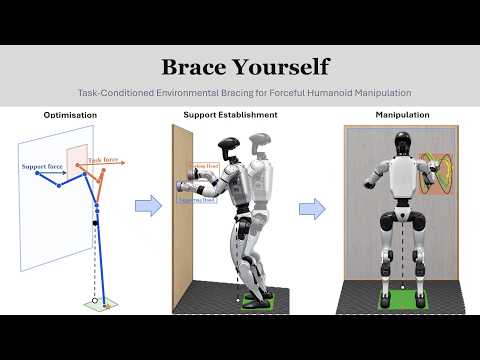
Brace Yourself: Task-Conditioned Environmental Bracing for Forceful Humanoid Manipulation

Zongyuan Zhang, Christopher Lehnert, Will N. Browne, Jonathan M. Roberts

Forceful manipulation is challenging for humanoid robots because interaction forces can disturb whole-body balance. We introduce the Supporting Hand Strategy (SHS), which enables a…

Forceful manipulation is challenging for humanoid robots because interaction forces can disturb whole-body balance. We introduce the Supporting Hand Strategy (SHS), which enables a humanoid to brace against the environment with one hand while performing forceful manipulation with the other. SHS optimises a task-conditioned support configuration that guides two synchronous reinforcement-learning policies, without human motion data or online whole-body trajectory planning. On a Unitree G1, SHS achieved usable contact forces up to 60 N, compared with a maximum sustained force of 13.5 N without environmental bracing, while substantially improving force tracking over a task-independent support configuration. The same policies generalised to different task regions without retraining. SHS therefore provides a simple mechanism for substantially extending humanoid forceful-manipulation capability.

cs.ROmanipulationhumanoid

兴趣:humanoid robots and whole-body control

#152026-09-2289

MAVP: Map-Aware Visuomotor Policies for Mobile Manipulation

Jinhe Tang, Ruixiao Dai, Weiming Zhi

Successful mobile manipulation requires coordinated base and arm motion while maintaining accurate spatial positioning. However, demonstration-trained policies can struggle to real…

Successful mobile manipulation requires coordinated base and arm motion while maintaining accurate spatial positioning. However, demonstration-trained policies can struggle to realise the intended base motion reliably, leading to spatial misalignment and subsequent manipulation failures. We present MAVP (Map-Aware Visuomotor Policies), a framework that improves execution reliability by predicting explicit base-pose targets and tracking them using localisation feedback. MAVP reconstructs a static map from teleoperated demonstrations and expresses demonstrated base trajectories in a shared map frame, providing consistent spatial supervision across demonstrations. At execution time, the policy receives RGB observations, joint states, and the robot's current map-frame base pose, and jointly predicts target base poses, arm actions, and gripper actions. A low-level controller tracks the predicted base targets using feedforward motion and pose error feedback, enabling correction of execution deviations. We additionally use pose-noise augmentation during training to improve robustness to errors in the policy's pose input. Across six real-world manipulation tasks and three policy families, MAVP achieves higher task success rates than unanchored velocity control in all tasks. Videos and additional results are available at https://123qwedsa123.github.io/mavp/.

cs.ROcs.AIcs.CVcs.LGrobotmanipulation

兴趣:robot manipulation and grasping with learned policies

#162026-09-2289

RouteRLT: Learning When and Which RL Specialist Should Control a Vision-Language-Action Policy

Chongyu Zhu, Jaden Hinds, Hyegang Kim, Juan Sebastian Rojas, Ramy Elmallah, Chi-Guhn Lee

Vision-language-action (VLA) models provide broad manipulation competence, but often struggle during the precision-critical stages that dominate contact-rich industrial tasks such …

Vision-language-action (VLA) models provide broad manipulation competence, but often struggle during the precision-critical stages that dominate contact-rich industrial tasks such as connector insertion and cable management. A common remedy is to refine a pretrained VLA with reinforcement learning (RL), enabling task-specific improvement beyond behavior cloning. However, how to preserve its generalist behavior while deciding when RL refinement is needed and which specialized policy should act remains an open question. In this work, we present RouteRLT, a routing framework that learns when and which RL specialist, an RL policy trained for a single precision-critical phase, should take control from a generalist VLA. A phase selector identifies the active controller, a stabilizer suppresses transient switches, and an action-boundary manager handles transitions between chunked policy outputs. We evaluate RouteRLT on multi-object pick-and-place tasks in LIBERO, as well as on a real-world cable pickup and port-insertion task with multiple precision-critical stages. In simulation, the learned routing improves over the base VLA and matches routing with privileged phase boundaries, without accessing those boundaries at deployment. The real-robot evaluation validates automatic routing to both the pickup and insertion specialists under an operator-aligned handoff protocol. Altogether, these results show that learned routing applies RL specialist control where precise adaptation is most valuable while preserving generalist VLA behavior, including recovery from failed execution attempts.

cs.ROrobotmanipulationVLAvision-language-action

兴趣:vision-language-action (VLA) models and foundation models for robots

#172026-09-2289

RoboFollow: Unveiling the Instruction Following Mirage in Embodied Agents

Chang Guo, Yukun Xie, Bohan Tan, Zheng Chang, Zhaokai Yin, Qianli Ma 等

Modern embodied agents achieve impressive success rates, yet their actual instruction-following ability is far weaker than these numbers suggest. We trace this illusion to a struct…

Modern embodied agents achieve impressive success rates, yet their actual instruction-following ability is far weaker than these numbers suggest. We trace this illusion to a structural property we term low scene entropy: when a visual scene admits only one valid task, language becomes redundant and a policy can score highly while barely using it. We introduce RoboFollow, a diagnostic benchmark with three principles: (1) High Scene Entropy: each training scene supports multiple kinematically distinct task branches, making vision alone insufficient and forcing reliance on language. (2) Hierarchical Diagnostic Protocol: a four-level protocol (L0--L3) progressively perturbs visual layout and semantics, probing whether equivalent instructions yield consistent behavior and distinct ones yield discriminable behavior across spatial relations, attributes, trajectory constraints, and logic. (3) Confound-Controlled Diagnosis: we simplify interaction objects, restrict actions to the trained repertoire and report stage-wise Intent and Execution scores, isolating comprehension from motor execution. Evaluation of nine VLA and WAM policies shows that strong L0 performance, where attained, does not reliably transfer to L1--L3 under our fine-tuning setup. Representative mitigations, including stronger VLM backbones, QA co-training, LangForce, and Classifier-Free Guidance, all fail to close this gap. RoboFollow exposes genuine instruction following as a critical, overlooked bottleneck. Code and dataset are available at https://github.com/AutoLab-SAI-SJTU/RoboFollow and https://huggingface.co/datasets/AutoLab-SJTU/robofollow-data.

兴趣:world models and video prediction for embodied agents

#182026-09-2288

Hierarchical Floorplan-Guided Vision-Language Exploration for Embodied Question Answering

Albert Gassol Puigjaner, Kostas Alexis

Embodied Question Answering (EQA) requires an agent to explore a previously unseen environment, gather relevant information, and answer questions about the scene. Recent approaches…

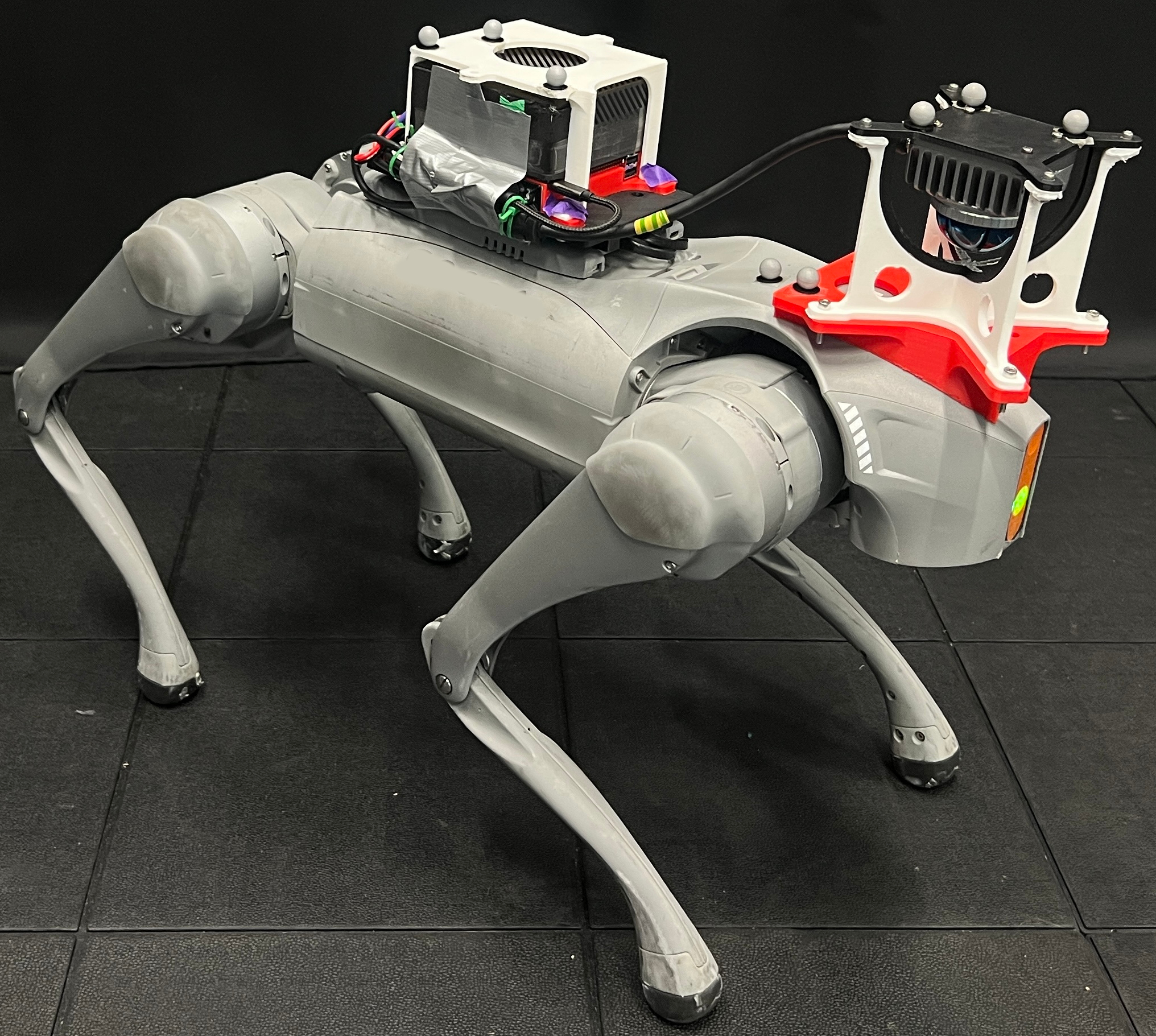
Embodied Question Answering (EQA) requires an agent to explore a previously unseen environment, gather relevant information, and answer questions about the scene. Recent approaches leverage Vision-Language Models (VLMs) together with semantic maps or scene graphs to guide exploration. However, exploration is typically driven only by local observations, while structural priors about the environment remain largely unused. We propose HFLEX-EQA, a hierarchical EQA framework that combines online scene graph construction, VLM- based planning, semantic frontier exploration, and floorplan priors. The system incrementally builds a hierarchical scene graph and an open-vocabulary occupancy map from RGB-D observations, enabling a VLM to jointly reason over the scene graph, task-relevant visual observations, exploration history, and an estimated topological floorplan. Furthermore, we introduce a room-discovery strategy that leverages the floorplan and open-vocabulary frontier semantics to guide exploration toward semantically relevant yet currently unobserved room types. We evaluate HFLEX-EQA on the OpenEQA and ExploreEQA benchmarks and demonstrate deployment on a quadruped robot in real indoor environments. Our results demonstrate the benefit of combining VLM-based hierarchical planning with structural floorplan priors for the EQA task.

cs.ROrobotembodied

兴趣:vision-language-action (VLA) models and foundation models for robots

#192026-09-2288

DynaForge: Planning-Guided Residual Learning for Dynamic Manipulation Demonstration Generation

Yiyang Jin, Yu Zheng, Xiao He, Hesheng Wang

Dynamic object manipulation is essential for robots operating in real-world environments, yet methods for generating high-quality demonstrations remain limited. Methods designed fo…

Dynamic object manipulation is essential for robots operating in real-world environments, yet methods for generating high-quality demonstrations remain limited. Methods designed for static tasks do not readily transfer to dynamic settings. Among dynamic demonstration generators, planning-based methods can fail near contact, while DOMINO-style replay simplifies dynamic interactions and may limit the experience available for policy learning. We present DynaForge, a planning-guided framework that learns residual corrections for dynamic manipulation demonstration generation. DynaForge combines low-frequency global planning with high-frequency object-centric inverse kinematics across task phases, and applies a residual policy to correct actions during dynamic interaction. An implicit curriculum groups rollouts under matched conditions and selects mixed-success groups, focusing residual reinforcement learning on the evolving competence frontier. On Can and Bottle, it uses 0.73x as many optimizer steps as vanilla GRPO at the same nominal environment-step budget, with higher observed final success rates. Across nine simulation tasks, DynaForge increases mean demonstration-generation success from 41.30% of the planning prior to 78.37%. With 800 demonstrations per task, DP3 policies trained on DynaForge data achieve 49.11% mean success, compared with 7.07% for DOMINO data. On three real-world dynamic tasks, DynaForge-trained policies achieve 30-60% success, compared with 0-10% for DOMINO-trained policies, showing the ability of DynaForge for sim-to-real transfer.

cs.ROmanipulationsim-to-real

兴趣:robot manipulation and grasping with learned policies

#202026-09-2287

MotionForge: A Data Generation Pipeline and Large-Scale Benchmark for Long-Horizon Manipulation of Dynamic Objects with Domain Shifts

Mohan Liu, Dengchen Mei, Haotian Xian, Ruyang Han, Jiayi Sun, Xuanyu Chen 等

Recent advances in learning-based robot policies have demonstrated promising progress, yet they are predom- inantly evaluated in static or quasi-static environments. In dynamic man…

Recent advances in learning-based robot policies have demonstrated promising progress, yet they are predom- inantly evaluated in static or quasi-static environments. In dynamic manipulation, objects and scenes continuously evolve while the robot perceives, reasons, and acts. However, recent dynamic simulation benchmarks largely focus on short-horizon, reactive interactions with simple motion patterns and offer limited support for both systematic evaluation under domain shifts and model-agnostic real-time execution protocols. To bridge these gaps, we introduce MotionForge, the first large- scale simulation benchmark and data-generation pipeline tailored to jointly evaluate domain shifts and long-horizon interaction in dynamic manipulation. MotionForge comprises 40 dynamic interaction tasks spanning 11 distinct motion patterns, with dedicated support for 17 long-horizon tasks. Our benchmark introduces two key novelties: (1) a systematic evaluation protocol for assessing policy robustness under both single-factor (e.g., only backgrounds shift) and joint domain shifts (e.g., simultaneous shifts of objects, backgrounds, lighting, and speed); and (2) a decoupled, latency-aware execution protocol where the environ- ment continuously evolves independently of policy inference time. Extensive evaluations of representative general-purpose robot policies on our benchmark reveal substantial limitations under joint domain shifts. These findings expose a critical gap between current policy capabilities and the requirements of robust long- horizon manipulation of dynamic objects under domain shifts, establishing MotionForge as a comprehensive testbed for future research in embodied AI.

cs.ROrobotmanipulationembodied

兴趣:robot manipulation and grasping with learned policies

#212026-09-2287

RoboMP-DINOv2: Prompts, Not Filters for Robust Robot Manipulation

Han Qi, Heng Yang

Robot manipulation policies must generalize across visual shifts while preserving scene context relevant to action. General-purpose vision encoders are not tailored to visuomotor c…

Robot manipulation policies must generalize across visual shifts while preserving scene context relevant to action. General-purpose vision encoders are not tailored to visuomotor control, while object-centric approaches often use segmentation masks as hard filters that discard potentially useful context. We propose RoboMP-DINOv2 (Robotics Mask-Prompted DINOv2), a full-scene vision encoder that treats masks as spatial prompts rather than visibility filters. It extracts dense DINOv2 features from the full observation, injects learned region-specific embeddings at masked locations, and jointly contextualizes prompted and unprompted tokens for action prediction. We further introduce masked-region color randomization (MCR) to improve appearance robustness, yielding RoboMP-DINOv2-MCR. Across seven simulated manipulation settings, RoboMP-DINOv2 achieves 60.7% success under spatial shifts and 59.7% under scene clutter, compared with 50.7% and 41.0% for a DINOv2-based Diffusion Policy. Under unseen object colors, RoboMP-DINOv2-MCR achieves 72.5% success versus 35.1% for the strongest color-randomized baseline. Additional experiments and representation analyses show improved robustness while preserving behaviorally relevant scene information. Code is available at https://github.com/han20192019/RoboMP_DINOv2.

cs.ROrobotmanipulationdiffusion policy

兴趣:vision-language-action (VLA) models and foundation models for robots

#222026-09-2187

Capability-Aware Arbitration for Semantic Intent-Based Shared Control

Zhaoda Du, Michael Bowman, Xiaoli Zhang

Shared control often allocates robot authority based on confidence in inferred human intent, assuming reliable autonomous execution. When this assumption fails, high intent confide…

Shared control often allocates robot authority based on confidence in inferred human intent, assuming reliable autonomous execution. When this assumption fails, high intent confidence can cause over-helping. We present a capability-aware shared-control framework in which a vision-language model (VLM) infers human intent and provides semantic-intent confidence, while a vision-language-action (VLA) policy generates autonomous actions. VLA capability confidence is estimated online from the dispersion and local instability of stochastic action trajectories. We design a nonlinear arbitration policy that combines Bayesian-filtered semantic-intent confidence with VLA capability confidence through a sigmoid mapping to adapt robot authority. Our evaluation combined VLM/VLA confidence assessment with a study involving 12 participants performing pick-and-place and bidirectional stacking under in-distribution and out-of-distribution conditions. The proposed method achieved the highest task success rate (92%), compared with manual teleoperation (83%), intent-only arbitration (44%), and fixed equal-weight blending (10%). It also achieved higher control friendliness and lower authority-weighted disagreement than both shared-control baselines. These results demonstrate the benefit of incorporating VLA capability into authority allocation to mitigate over-helping and improve shared-control performance.

cs.ROrobotVLAvision-language-action

兴趣:vision-language-action (VLA) models and foundation models for robots

#232026-09-2287

PhyVisGen: Physically and Visually High-Fidelity Robotic Manipulation Data Generation

Yu Zheng, Qiyu Feng, Yixin Wu, Baoquan Yang, Yixuan Zhou, Bingyang Hu 等

Large-scale manipulation demonstrations are essential for learning robust visuomotor policies, yet real-world data collection is expensive and difficult to scale. Simulation offers…

Large-scale manipulation demonstrations are essential for learning robust visuomotor policies, yet real-world data collection is expensive and difficult to scale. Simulation offers a promising alternative, but physical and visual discrepancies can limit the transferability of synthetic data, particularly for manipulation with soft grippers. We present PhyVisGen, a physically and visually high-fidelity framework for scalable robotic manipulation data generation. On the physical side, PhyVisGen introduces an arm-gripper coupling method based on the Incremental Potential Contact (IPC), enabling high-fidelity soft contact throughout complete manipulation trajectories. On the visual side, it combines real-scene reconstruction with real-time path tracing to generate visually realistic observations while preserving captured scene appearance. Quantitative evaluations demonstrate the physical and visual fidelity of PhyVisGen. Policies trained exclusively on synthetic manipulation demonstrations achieve 65-95% success across five real-robot tasks, without real-robot demonstration data or policy fine-tuning.

cs.ROrobotmanipulation

兴趣:robot manipulation and grasping with learned policies

#242026-09-2286

Sample, Simulate, Select: Physics-in-the-Loop Text-to-Motion for Humanoids Without Training

Raphael Memmesheimer, Sven Behnke

Text-to-motion models generate plausible human motion but do not model a robot's dynamics; whole-body tracking controllers execute robot references reliably but cannot replan an in…

Text-to-motion models generate plausible human motion but do not model a robot's dynamics; whole-body tracking controllers execute robot references reliably but cannot replan an infeasible one. Recent language-to-humanoid systems bridge this gap by training. We measure how much of the gap closes with no training at all, by putting the deployment controller itself in the loop. Sample-simulate-select (S$^3$) draws $N$ motions per prompt from a frozen text-to-motion model, retargets each to a Unitree G1 by direction-matching inverse kinematics, rolls all of them out under full rigid-body dynamics with the pretrained SONIC tracking policy, and keeps the candidate the policy executed best. Because the verifier is the deterministic simulator itself, S$^3$ attains the any-of-$N$ ceiling by construction; what we measure is where that ceiling lies and what falls short of it. On 200 stratified HumanML3D test prompts with $N=8$, upright execution rises from 83.5% to 89.5% and hardware-gate passes from 33 to 85; on the complete test split (4,184 prompts) it rises from 80.5% to 89.5%. A kinematic verifier that predicts falls well (AUROC 0.90) recovers only a quarter of this gain: ranking a prompt's own candidates is harder than classifying the population. What selection cannot fix is one class, prompts that lower the pelvis, which a generator trained on retargeted robot data does execute. We further score the semantic fidelity of the executed motion with the standard text-motion evaluator, with a real-mocap control that attributes the loss to the robot projection, ablate the retargeter against GMR (complementary failures: the any-of-8 ceiling rises to 95.0% over both), and execute all 177 gate-selected clips on the real G1: every one completes standing, with hardware tracking error matching simulation ($r=0.94$).

cs.ROcs.CVrobothumanoid

兴趣:humanoid robots and whole-body control

#252026-09-2286

Imperfection for Precision: Upcycling Imperfect Data for High-Precision Robotic Manipulation

Hao Wei, Yang Liu, Chao Tang, Shengbao Li, Jiangtao Chen, Jinxuan Zhu 等

Training vision-language-action (VLA) models for high-precision manipulation typically requires task-specific, high-quality data (e.g., teleoperation), which is slow and expensive …

Training vision-language-action (VLA) models for high-precision manipulation typically requires task-specific, high-quality data (e.g., teleoperation), which is slow and expensive to collect. To reduce this burden without compromising manipulation precision, we propose $\varepsilon$4P (Imperfection for Precision), a simple yet effective method that "upcycles" two otherwise discarded data sources: (1) low-precision data from the target task and (2) high-precision data from mismatched tasks. Rather than naively mixing these imperfect data sources throughout co-training, $\varepsilon$4P controls where each source contributes along the flow-matching trajectory. Specifically, low-precision, target-task data is used at high noise to preserve high-level task context and high-precision, task-mismatched data is used at low noise to transfer low-level action precision. Through real-robot experiments on both sub-millimeter, high-precision tasks and coarse-grained tasks, we demonstrate that the proposed method (1) effectively leverages additional imperfect data to improve policy performance by up to 31.7 percentage points, and (2) can replace an equal amount of task-specific, high-quality data with an average performance drop of only 4.2 percentage points. Overall, $\varepsilon$4P points toward a scalable paradigm for high-precision manipulation, in which heterogeneous, imperfect data can be systematically repurposed to reduce reliance on costly task-specific, high-quality data. More details are available at https://varepsilon4p.github.io/.

cs.ROrobotmanipulationVLAvision-language-action

兴趣:vision-language-action (VLA) models and foundation models for robots

#262026-09-2185

JAMB: Joint Action-Motion Diffusion for Bimanual Manipulation

Chuyang Xiao, Peilin Meng, David Held

Coordinated bimanual manipulation is challenging because the motion of either arm can alter the shared 3D scene and thereby affect the other arm. Yet most diffusion policies genera…

Coordinated bimanual manipulation is challenging because the motion of either arm can alter the shared 3D scene and thereby affect the other arm. Yet most diffusion policies generate actions without explicitly modeling these future geometric consequences, while predictive variants typically use future state only as auxiliary supervision or fixed conditioning. We address this limitation by proposing JAMB, a diffusion policy that jointly denoises bimanual actions and future 3D point tracks. By allowing action and track hypotheses to evolve together within a shared Transformer, each can inform and refine the other throughout denoising. We further ground multimodal representations in a shared spatiotemporal coordinate system to facilitate geometry-aware interaction during joint denoising. We evaluate JAMB on diverse bimanual manipulation tasks in RoboTwin 2.0 and on a real-world robot, comparing it with action-only policies and alternative future-prediction approaches spanning different state representations and learning objectives. Across 16 simulation tasks, JAMB achieves an average success rate of 83.4%, outperforming the strongest baseline by 23.9 percentage points. On three real-world tasks, it outperforms the action-only and auxiliary geometry prediction methods by 50.0 and 21.2 percentage points, respectively. Beyond these performance gains, JAMB shows stronger generalization to cluttered scenes and out-of-distribution backgrounds than the evaluated baselines. Together, these results demonstrate the effectiveness of our joint action-motion modeling framework for coordinated bimanual manipulation. Our project website is available at https://jam-bimanual.github.io/

cs.ROrobotmanipulationdiffusion policy

兴趣:imitation learning and diffusion policies for robot control

#272026-09-2285

SafeLoop: Risk-Aware Rollback for Vision-Language-Action Manipulation

Zeyu Lou, Tianran Zhang, Xinquan Yue, Ya Jing, Chenyang Si

Recent vision-language-action (VLA) models are promising for general-purpose manipulation, but long-horizon execution remains fragile. Small state-estimation or control errors can …

Recent vision-language-action (VLA) models are promising for general-purpose manipulation, but long-horizon execution remains fragile. Small state-estimation or control errors can lead to irreversible failures (e.g., collisions and object drops). Avoiding these risks requires a proactive safety mechanism capable of anticipating hazards. In this paper, we introduce SafeLoop, a non-invasive external wrapper that adds hazard prediction and rollback-based recovery to a VLA model without changing its parameters. SafeLoop trains a risk predictor from vision and proprioception to output four values: the probability and time-to-hazard for body collisions and for object failures. A lightweight controller then chooses one of three actions based on the predicted risk: continue execution (noop), save a safety checkpoint (record), or retreat in joint space (rollback). Rollback moves the robot back to a recent safe waypoint and queries the base policy again, which may yield an alternative continuation. Across 24 LIBERO tasks (16 random seeds each) and three real-robot tasks (25 rollouts each), SafeLoop achieves a stronger overall safety-success trade-off than alternative methods, reducing hazard cases by roughly 70% while preserving task success and the base-policy control rate. Project code is available at https://github.com/Loule0-0/SafeLoop/tree/release/safeloop.

cs.ROrobotmanipulationVLAvision-language-action

兴趣:vision-language-action (VLA) models and foundation models for robots

#282026-09-2285

PLAT: Sparse Timed Keyframe Motion Tracking for Humanoid Control via Privileged Latent Transition Learning

Zepeng Wang, Jiangxing Wang, Chao Ma, Xiaochuan Shi, Zongqing Lu

Humanoid motion tracking policies rely on dense frame-by-frame references, limiting their use as high-level motion controllers for planning and interactive motion generation. We st…

Humanoid motion tracking policies rely on dense frame-by-frame references, limiting their use as high-level motion controllers for planning and interactive motion generation. We study Sparse Timed Keyframe Motion Tracking, where a policy receives only sparse future keyframes and their desired arrival times, and must execute stable whole-body motions that reach successive goals. We propose PLAT, a three-stage sparse timed keyframe motion tracking policy learning framework with Privileged LAtent Transition learning. PLAT bridges dense motion tracking and sparse goal-conditioned control by exploiting dense goal sequences as privileged supervision during training while requiring only sparse timed keyframe commands at deployment. A pretrained dense tracking expert first provides robust motion priors. A privileged latent prior is then learned through DAgger-style imitation, followed by latent residual reinforcement learning that refines latent transitions instead of directly optimizing actions. Extensive simulation experiments demonstrate that PLAT maintains accurate and stable sparse timed keyframe tracking across varying planning horizons, with particularly strong performance under long-horizon commands. Successful deployment on a Unitree G1 humanoid robot further demonstrates the effectiveness and practicality of PLAT for sparse humanoid motion control.

cs.ROrobothumanoid

兴趣:imitation learning and diffusion policies for robot control

#292026-09-2284

Relative Contact Velocity-Controlled Hand-Object Mechanism for Dexterous Tool Manipulation

Sunyu Wang, Jean Oh, Nancy S. Pollard

This work investigates how to enable general multi-finger robotic hands to perform the complete tool manipulation process, which entails picking up a tool, loading it into a suitab…

This work investigates how to enable general multi-finger robotic hands to perform the complete tool manipulation process, which entails picking up a tool, loading it into a suitable pose, and then wielding it. Inspired by human tool manipulation and mechanical design principles, we model the hand and the tool as a unified hand-object mechanism (HOM) composed of sub-assemblies. Specifically, we define a HOM as consisting of the hand, the object, and the generalized contact frames, allowing the HOM's motions to be expressed with the same set of Cartesian-space relative contact velocities, irrespective of the hand's kinematics and geometry. Then, we define a HOM's sub-assemblies as relative contact velocity and contact force constraints between fingers. Building on these definitions, we developed a lightweight and physically interpretable motion planning and contact estimation framework using least squares and a complementary filter. We evaluated our framework in simulation by teleoperating five different robotic hands. The results show that our framework enabled all five hands to execute the complete tool manipulation process, achieving dexterous behaviors even from identical, simple reference trajectories. Furthermore, the results showcase our framework's adaptability to different hands, tools, and tasks, enabled by its kinematic and geometric foundation.

cs.ROmanipulationdexterous

兴趣:robot manipulation and grasping with learned policies

#302026-09-2284

Metric-Bench: Exploring In-context Spatial Metric Reasoning in VLMs for Indoor Scenes

Yuling Xi, Haokai Zhang, Muzhi Zhu, Hao Zhong, Zongze Du, Hengyu Zhao 等

Metric reasoning is a critical and challenging task for Vision Language Models (VLMs), playing a pivotal role in embodied AI tasks such as robotic manipulation and autonomous navig…

Metric reasoning is a critical and challenging task for Vision Language Models (VLMs), playing a pivotal role in embodied AI tasks such as robotic manipulation and autonomous navigation. However, current spatial reasoning remains bottlenecked by rigid pixel-level supervision; such localized optimization often compromises general multimodal intelligence, triggering performance degradation or catastrophic forgetting of broad reasoning capabilities. To address these limitations, we introduce Metric-Bench, a focused benchmark designed to guide metric-spatial reasoning using contextual information. By incorporating in-image reference objects with known physical dimensions, Metric-Bench guides models to implicitly learn the 2D-to-3D mapping without camera intrinsics. We further present MetricReasoner, a task-adapted reinforcement fine-tuning recipe for reference-grounded metric reasoning, using structured prompts and verifiable numerical rewards. Extensive experiments on Metric-Bench demonstrate that our approach significantly enhances spatial metric understanding, outperforming existing and even larger proprietary models by 43.1%, while improving downstream embodied performance over a spatial-specialized counterpart by 30.4% on RoboSpatial overall accuracy and 9.3% on ERQA, and additionally delivering consistent gains on general benchmarks (15.9% on V$\star$Bench, 88.9% on BLINK), indicating that the proposed adaptation does not necessarily compromise general VLM capabilities.

cs.CVcs.MMmanipulationembodied

兴趣:vision-language-action (VLA) models and foundation models for robots

#312026-09-2184

Learning to Plan in Human-Robot Collaboration: Multimodal Reinforcement Learning for Adaptive Interaction

Afagh Mehri Shervedani, Siyu Li, Natawut Monaikul, Bahareh Abbasi, Barbara Di Eugenio, Miloš Žefran

Robot assistants for older adults and people with disabilities need to perform collaborative tasks with users effectively. The core component of these systems is an interaction man…

Robot assistants for older adults and people with disabilities need to perform collaborative tasks with users effectively. The core component of these systems is an interaction manager whose job is to observe and assess the task and infer the state of the human and their intent for the robot to choose the best course of action. Due to the sparseness of the data in this domain, the policy for such multimodal systems is often crafted by hand; as the complexity of interactions grows, this process is not scalable. This paper proposes a reinforcement learning (RL) approach to automatically generate the multimodal policy of the robot. Our system focuses on a realistic scenario where a robot assists a user in locating objects within a home environment, managing multimodal signals, including language and physical actions, to select the best action. In contrast to traditional dialog systems, our agent is trained with a simulator that uses human data and can deal with multiple modalities. We use a simple high-level reward function that needs no fine-tuning and enforce some preconditions to speed up the training process. A human study evaluating the system in a real-world setting demonstrates promising results, indicating high usability and effective task completion. This RL-based approach offers a scalable and interpretable alternative for designing interaction managers in multimodal human-robot collaborations.

cs.ROrobot

兴趣:large language models for robot task planning and reasoning

#322026-09-2283

Beyond Reconstruction Error: Analytical and Data-Driven Action Tokenization for Autoregressive Vision-Language-Action Models

Yuxin Yang, Gaohan He, Changxue Guan, Hangming Liu

Discrete action tokenization is central to autoregressive vision-language-action (VLA) models, yet action representations are often evaluated primarily through reconstruction fidel…

Discrete action tokenization is central to autoregressive vision-language-action (VLA) models, yet action representations are often evaluated primarily through reconstruction fidelity. We ask which representation properties actually matter for closed-loop control by comparing fixed analytical, data-driven linear, and nonlinear neural representations under a unified tokenization interface. Across rate-distortion analysis, sequence-modeling diagnostics, and 3,500 LIBERO rollouts, representation rankings change with the evaluation criterion. PCA achieves lower nominal reconstruction error than Temporal-DCT, but produces less predictable token sequences and 3.0 percentage points lower mean seen-task success across three policy-training seeds, with the policy ordering reversing in one seed. In a matched seed-42 ablation, an autoencoder further reduces reconstruction error yet does not yield the strongest policy and exhibits greater sensitivity to discrete token perturbations. These findings show that reconstruction fidelity alone cannot reliably select action representations for autoregressive control, motivating joint evaluation of geometric fidelity, sequence predictability, decoder stability, and closed-loop performance.

cs.ROcs.LGVLAvision-language-action

兴趣:vision-language-action (VLA) models and foundation models for robots

#332026-09-2283

Deploying Foundation Models for Embodied Navigation

Vishnu Sashank Dorbala, Dinesh Manocha

We present and tackle two problems associated with deploying Foundation Models (FMs) on Embodied Agents performing navigation: 1) Training bias in FMs leading to poor personalizati…

We present and tackle two problems associated with deploying Foundation Models (FMs) on Embodied Agents performing navigation: 1) Training bias in FMs leading to poor personalization in unseen environments, and 2) Limited FM context length hindering success, especially on long horizon tasks. Our solution for the former involves priming the FM with human-habit data mined from the scene and our solution for the latter involves active memory management via a novel `memory head' augmentation. We first present a taxonomy of existing literature on FM-based Embodied Navigation, and highlight these limitations. We then present our approaches, Transit-Aware Planning (TAP) and MemCtrl to address the limitations. With TAP, we present real-world results in a lab environment with a Turtlebot for personalized target finding that shows an average improvement of 18% over a non-TAP baseline. On MemCtrl, we report a 6% average improvement across various embodied tasks, with 20% on long instruction subsets, all while using nearly half the context used in the baseline model. Motivated by these result, we present our stance the deployability of FM-based embodied agents in real-world environments, and highlight open research directions.

cs.ROembodied

兴趣:world models and video prediction for embodied agents

#342026-09-2183

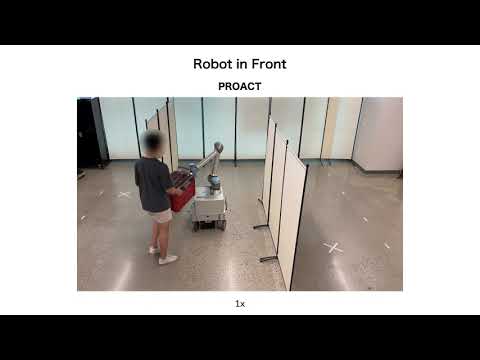
Learning from Humans for Proactive Assistance in Human-Robot Collaborative Transport

Elvin Yang, Christoforos Mavrogiannis

We focus on human-robot collaborative transport, a challenging task of broad relevance spanning logistics, manufacturing, and the home, in which a user and a robot work together to…

We focus on human-robot collaborative transport, a challenging task of broad relevance spanning logistics, manufacturing, and the home, in which a user and a robot work together to relocate a large or heavy object. To act as an effective partner, the robot should reduce the user's effort by contributing to efficient relocation of the object while remaining physically responsive to them. Prior work often addresses these capabilities separately, producing robots that may move the object efficiently but resist user input, or accommodate the user but depend on continuous guidance. Our key insight is that obstacle-constrained collaborative transport requires integrating predictions of human collaborative behavior with compliant robot control. To this end, we introduce PROACT, a framework for human-robot collaborative transport that incorporates anticipation into compliant whole-body control through a learned model of human collaborative behavior. Trained on a large-scale, real-world dataset of dyadic human transport demonstrations, our transformer architecture distills collaborative behavior into predictions of future object motion. Across 108 real-world trials with a 9-DoF mobile manipulator, PROACT reduces mean interaction work by 59.2% and 20.4%, and mean completion time by 12.9% and 6.9%, relative to compliance-only and MPC baselines, respectively. Footage from our experiments can be found at https://youtu.be/qAGvQfVPjbk.

cs.ROcs.HCcs.LGrobot

兴趣:imitation learning and diffusion policies for robot control

#352026-09-2281

An Action Is Worth One Patch: Unified World-Action Modeling with PatchWAM

Tianheng Wang, Zhou Xie, Heng Jia, Jianhua Xu, Tong Zhang, Kaicheng Yu

Generative visual models offer a foundation for learning representations of physical dynamics, yet their extension to continuous control raises a fundamental question: do visual pr…

Generative visual models offer a foundation for learning representations of physical dynamics, yet their extension to continuous control raises a fundamental question: do visual prediction and action generation require separate computational pathways? Existing approaches usually introduce trainable action heads or separate action experts to bridge low-dimensional states and high-dimensional visual representations. In this work, we explore whether the visual backbone's existing capacity can also support control when actions are expressed in a compatible representation. Thus, we introduce PatchWAM (Patch World-Action Model), which treats continuous actions as another type of patch through a fixed mapping called Action-as-Patch. This allows a single model to predict both how the robot should move and what the scene may look like afterward. Visual prediction and action generation become parts of the same generative process, without a dedicated action head or separate action expert. Experiments with subsampled training windows show gains over a matched dual-expert control, while benchmark evaluations reach 91.8% success rate on LIBERO-Plus and 96.12% on RoboTwin 2.0 in a full-data setting with additional augmented demonstrations. More broadly, the result suggests that capability need not be added where it can be inherited: the constraint on extending a generative backbone is the interface a new signal is written in, not the capacity to model it.

cs.ROrobot

兴趣:world models and video prediction for embodied agents

#362026-09-2279

CableVLA: Simulation-Privileged Global-Local Representation Learning for Cable Routing

Zhifei Teng, Bo Feng, Xiang Zou, Jinpeng Xiao, Min Li, Zhouping Yin 等

Cable routing requires coordinated control of global cable topology and changing local contacts. We present CableVLA, an end-to-end multimodal vision-language-action framework that…

Cable routing requires coordinated control of global cable topology and changing local contacts. We present CableVLA, an end-to-end multimodal vision-language-action framework that converts simulation-privileged supervision into deployable cable-topology and tactile representations. TopoHead distills node-level physics and current and future cable-topology information into causal visual context for the action expert. TacSense uses complementary frame and taxel branches to learn contact dynamics from resistive arrays, with simulator-derived kinematics and contact events providing supervision beyond the measured force map. A contact gate activates force-tactile residuals that refine the next 8 arm-and-gripper actions of a frozen topology-conditioned policy. Across 345 MuJoCo evaluations, CableVLA improves success from 62.6% for the $π_{0.5}$-V visual baseline to 84.9%. TacSense achieves pronounced gains in slip-transition recognition over a CNN-LSTM baseline with a similar parameter count, and this advantage persists under frozen-encoder probes. Topology prediction and 57-task tactile evaluations assess representation quality, while policy adaptation studies evaluate downstream control performance. Cross-simulator and real-robot comparisons further examine zero-shot policy transfer under changes in dynamics and sensing.

cs.ROrobotvision-language-actiontactile

兴趣:robot manipulation and grasping with learned policies

#372026-09-2279

Minimal Recurrent Behavioral Memory for Imitation under Partial Observability

Xianyao Li, Fang Xu, Rui Min, Ruitong Tian, Jing Du

What is the least recurrent memory needed to reproduce a specified expert under partial observability? The instantaneous requirement is the conditional entropy of the expert's beha…

What is the least recurrent memory needed to reproduce a specified expert under partial observability? The instantaneous requirement is the conditional entropy of the expert's behavioral quotient, but recurrence must also preserve distinctions that future observations will not restore before use. We characterize this minimal recurrent behavioral memory by a compatibility relation: under transitivity its classes attain the exact minimum, while the general case is an entropy minimization over closed compatible state assignments, with exact certificates on finite instances. A sole-carrier measurement protocol separates behavioral sufficiency, excess code rate, and information carried by observations or other memory paths; experimental bit requirements refer to the induced symbolic behavioral model under the stated occupancy. Across manipulation tasks, learned code rates remain near zero- and two-bit requirements as hidden modes grow to $512$, and anticipatory memory follows a $2\to1\to0$ requirement despite zero instantaneous demand during waiting. Learning this representation remains difficult: event-agnostic future-behavior supervision yields $36/40$ sufficient seeds with one frozen configuration and improves the longest-horizon pixel setting from $0/8$ to $6/8$ sufficient held-out seeds (closed-loop success from $0.08$ to $0.57$). On unmodified community benchmarks, the protocol certifies delay-independent requirements, which sufficient codes match at mid-delay. The supervision aids commitment but can induce predictive surplus; annealing it lets imitation and rate training reduce that surplus, separating the information-theoretic target from the ability to learn it.

cs.LGcs.ITcs.ROmanipulation

兴趣:imitation learning and diffusion policies for robot control

#382026-09-2179

Norm2Tex: Augmenting Visuo-Tactile Simulations with Texture

Seongjin Bien, Débora Oliveira Makowski, Roberto Calandra, Florian Walter, Wolfram Burgard

Large-scale datasets are essential for training generalist robot control policies. Collecting real-world tactile data is costly and time-consuming, motivating the use of tactile si…

Large-scale datasets are essential for training generalist robot control policies. Collecting real-world tactile data is costly and time-consuming, motivating the use of tactile simulations. However, current tactile simulators capture only overall contact geometry and miss fine details like texture. This results in a significant domain shift between simulated and real tactile data. To address this gap, we introduce Norm2Tex, a plug-in method that augments simulations of vision-based tactile sensors with high-frequency surface details from normal map textures. By modifying the target object's depth map before a tactile simulator's rendering pipeline, Norm2Tex seamlessly integrates into different tactile simulators. We also evaluate sim-to-real transfer using material classification and a reinforcement learning task. Our results show that Norm2Tex preserves material-dependent tactile information across domains, improving texture recognition and producing material-dependent control behavior in the real world.

cs.ROrobotsim-to-realtactile

兴趣:dexterous hands and tactile sensing

#392026-09-2279

Learning Air-Ground Motion Control with Temporal Mode Switching and Cross-Terrain Tracking

Ruitian Pang, Mingrui Li, Xuanting Liu, Tiancheng Lai, Juncheng Chen, Xiangyu Li 等

Passive-wheeled terrestrial-aerial bimodal vehicles (TABVs) combine aerial mobility with energy-efficient ground locomotion. However, reliable air-ground mode switching under limit…

Passive-wheeled terrestrial-aerial bimodal vehicles (TABVs) combine aerial mobility with energy-efficient ground locomotion. However, reliable air-ground mode switching under limited onboard perception and robust ground trajectory tracking across diverse terrains remain challenging when targeting real-world applications. In this work, we propose a learning-based air-ground motion control framework for passive-wheeled TABVs: 1) a learned mode selector for autonomous air-ground motion mode switching. The selector uses historical single-point time-of-flight (ToF) measurements and robot states together with future reference information to determine the active locomotion mode. 2) a reinforcement learning control policy for trajectory tracking. The policy combines proprioceptive observations with future reference information to anticipate trajectory changes. For ground locomotion, multi-terrain training and dynamics randomization enable robust tracking across different terrains. Simulation and real-world experiments demonstrate reliable air-ground switching under limited perception and accurate ground tracking across diverse terrain conditions. The learned selector outperforms a rule-based mode selector in challenging transitions, while the ground controller achieves lower position RMSE than PID across all tested conditions and maintains decent tracking where NMPC fails. With these capabilities integrated, the system tracks a 101m air-ground trajectory through multiple autonomous mode transitions with a position RMSE of 0.08m.

cs.ROrobotlocomotion

兴趣:reinforcement learning for legged locomotion and sim-to-real transfer

#402026-09-2279

Fisheye-VLA: Decoupling Coverage and Acuity for Manipulation with a Single Fisheye Camera

Ziang Ren, Zike Yan, Raymond Zhang, Xuguo He, Zhongyu Li

Manipulation requires both broad scene awareness and detailed local feedback, yet conventional camera rigs provide them through separate front and wrist cameras. We present Fisheye…

Manipulation requires both broad scene awareness and detailed local feedback, yet conventional camera rigs provide them through separate front and wrist cameras. We present Fisheye-VLA, a visual interface that brings these capabilities together using a single passive fisheye. A global view preserves the workspace, while local perspective crops direct detail toward the interaction. The key design question is where this local visual budget should go. We answer it through a controlled re-rendering study, comparing alternative crop directions on the same recorded observations. The study finds that end-effector-centered views capture most of the estimated benefit of a much larger candidate pool, motivating a compact allocation around both hands. Our interface uses calibrated end-effector projection and motion lead to track the crops, while a shared ray encoding preserves their spatial meaning as they move. Integrated with a pretrained VLA, it achieves 84% and 82% success in the two expanded tabletop regions, where some target placements extend beyond the front-camera coverage, and supports shelf and conveyor manipulation. Ablations show that local crops and their viewing directions become more important in the larger workspace regions. The results demonstrate that a single fisheye can support these manipulation tasks without physical wrist cameras.

cs.ROmanipulationVLA

兴趣:3D perception, point clouds and scene understanding for robotics

#412026-09-2278

Predict Before You Step: Auditable Occupancy Forecasting for Dynamic Obstacle Avoidance under Sparse Guidance

Yuhui Mao, Fen Liu, Shenghai Yuan, Tianxin Hu, Ruimeng Liu, Rong Su

Legged robots under sparse waypoint guidance must avoid moving obstacles using partial, rapidly changing LiDAR observations. We present LOOP (Latent-recurrent Occupancy rollOut Pol…

Legged robots under sparse waypoint guidance must avoid moving obstacles using partial, rapidly changing LiDAR observations. We present LOOP (Latent-recurrent Occupancy rollOut Policy), a local avoidance policy that connects sparse waypoint guidance to a frozen locomotion controller at 50 Hz. From occupancy and ego-velocity histories, a recurrent predictor forecasts future occupancy over a 1 s horizon by warping the current map with learned flow and visibility gates. These maps guide velocity selection through map-derived features and geometric risk estimates, providing an explicit interface for inspecting and replacing predictions. In encounter-synchronised Isaac Lab evaluations, LOOP achieves 57.1% head-on success at obstacle speeds of 2.5-3.2 m/s, exceeding a retrained reactive baseline by 8.2 percentage points. Comparisons with a rollout-free BEV policy show smaller, scenario-dependent gains from the prediction branch, including improved crossing success and reduced variability across training seeds at the highest head-on speeds. The adapter runs onboard a Unitree Go2 in 14.5 ms per step and completes all 16 real-world crossing trials without collision, demonstrating deployment feasibility.

cs.ROleggedlocomotion

兴趣:reinforcement learning for legged locomotion and sim-to-real transfer

#422026-09-2278

RoboTwin-Phys: Do WAMs and VLAs Understand the Physical World?

Jiaqi Zhang, Feng Ye, Mingjia Yang, Zhihong Chen, Mingkang Xiang, Xinglin Yao 等

Physical-condition diversity is largely missing from current benchmarks for robot manipulation. While large-scale simulation benchmarks increasingly incorporate variations in objec…

Physical-condition diversity is largely missing from current benchmarks for robot manipulation. While large-scale simulation benchmarks increasingly incorporate variations in object appearance, scene layout, and visual observations, they typically keep the underlying physical parameters fixed. As a result, important sources of real-world variability, such as changes in mass, friction, and joint dynamics, remain largely untested. We introduce RoboTwin-Phys, a physics-diverse benchmark that treats physical-condition diversity as an explicit dimension of robot manipulation evaluation. The benchmark continuously varies 13 physical attributes within physically plausible ranges, providing a unified setting for evaluating policies across diverse physical operating conditions. We further release more than 5,000 expert demonstrations with ground-truth physical parameters, enabling physical-attribute estimation, condition-aware modeling, and physics-conditioned policy training. Evaluations of representative WAMs and VLAs reveal a substantial robustness gap: models that remain effective under existing visual and layout randomization can degrade markedly under changes in physical conditions. RoboTwin-Phys provides the benchmark, data, and evaluation protocol needed to systematically measure and improve robustness to physical-condition diversity in robot manipulation.

cs.ROrobotmanipulation

兴趣:robot manipulation and grasping with learned policies

#432026-09-2178

REDACT: Robust Perceptive Locomotion under Unseen Visual Corruption

Natapat Kirdwichai, Tobias Driskell-Poole, Andrei Sontea, Jadu Dash, Muhammad Burhan Hafez, Danesh Tarapore

Depth-conditioned locomotion policies have demonstrated impressive agile maneuvers, but can be steered to unpredictable actions when observations are outside their training distrib…

Depth-conditioned locomotion policies have demonstrated impressive agile maneuvers, but can be steered to unpredictable actions when observations are outside their training distribution. Occlusion, invalid returns, sensor noise, and visual distractors can shift deployment observations away from nominal simulated depth. While synthetic sensor augmentation targets specified degradations, it does not by itself define behavior under corruption families omitted from training. To address gaps in training-time coverage, we present REDACT (Retaining Evidence Despite Artifacts for Continued Traversal), a teacher-student framework combining an improved visual encoder architecture, persistent feature masking, and a novel consensus-gating algorithm to retain useful depth information under unmodeled corruption. The gate uses approximate conformal calibration on clean observations alone, requiring no prior knowledge of the corruption type. Trained on clean simulated depth, REDACT retains useful visual information under unseen corruption, supporting higher traversal success than existing parkour baselines. Evaluation of depth augmentation across corruption families further shows that REDACT improves robustness where augmentation coverage is missing. Real-world trials demonstrate zero-shot transfer to structured and forested environments with unfamiliar scene content.

cs.ROlocomotion

兴趣:reinforcement learning for legged locomotion and sim-to-real transfer

#442026-09-2177

Geometric and Semantic Coupling for Interaction Understanding in 3D Scenes

Hanyang Kong, Xingyi Yang

Interaction understanding in 3D scenes requires a joint description of movable parts, their motion, and the regions through which they can be operated. We present Segment-Snap, whi…

Interaction understanding in 3D scenes requires a joint description of movable parts, their motion, and the regions through which they can be operated. We present Segment-Snap, which connects these outputs through the physical relationship between parts and handles. Learned predictors identify broad part surfaces and small handles. A geometric decoder uses planar and upright priors to constrain motion, then selects hinge lines using predicted handle locations, without training a motion regressor. Conversely, a joint part-and-handle predictor supplies additional handle candidates, whose motion classes are refined using containing parts. Each information transfer is applied once, without iterative feedback. On Articulate3D validation, handle guidance raises motion-gated AP from 13.74% to 40.98% at fixed masks and axes. Additional handle candidates raise handle AP from 24.63% to 29.65%; part-based class correction adds 0.98 points, and full context reaches 30.99%. Repeated training, learned-decoder controls and paired visualizations establish the benefits and limitations of combining geometric and semantic evidence for interaction understanding.

兴趣:3D perception, point clouds and scene understanding for robotics

#452026-09-2277

Teaching Reinforcement Learning and Humanoid Robotics to High-School Students: An Expert-Validated Curriculum Design on a Low-Cost Open Platform

Yuanzhe Dong, Jie Cao, Shuman Wang

Lower cost open source robots and reinforcement learning (RL) simulation tools create new opportunities for precollege students to engage with contemporary robotics. However, trans…

Lower cost open source robots and reinforcement learning (RL) simulation tools create new opportunities for precollege students to engage with contemporary robotics. However, translating a complete research workflow, spanning mechanical assembly, electrical setup, simulation, policy learning, system identification, and physical deployment, into a coherent course for novice learners remains challenging. We present an integrated robotics course framework that organizes these activities around a shared robotic artifact. The framework combines parallel disciplinary tracks, sequencing based on technical dependencies, progressive integration of simulation and hardware, layered performance checkpoints, and structures for balancing collaborative work with individual accountability. We illustrate the framework through a high school curriculum organized around a robot project in which pairs of students assemble an open source humanoid robot, train a walking policy in simulation, and deploy it on the physical platform. The framework was developed through an iterative design process that included formative review by five experts in robotics research, engineering, secondary STEM education, and curriculum design. Expert feedback highlighted three central design tensions: authenticity versus cognitive load, system integration versus timely visible progress, and team construction versus individual accountability. These tensions informed the final framework presented in this paper. This work offers a structured approach for adapting robotics research workflows into interdisciplinary precollege courses; future classroom studies are needed to examine implementation and student learning.

cs.ROcs.AIrobothumanoid

兴趣:humanoid robots and whole-body control

#462026-09-2277

PAKT: Physically-Aligned Kinesthetic Teaching for Reinforcement Learning

Lars Johannsmeier, Yashraj Narang

Real-world reinforcement learning (RL) systems still struggle with the demands of contact-rich industrial manipulation, including micrometer-level precision, success rates above 99…

Real-world reinforcement learning (RL) systems still struggle with the demands of contact-rich industrial manipulation, including micrometer-level precision, success rates above 99%, and human-level cycle times. Although off-policy algorithms can improve performance by leveraging demonstrations and interventions, a key bottleneck is the lack of an intuitive interface for collecting such guidance while complying with constraints of the physical system and the policy. We propose PAKT, a framework for kinesthetic teaching in RL. As opposed to teleoperation approaches, PAKT relies on kinesthetic guidance, which is widely used in industry. However, a critical weakness of kinesthetic guidance is the possibility for the operator to move the robot along trajectories (e.g., velocities, accelerations, jerk) that the robot and/or policy cannot physically reproduce. Using PAKT, operators guide the robot through admittance control, which maps human-applied forces to motion. The downstream reference generator applies the same kinematic limits used during policy execution, keeping the collected trajectories within these limits. To support this teaching interface with an appropriate execution layer, PAKT adds a high-performance control stack that maps low-frequency RL actions to high-frequency torque commands. It consists of a reference generator and subsequent impedance controller, where the reference generator preserves the tracking performance of the impedance controller while improving contact handling and producing smoother policy actions. Across the reported runs on four insertion and industrial assembly benchmarks, including a data center compute tray, the end-to-end system reduces cycle time by 23%-48% and cumulative intervention count by 62%-86% relative to the HIL-SERL baseline. Project website: https://pakt-website.github.io/pakt-website}{https://pakt-website.github.io/pakt-website

cs.ROrobotmanipulation

兴趣:imitation learning and diffusion policies for robot control

#472026-09-2277

Leveraging Vision-Based Point Cloud Map Priors for Camera-Based 3D Object Detection and Online Vectorized HD Mapping

Markus Käppeler, Rohit Mohan, Abhinav Valada

Camera-based 3D object detection and online vectorized HD mapping provide compact scene representations for autonomous driving, but both depend on accurate metric geometry and rema…

Camera-based 3D object detection and online vectorized HD mapping provide compact scene representations for autonomous driving, but both depend on accurate metric geometry and remain limited by depth ambiguity. Over long-term deployment, observations from repeated traversals can be accumulated into persistent point cloud priors that provide geometric context beyond the current observations. Existing explicit point cloud prior approaches, however, rely on LiDAR-based map construction and therefore require expensive 3D ranging sensors. We propose a framework that constructs a static point cloud prior map from previous camera traversals using Pi3X and augments each point with DINOv3 features. At runtime, a local prior patch is retrieved using global localization, encoded with a sparse voxel backbone, and fused in bird's-eye view (BEV) with lifted multi-view camera features. Task-specific sparse transformer heads then predict 3D objects and vectorized map elements from the fused representation. On Argoverse 2, the vision-based prior improves a strong baseline from 0.287 to 0.299 CDS and from 0.669 to 0.750 vectorized mapping mAP. Ablations show that semantic DINOv3 features are particularly important for vectorized mapping. These results demonstrate that vision-built geometric-semantic priors provide an effective form of long-term scene memory for camera-based perception, improving both tasks without LiDAR for prior-map construction or online inference.

cs.CVcs.RO

兴趣:3D perception, point clouds and scene understanding for robotics

#482026-09-2277

Manipulation with Stability Guarantees: Linear Deformable Objects with Non-negligible Physical Response Grasped at Multiple Location

Daniel Feliu-Talegon, Cosimo Della Santina

Most research on the manipulation of deformable objects focuses on lightweight systems with negligible mechanical response, effectively restricting attention to quasi-static regime…

Most research on the manipulation of deformable objects focuses on lightweight systems with negligible mechanical response, effectively restricting attention to quasi-static regimes. This assumption excludes a broad class of practically relevant objects, such as hoses, pipes, and wiring harnesses, whose dynamics cannot be ignored during manipulation. In this work, we address this limitation by introducing a closed-loop control architecture that explicitly accounts for object dynamics and recasts manipulation as a shape-regulation problem. Control is achieved by modulating forces and torques applied at multiple fixed points along the object. This approach builds on three methodological contributions: a fully dynamic model of linear deformable objects based on discrete strain parameterizations; an extension of the notion of actuation coordinates to SE(3), yielding a structured and inherently underactuated control architecture; and nonlinear feedback strategies providing explicit conditions for steady-state convergence to desired configurations. Extensive simulations on representative manipulation tasks demonstrate the performance gains enabled by the proposed modelbased formulation. We finally validate the approach experimentally through a real-time closed-loop implementation with online shape estimation, confirming its practical feasibility and effectiveness

cs.ROmanipulation

兴趣:robot manipulation and grasping with learned policies

#492026-09-2277

ForeDrive: Foresight-Guided End-to-End Autonomous Driving with a Planning-Relevant Latent World Model

Sinuo Wang, Zichong Gu, Yuhan Huang, Wenxin Wen, Xun Yang, Yiqing Zhang 等

Existing latent world models are typically optimized for future predictability, yet the resulting representations are not necessarily useful for planning in autonomous driving. Pre…

Existing latent world models are typically optimized for future predictability, yet the resulting representations are not necessarily useful for planning in autonomous driving. Predictions are commonly used for pretraining or auxiliary supervision rather than as direct conditioning signals for trajectory generation. We propose ForeDrive, which learns a planning-relevant latent representation and couples it asymmetrically to a Diffusion Transformer (DiT) planner. The planner consumes multi-horizon latent future representations learned with a JEPA-style world model; planning gradients update the shared online encoder, while stop-gradient routing trains the latent predictor with forecasting losses only. Because predicted futures have varying reliability across horizons and BEV trajectories are misaligned with image tokens, we use gated visual fusion, future-status injection, and Trajectory-Adaptive Bias (TAB) to inject future latents as guidance without overriding the current observation. Trained with pure imitation learning and using only the current front-view image as visual input at inference, ForeDrive attains 89.9 PDMS on NAVSIM v1 and 90.0 one-stage EPDMS on NAVSIM v2, without reinforcement learning or an external trajectory scorer.

cs.CVimitation learningworld model

兴趣:world models and video prediction for embodied agents

#502026-09-2276

Skytopia: Monocular Drone Navigation with Action-Conditioned Latent World Models

Yuhang Zhang, Rangya Zhang, Yujing Shang, Zhuoyuan Yu, Weiying Wang, Steven Yang 等

Monocular drone navigation requires reaching a goal in an unseen environment from a single forward-facing camera, which offers few cues for depth and scale. World models address th…

Monocular drone navigation requires reaching a goal in an unseen environment from a single forward-facing camera, which offers few cues for depth and scale. World models address this by modelling how observations evolve under actions, but they are built to be executed: the prediction is produced at deployment and fed back into action generation at every control step. We argue that what a policy needs from a world model is not the prediction but the representation required to produce it: in flight the executed action explains almost all of the change between observations, so prediction reduces to reprojecting a static scene under a known displacement. We therefore introduce skytopia, a policy built on an action-conditioned latent world model, and the 3D Gaussian Splatting platform on which it is trained. A forward objective predicts the representation of the next observation from the intended motion, and an inverse objective recovers that motion from the predicted transition. Because the prediction never reaches action generation, the predictor is discarded and one policy serves point-goal, image-goal, and goal-free navigation. Simulation experiments show that skytopia outperforms every baseline under all three specifications, attaining 57.8%, 66.0%, and 49.0% success rate, while discarding the predictor removes 59.4% of the inference cost. The same policy is subsequently deployed on a physical drone without fine-tuning and reaches goals in indoor, open outdoor, and woodland environments.

cs.ROcs.AIworld model

兴趣:world models and video prediction for embodied agents

GitHub 项目

#12023-10-06★ 1.9k77

Thinklab-SJTU/Awesome-LLM4AD

A curated list of awesome LLM/VLM/VLA/World Model for Autonomous Driving(LLM4AD) resources (continually updated)

A curated list of awesome LLM/VLM/VLA/World Model for Autonomous Driving(LLM4AD) resources (continually updated)

large-language-modelsvision-language-action-modelvision-language-modelworld-modelVLAvision-language-actionworld model

兴趣:vision-language-action (VLA) models and foundation models for robots

#22026-08-31★ 4.2k +209新项目75

Human-Agent-Society/reef

Python

Continual learning infra for self-improving agents

Continual learning infra for self-improving agents

agent-infrastructureai-agentscontinual-learninginferencellmllm-trainingreinforcement-learningself-improving-agents

兴趣:multi-agent systems and LLM agents

#32026-08-26★ 316 +6新项目73

OpenMOSS/EasyWAM

Python

A unified framework for training, fine-tuning, and evaluating World Action Models

A unified framework for training, fine-tuning, and evaluating World Action Models

benchmarkcodebaseembodied-aifoundation-modelsloraroboticsvision-language-actionworld-action-modelvision-language-actionembodied

兴趣:vision-language-action (VLA) models and foundation models for robots

#42024-12-08★ 3.8k +972

datawhalechina/every-embodied

Python

仅需Python基础,从0构建自己的具身智能机器人;从0逐步构建VLA/OpenVLA/SmolVLA/Pi0, 深入理解具身智能

仅需Python基础,从0构建自己的具身智能机器人;从0逐步构建VLA/OpenVLA/SmolVLA/Pi0, 深入理解具身智能

embodied-agentembodied-aiembodied-intelligenceopenvlasmolvlavision-language-action-modelVLAvision-language-actionembodied

兴趣:world models and video prediction for embodied agents

#52025-08-14★ 5.4k +2272

RLinf/RLinf

Python

RLinf: Reinforcement Learning Infrastructure for Embodied and Agentic AI

RLinf: Reinforcement Learning Infrastructure for Embodied and Agentic AI

agentic-aiembodied-aireinforcement-learningrl-infrarlinfvla-rlVLAembodied

兴趣:vision-language-action (VLA) models and foundation models for robots

#62026-08-29★ 95 +11新项目72

nssmd/RoboRSI

Python

Robot-agent harness with a CLI and local Web console for LIBERO short evaluation

Robot-agent harness with a CLI and local Web console for LIBERO short evaluation

agentsembodied-aievaluationliberorobot-learningroboticsself-evolutionrobotembodied

兴趣:multi-agent systems and LLM agents

#72026-07-19★ 596 +571

RealXiaoze/humanoid-motion-intelligence

人形机器人运动智能论文、开源项目、产业与求职知识库

人形机器人运动智能论文、开源项目、产业与求职知识库

embodied-aihumanoid-roboticslocomotionmotion-controlreinforcement-learningrobot-learningsim2realvlarobotVLAhumanoidlocomotionembodied

兴趣:humanoid robots and whole-body control

#82025-09-09★ 50.3k +31971

bojieli/ai-agent-book

Python

《深入理解 AI Agent:设计原理与工程实践》(李博杰 著)开源主仓库:全书正文、编译版 PDF 与按章配套代码

《深入理解 AI Agent:设计原理与工程实践》(李博杰 著)开源主仓库:全书正文、编译版 PDF 与按章配套代码

agentagent-memoryai-agentbookcoding-agentcontext-engineeringlarge-language-modelsllm

兴趣:multi-agent systems and LLM agents

#92026-07-06★ 2.2k +271

dexmal/opendm

Python

An Open-World Foundation Model for General-Purpose Embodied Intelligence.

An Open-World Foundation Model for General-Purpose Embodied Intelligence.

embodied-aiembodied-intelligenceroboticsvision-language-actionvlaVLAvision-language-actionembodied

兴趣:vision-language-action (VLA) models and foundation models for robots

#102025-10-09★ 3.7k +570

starVLA/starVLA

Python

StarVLA: A Lego-like Codebase for Vision-Language-Action Model Developing

StarVLA: A Lego-like Codebase for Vision-Language-Action Model Developing

robotic-foundation-modelroboticsvision-language-action-modelworld-action-modelvision-language-action

兴趣:vision-language-action (VLA) models and foundation models for robots

#112025-11-23★ 650 +270

sou350121/VLA-Handbook

HTML

本项目旨在为致力于进入VLA(Vision-Language-Action)领域的算法工程师提供一份全中文、实战导向的学习/面试手册。 不同于通用的 CV/NLP 面试指南,本项目聚焦于 Robotics 特有的挑战

本项目旨在为致力于进入VLA(Vision-Language-Action)领域的算法工程师提供一份全中文、实战导向的学习/面试手册。 不同于通用的 CV/NLP 面试指南,本项目聚焦于 Robotics 特有的挑战

chinesedeep-learningembodied-aillmrobot-learningroboticsvision-language-actionvlarobotVLAvision-language-actionembodied

兴趣:vision-language-action (VLA) models and foundation models for robots

#122026-09-12★ 42 +5新项目70

3587jjh/HuRo

Python

HuRo: Robotizing Human Videos for Scalable VLA Pretraining (CoRL 2026)

HuRo: Robotizing Human Videos for Scalable VLA Pretraining (CoRL 2026)

egocentric-videomotion-retargetingrobot-learningrobotizationvision-language-actionvlarobotVLAvision-language-action

兴趣:vision-language-action (VLA) models and foundation models for robots

#132024-01-26★ 27.7k +2270

huggingface/lerobot

Python

🤗 LeRobot: Making AI for Robotics more accessible with end-to-end learning

🤗 LeRobot: Making AI for Robotics more accessible with end-to-end learning

兴趣:imitation learning and diffusion policies for robot control

#142026-03-18★ 55.6k +37170

rohitg00/ai-engineering-from-scratch

Python

Learn it. Build it. Ship it for others.

Learn it. Build it. Ship it for others.

agentsaiai-agentsai-engineeringcomputer-visioncoursedeep-learningfrom-scratch

兴趣:multi-agent systems and LLM agents

#152026-02-21★ 217 +268

RoboTwin-Platform/RMBench

Python

Memory-Dependent Manipulation Benchmark based on RoboTwin

Memory-Dependent Manipulation Benchmark based on RoboTwin

benchmarkembodied-aimanipulationmemoryroboticsmanipulationembodied

兴趣:robot manipulation and grasping with learned policies

#162026-08-29★ 72 +1新项目68

OpenBMB/SimpleMemVLA

Python

Native-video memory for vision-language-action models, using timestamped visual history and exact streaming inference for long-horizon robot manipulation.

Native-video memory for vision-language-action models, using timestamped visual history and exact streaming inference for long-horizon robot manipulation.

embodied-ailong-horizon-roboticsmultimodal-learningnative-video-memoryrobot-learningrobot-manipulationstreaming-inferencevideo-understandingrobotmanipulationVLAvision-language-actionembodied

兴趣:vision-language-action (VLA) models and foundation models for robots

#172025-09-11★ 7k +2968

vllm-project/vllm-omni

Python

A framework for efficient model inference with omni-modality models

A framework for efficient model inference with omni-modality models

audio-generationdiffusionimage-generationinferencemodel-servingmultimodalpytorchtransformer

兴趣:vision-language-action (VLA) models and foundation models for robots

#182025-01-16★ 3.5k +368

jonyzhang2023/awesome-embodied-vla-va-vln

A curated list of state-of-the-art research in embodied AI, focusing on vision-language-action (VLA) models, vision-language navigation (VLN), and related multimodal learning appro…

A curated list of state-of-the-art research in embodied AI, focusing on vision-language-action (VLA) models, vision-language navigation (VLN), and related multimodal learning approaches.

VLAvision-language-actionembodied

兴趣:vision-language-action (VLA) models and foundation models for robots

#192026-06-26★ 594 +667

robocurve/inspect-robots

Python

Open source evals for physical AI. Run any LLM/VLA on any arm/humanoid against any real/sim benchmark.

Open source evals for physical AI. Run any LLM/VLA on any arm/humanoid against any real/sim benchmark.

benchmarkembodied-aievaluationphysical-airerunroboticsvision-language-actionvlaVLAvision-language-actionhumanoidembodied

兴趣:vision-language-action (VLA) models and foundation models for robots

#202024-02-29★ 16067

RobotControlStack/robot-control-stack

Python

A lean, ROS-free sim-to-real framework for training and deploying Vision-Language-Action (VLA) models and RL agents. Native MuJoCo Gymnasium wrappers with synchronous execution for…

A lean, ROS-free sim-to-real framework for training and deploying Vision-Language-Action (VLA) models and RL agents. Native MuJoCo Gymnasium wrappers with synchronous execution for Franka, UR5e, xArm, SO101 and YAM.

frankagymnasiummujocoreinforcement-learningrobot-learningrobot-manipulationsim-to-realvision-language-actions-modelsrobotmanipulationVLAvision-language-actionsim-to-real

兴趣:vision-language-action (VLA) models and foundation models for robots

#212022-11-16★ 8.2k +1067

isaac-sim/IsaacLab

Python

Unified framework for robot learning with multi-physics/renderer support

Unified framework for robot learning with multi-physics/renderer support

isaac-simomniverse-kit-extensionrobot-learningroboticsrobot

兴趣:3D perception, point clouds and scene understanding for robotics

#222026-08-25★ 128 +1新项目67

starVLA/VLAct

Python

Beyond Data Scaling: Representation-Centric Continued Pre-training for Vision-Language-Action Models

Beyond Data Scaling: Representation-Centric Continued Pre-training for Vision-Language-Action Models

roboticsvision-language-actionvision-language-modelvision-language-action

兴趣:vision-language-action (VLA) models and foundation models for robots

#232026-04-22★ 16.3k +4767

earthtojake/text-to-cad

Python

A library of agent skills for CAD, CAE and CAM

A library of agent skills for CAD, CAE and CAM

agentsai-agentscadmechanical-engineeringroboticsstepstlstp

兴趣:large language models for robot task planning and reasoning

#242026-02-24★ 12.3k +19567

cactus-compute/needle

Python

Automation foundation model for tiny devices: 2-bit, 8-29 MB, tool calls, structured extraction and embeddings on phones, wearables, smart homes, robots, cars and microcontrollers.

Automation foundation model for tiny devices: 2-bit, 8-29 MB, tool calls, structured extraction and embeddings on phones, wearables, smart homes, robots, cars and microcontrollers.

cactusedge-aifoundation-modelfunction-callingllmon-device-aitinymltool-calling

兴趣:vision-language-action (VLA) models and foundation models for robots

#252025-04-04★ 1.9k66

RoboVerseOrg/RoboVerse

Python

RoboVerse: Towards a Unified Platform, Dataset and Benchmark for Scalable and Generalizable Robot Learning

RoboVerse: Towards a Unified Platform, Dataset and Benchmark for Scalable and Generalizable Robot Learning

imitation-learningreinforcement-learningroboticssimulationrobot

兴趣:imitation learning and diffusion policies for robot control

#262026-09-12★ 69 +4新项目66

ASIG-X/JEPLO

C++

First JEPA-based learning framework for mapping-free LiDAR-based perceptive locomotion

First JEPA-based learning framework for mapping-free LiDAR-based perceptive locomotion

isaac-lablegged-robotslidarmujocoquadrupedreinforcement-learningrlrosleggedlocomotion

兴趣:reinforcement learning for legged locomotion and sim-to-real transfer

#272024-09-29★ 3.5k +1066

enactic/openarm

MDX

A fully open-source humanoid arm for physical AI research and deployment in contact-rich environments.

A fully open-source humanoid arm for physical AI research and deployment in contact-rich environments.

bilateral-teleoperationforce-feedbackgenesisgravity-compensationhumanoid-robotimitation-learningmachine-learningmoveit2robothumanoid

兴趣:humanoid robots and whole-body control

#282026-09-06★ 858 +11新项目65

OpenWAM-Official/OpenWAM

Python

Official repository for "OpenWAM: An Open, Modular Exploration Towards Systematic World–Action Model Pretraining".

Official repository for "OpenWAM: An Open, Modular Exploration Towards Systematic World–Action Model Pretraining".

generalist-robot-policiespretrainingroboticsworld-action-modelrobot

兴趣:vision-language-action (VLA) models and foundation models for robots

#292026-08-26★ 686 +135新项目65

whitecircle/halo

Python

Halo is an open-source framework built by White Circle for training large language and multimodal models

Halo is an open-source framework built by White Circle for training large language and multimodal models

agentasync-rldistributed-trainingfine-tuninggrpolarge-language-modelsllmlora

兴趣:vision-language-action (VLA) models and foundation models for robots

#302026-09-19★ 61 +7新项目65

Dimweaker/jev-libero

Python

Fine-grained robot control with Jev, physics previews, and configurable LIBERO tasks.

Fine-grained robot control with Jev, physics previews, and configurable LIBERO tasks.

emobodied-aijevliberollmmodel-based-controlmujocorobosuiterobot-manipulationrobotmanipulation

兴趣:humanoid robots and whole-body control