Tech Station

2026-11-05

50 篇论文 · 30 个项目 ← 2026-11-04

论文

#12026-11-0499

$A^3$-VLA: Automatic Perception-Guided Attention Alignment for Robot Manipulation

Shengzhe Zhang, Qi Zhang, Dazhong Shen, Chao Wang, Shaopeng Zhai, Hui Xiong

Vision-Language-Action Models (VLAs) enable robots to perform manipulation tasks by leveraging Vision-Language Models (VLMs) to process visual observations and language instruction…

Vision-Language-Action Models (VLAs) enable robots to perform manipulation tasks by leveraging Vision-Language Models (VLMs) to process visual observations and language instructions. However, the action prediction objective itself lacks fine-grained task-specific perceptual supervision, making it prone to relying on task-irrelevant visual shortcuts, leading attention away from target objects and key interaction areas, thereby limiting its operational performance and generalization ability. To address this, we propose Automatic Perception-Guided Attention Alignment for Robot Manipulation ($A^3$-VLA), a framework that derives task-specific visual guidance from the manipulation process itself. Specifically, $A^3$-VLA first generates heuristic candidate regions for target objects and the robot from interaction-induced visual changes, and refines them with a visual segmentation model offline. These regions serve as explicit perceptual guidance through two complementary objectives: an attention allocation loss that encourages sufficient focus on task-critical regions when language or robot state tokens query the visual input, and a contrastive learning loss that aligns the representations of candidate target regions with language instructions while separating them from task-irrelevant regions. Extensive experiments on simulated and real-world manipulation tasks demonstrate that $A^3$-VLA consistently improves multiple VLA backbones, with an average success rate gain of 6.5% - 25.2% across benchmarks.

cs.ROrobotmanipulationVLAvision-language-action

兴趣:vision-language-action (VLA) models and foundation models for robots

#22026-11-03追踪学者 · Koushil Sreenath95

Ctrl-F: Force as an Interface for Humanoid Loco-Manipulation

Mengjie Zhao, Yuxin Chen, Yiyang Shao, Chuye Hong, Jiakang Chen, Koushil Sreenath 等

Humanoid motion tracking has scaled to general policies that reproduce diverse human motion, but the resulting behavior is in free-space: the tracker knows where the body should be…

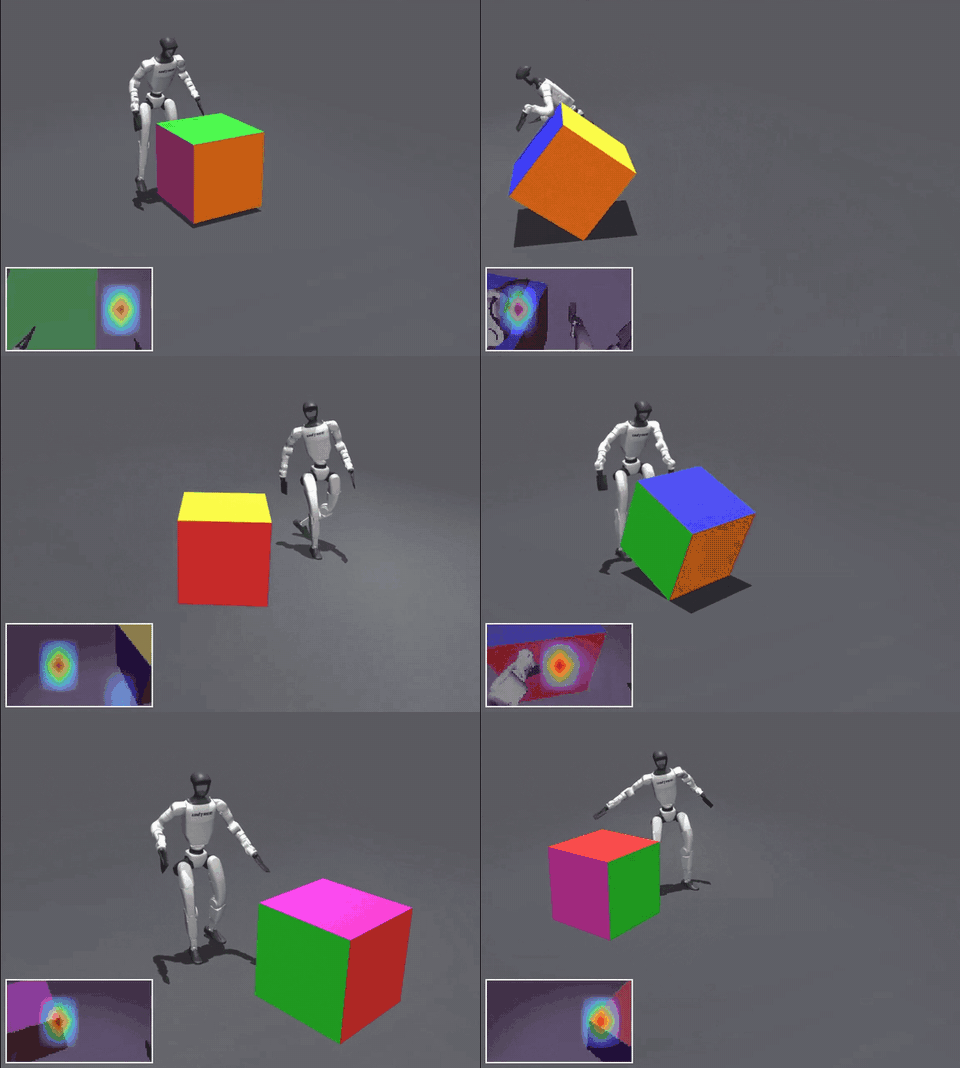
Humanoid motion tracking has scaled to general policies that reproduce diverse human motion, but the resulting behavior is in free-space: the tracker knows where the body should be, not how it should interact with the environment. Other work makes the object part of the objective, yet abstracts that interaction to contact or geometry, which leaves the demanding cases under-explored. We argue that force is a natural command channel between motion imitation and object interaction, one that specifies not just where to make contact but how hard. We present Ctrl-F, a hierarchical motion-force framework that augments motion tracking with an explicit force command, a 3-D force at each designated contact body such as a hand or a foot. The hierarchical framework comprises: (1) A unified motion-force controller tracks the reference motion while applying the commanded force to the world. (2) A high-level force planner that issues a force command online based on object state and proprioception observations. In simulation and on hardware, Ctrl-F completes loco-manipulation that demands large, sustained interaction force and adjusts its command online as the load changes, both out of reach of a force-blind tracker. On hardware, Ctrl-F demonstrates hand-based dragging, pushing, and lifting, as well as foot-based kicking, successfully manipulating boxes weighing up to 20kg in pushing and kicking tasks where the force-blind baseline fails, while adapting online to additional loads introduced mid-task.

cs.ROcs.LGmanipulationhumanoid

追踪学者:Koushil Sreenath;兴趣:humanoid robots and whole-body control

#32026-11-03追踪学者 · Peter Stone93

ELA: End-to-End Latent Action Policy Learning from Video Demonstrations

Cheng-Chun Hsu, Peter Stone

Robot imitation learning is limited by the scarcity of action-labeled data, while action-free demonstrations such as videos are abundant. Recent latent-action methods learn action-…

Robot imitation learning is limited by the scarcity of action-labeled data, while action-free demonstrations such as videos are abundant. Recent latent-action methods learn action-relevant representations from observation transitions, but they do not optimize latent actions for downstream control, leading to latent representations that are difficult for policies to model and difficult to accurately decode into continuous robot actions. This paper introduces ELA, an end-to-end framework for learning from video demonstrations via latent actions jointly optimized for policy learning and action decoding. ELA jointly trains a latent action model, latent action policy, and action decoder, enabling policies to leverage abundant video data with only a handful of action-labeled robot demonstrations. Experiments on simulated and real-world manipulation tasks show that ELA consistently outperforms prior latent action baselines. Moreover, it integrates seamlessly with existing imitation learning methods through lightweight 4M-parameter action decoders, requiring no changes to policy architectures or training objectives. Additional materials can be found on: https://end2end-latent-action.github.io/

cs.ROrobotmanipulationimitation learning

追踪学者:Peter Stone;兴趣:imitation learning and diffusion policies for robot control

#42026-11-0492

Dexterous Robotic Hands in the Foundation-Model Era: A Full-Stack Survey of Hardware, Data, Cross-Embodiment Transfer, Learning, and Evaluation

Ji Pei

Dexterous robotic hands are increasingly coupled to large-scale human data and foundation models, yet progress in hardware, representation learning and evaluation is often assessed…

Dexterous robotic hands are increasingly coupled to large-scale human data and foundation models, yet progress in hardware, representation learning and evaluation is often assessed separately. This survey reviews work from January 2024 to early November 2026, with earlier studies included to establish technical lineages. We organize the literature into five interdependent layers: hardware; data collection and curation; cross-embodiment transfer; learning and foundation models; and evaluation and applications. Human hand-object understanding and tactile sensing provide two cross-cutting perspectives. A system-level architecture, comparative tables and five case analyses connect design choices across these layers. We distinguish within-study experimental comparisons from heterogeneous corpus statistics, vendor specifications and company-reported results. Three conclusions emerge. First, the value of human data depends on kinematic, visual and contact alignment, not recording volume alone. Second, shared action representations and foundation policies do not remove embodiment-specific constraints on force, latency and contact. Third, task completion is insufficient to establish physical correctness or deployment readiness. Evidence remains limited for zero-shot transfer of contact-rich skills between morphologically different hands, long-duration reliability, and cross-sensor tactile generalization. We identify eleven open problems and propose reporting interfaces and controlled comparisons that can make full-stack progress more measurable. The review is a structured narrative synthesis rather than a pooled performance ranking or an exhaustive systematic review.

cs.ROcs.AIcs.CVcs.LGdexteroustactile

兴趣:dexterous hands and tactile sensing

#52026-11-0392

GRASP: Gradient-Guided Sampling for Contact-Rich Physics-Based Motion Retargeting

Yang Liu, Tong Wang, Yiming Bao, Heng Yang

We study physics-based retargeting of human demonstrations for robot learning: finding robot controls that reproduce reference motions under contact dynamics. We propose GRASP (Gra…

We study physics-based retargeting of human demonstrations for robot learning: finding robot controls that reproduce reference motions under contact dynamics. We propose GRASP (Gradient Recovery from Archived Samples for Proposals), which combines sampling-based exploration with gradient-guided refinement without requiring a differentiable simulator. GRASP-TO extends tempered sequential Monte Carlo by fitting local quadratic cost models to archived rollouts and using their gradients to guide Markov chain Monte Carlo rejuvenation. Metropolis-Hastings correction preserves the target distribution for each fixed proposal kernel, and a population analysis connects the recovered gradients to Gaussian smoothing. GRASP-MPC scales this optimizer to long demonstrations through warm-started receding-horizon planning. Experiments on dexterous hands and humanoids show accurate retargeting with a shared tracking objective and no task-specific contact rewards, including 92.8% success on 1352 bimanual OakInk2 demonstrations. The refined references improve PPO tracking in pen spinning and humanoid-object interaction. We also demonstrate dexterous manipulation and whole-body humanoid motion on real hardware.

cs.ROrobotmanipulationgrasphumanoiddexterous

兴趣:robot manipulation and grasping with learned policies

#62026-11-0492

ReactWorld: Structuring Interaction Responses for Embodied Video Generation

Hanwei Liu, Huijia Zhang, Hanzhang Wang, Guangyu Liu, Hanbei Zhan, Linjie Hu 等

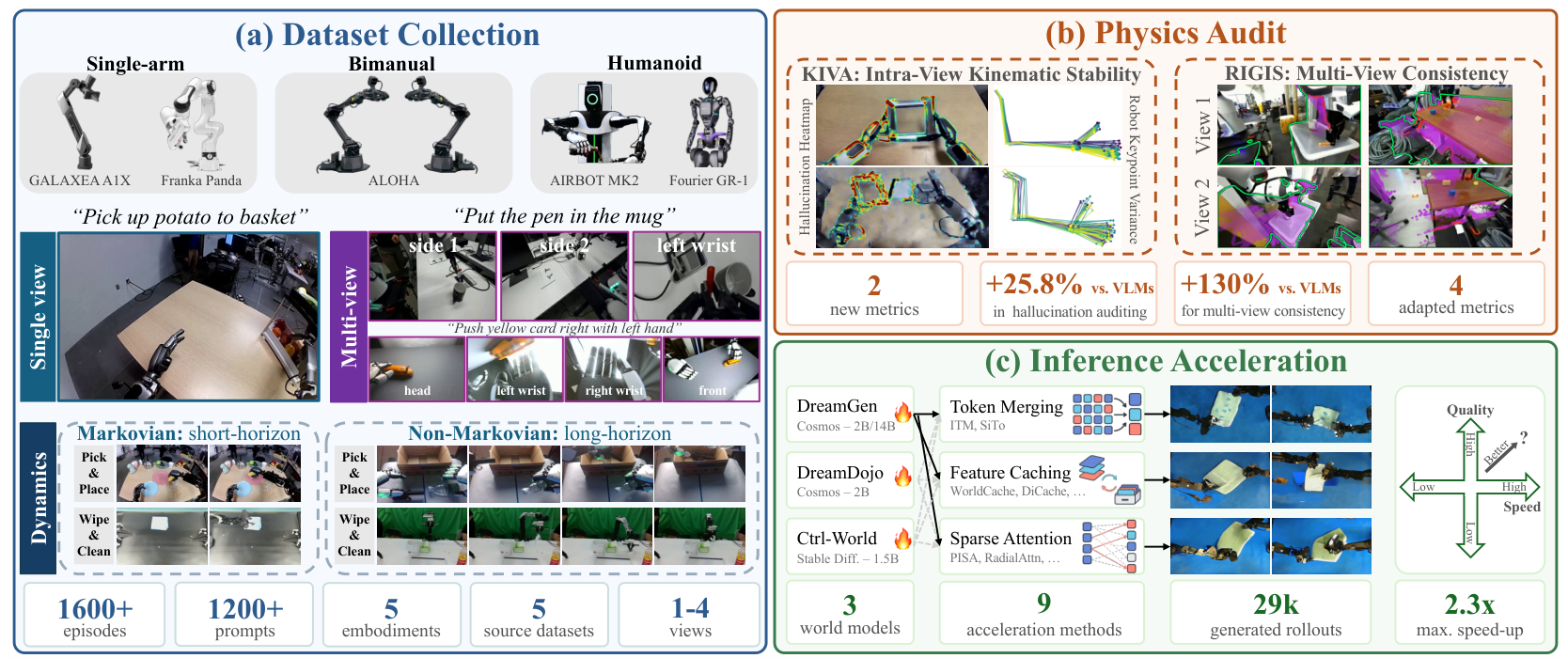
Embodied video world models predict scene changes caused by robot actions, yet generated object responses may remain inconsistent with task intent and contact dynamics. Critical re…

Embodied video world models predict scene changes caused by robot actions, yet generated object responses may remain inconsistent with task intent and contact dynamics. Critical responses in embodied scenes often concentrate in local regions and specific time intervals. Inspired by chain-of-thought reasoning, we introduce ReactWorld, an embodied video generation model guided by structured interaction anticipation. In the generation backbone's feature space, an interaction response field predictor anticipates how the interaction will unfold, explicitly describing participant roles, future motion response intensity, and local motion changes. A response feedback adapter forms increments to object features from the difference between the object branch's outputs with predicted and zeroed local dynamics inputs. It also converts predicted displacements into positional biases for temporal attention. These two mechanisms guide object feature updates and information retrieval across frames, respectively. Through interaction anticipation and generative feedback, ReactWorld achieves an average score of 77.51 on RBench, outperforming PhysisForcing by 3.29 points with improvements in all nine categories. On EZS-Bench, it achieves a Domain score of 86.98 and an average score of 81.87.

cs.CVcs.ROrobotembodied

兴趣:world models and video prediction for embodied agents

#72026-11-0492

From Pixels to Actions - Towards Native Vision-Language-Action Policies

Weichen Fan, Haiwen Diao, Penghao Wu, Siyuan Hu, Ziqi Huang, Tianqi Liu 等

Vision-language-action models are typically built on a simple premise: perception is first compressed by visual encoders, and action reasoning begins only afterwards. Yet manipulat…

Vision-language-action models are typically built on a simple premise: perception is first compressed by visual encoders, and action reasoning begins only afterwards. Yet manipulation often hinges on precisely the visual signals most vulnerable to this abstraction, e.g., local geometry, boundaries, depth, and subtle state changes. This raises a fundamental question: should action policies inherit a fixed visual endpoint, or directly access evolving visual computation? We introduce NEO-VLA, a structurally encoder-free vision-language-action framework. Images are tokenized by lightweight patch convolutional layers and evolve jointly with language throughout the backbone, allowing a flow-matching action expert to draw from instruction-conditioned visual representations at different depths. This simple change reveals a consistent pattern. Native architectures outperform encoder-based counterparts under controlled comparisons; full fine-tuning reduces but does not erase the gap, and additional scale alone cannot recover it. More strikingly, layer-wise probing shows that the action-critical signals often peak well before the final visual representation. Across diverse manipulation settings and distribution shifts, NEO-VLA consequently achieves stronger and more robust control. Together, these results suggest that embodied control benefits from access to visual representations across the computational hierarchy, rather than a fixed encoder output.

cs.CVmanipulationVLAvision-language-actionembodied

兴趣:vision-language-action (VLA) models and foundation models for robots

#82026-11-0491

Learning Object-Centric Motion Priors from Human for Robotic Dexterous Manipulation

Zhengdong Hong, Guofeng Zhang

Manipulating diverse objects with multi-fingered dexterous hands is challenging due to the high dimensionality and complex dynamics. Human-Object Interaction (HOI) datasets provide…

Manipulating diverse objects with multi-fingered dexterous hands is challenging due to the high dimensionality and complex dynamics. Human-Object Interaction (HOI) datasets provide rich knowledge about task information and embodied interactions. Instead of solely imitating the human demonstrations, our method learns to holistically predict future hand-object states by leveraging these datasets. The predicted future states of the object can serve as a general-purpose reward term for reinforcement learning, reducing reliance on task-specific reward engineering and enhancing generalization across tasks. We conduct extensive experiments on three manipulation tasks in simulation and the real world. Our approach outperforms existing SOTA methods in both success rate and generalizability on novel objects. Furthermore, we validate the cross-embodiment compatibility of our methods by successfully deploying the skills on different robot hands.

cs.ROrobotmanipulationembodieddexterous

兴趣:robot manipulation and grasping with learned policies

#92026-11-0491

H^2MARL: Hierarchical Heterogeneous Multi-agent Reinforcement Learning for Humanoid Robot Control

Xuemin Hu, Kaixin Li, Qingqing Xia, Yuxin Wang, Wei Xie, Bo Tang 等

Coordinated whole-body control of humanoid robots remains challenging due to high-dimensional coupled dynamics and substantial physical heterogeneity across joint degrees of freedo…

Coordinated whole-body control of humanoid robots remains challenging due to high-dimensional coupled dynamics and substantial physical heterogeneity across joint degrees of freedom (JDoFs). Existing multi-agent reinforcement learning methods either employ coarse agent partitions or directly apply generic heterogeneous-agent algorithms, while hierarchical controllers commonly optimize high-level planning and low-level execution independently, leading to uncoordinated motion. In this paper, we propose H^2MARL, a hierarchical heterogeneous multi-agent reinforcement learning framework with two key mechanisms. We first formulate humanoid whole-body control using a JDoF-level physical-heterogeneity-aware policy factorization, where each torque-actuated JDoF is conditioned on an explicit descriptor of its actuation, kinematic, and dynamic properties. Moreover, we develop a closed-loop policy-executor co-optimization mechanism that jointly adapts the high-level pose planner and the low-level joint executor using shared interaction trajectories, thereby reducing the distribution mismatch between planning and execution. Extensive experiments in MuJoCo and Isaac Gym demonstrate that H^2MARL consistently improves locomotion stability, gait coordination, and motion quality over homogeneous, coarse-grained, and independently optimized alternatives.

cs.ROrobothumanoidlocomotion

兴趣:humanoid robots and whole-body control

#102026-11-0490

Open-HumanScale: An Open Recipe for Scaling Human and Robot Experience for Embodied Foundation Models

Juncheng Ma, Jiaxin Li, Jiankai Tu, Bo Liang, Guodong Lv, Yufan Deng 等

Egocentric human video offers a scalable source of manipulation priors for robot learning, yet translating raw data scale into generalizable robot policies demands rigorous data cu…

Egocentric human video offers a scalable source of manipulation priors for robot learning, yet translating raw data scale into generalizable robot policies demands rigorous data curation and training recipes. We introduce Open-HumanScale, the first fully open recipe for scaling egocentric pretraining to 50,000 hours, anchored by Open-HumanScale-50K---a curated egocentric video corpus densely annotated with hand motion and natural language. Leveraging this corpus, we systematically investigate pure human pretraining via closed-loop simulation evaluations and uncover an empirical log-linear scaling law linking pretraining data hours to downstream robot success rates. Grounded in these findings, we develop HumanWAM-Vanilla, a world--action model pretrained exclusively on 50k hours of egocentric human video. Upon robot post-training, HumanWAM-Vanilla reaches 92.08% success on RoboTwin 2.0 Clean2Clean and 68.88% on Clean2Random, alongside a 14.17% mean success rate and a 19.00 mean progress score on RoboDojo. To push the capability frontier further, we explore joint human--robot pretraining with HumanWAM-Goal, a visual-goal-conditioned world--action model. Hybrid data scaling unlocks broad zero-shot generalization across both simulation and physical benchmarks, propelling post-trained RoboTwin 2.0 performance to new state-of-the-art levels: 92.70% on Clean2Clean and a substantial leap to 84.60% on Clean2Random. On physical robots, HumanWAM-Goal further exhibits emergent embodied in-context learning, dynamically adapting its manipulation behavior to unseen visual goals without parameter updates. To support reproducible scaling research in embodied AI, we open-source the Open-HumanScale-50K corpus, data curation and pretraining pipelines, alongside the pretrained and post-trained HumanWAM checkpoints, inference code, and simulation evaluation suites.

cs.CVrobotmanipulationembodied

兴趣:world models and video prediction for embodied agents

#112026-11-0387

Correct Robots Before They Make Mistakes: Proactive Human-in-the-Loop Intervention via Preference Learning

Xinkai Jiang, Jing Jiang, Hongyi Zhou, Pankhuri Vanjani, Ahmad Baki, Jakub Suliga 等

This paper presents Proactive Human-in-the-Loop (PHIL), a framework for proactive policy correction and preference-based post-training. PHIL enables operators to preview policy-pre…

This paper presents Proactive Human-in-the-Loop (PHIL), a framework for proactive policy correction and preference-based post-training. PHIL enables operators to preview policy-predicted future motion and intervene before anticipated undesirable actions. During takeover, PHIL continues querying the policy and displaying its predicted trajectories in the physical workspace through an extended reality (XR) interface. PHIL pairs rejected policy predictions with corrective action chunks subsequently executed from the same physical state over the same horizon, and preference-based post-training encourages the policy to favor these corrections. This paper evaluates PHIL on four real-world manipulation tasks using a diffusion policy and a pretrained vision-language-action policy. With five correction episodes per condition, PHIL increases mean success rates across the evaluated tasks and demonstration budgets from 44.0% to 70.3% for the diffusion policy and from 57.8% to 76.9% for X-VLA, compared with HG-DAgger. Separately, policies trained with proactive corrections show fewer unnecessary recovery behaviors in successful episodes. Project page: https://intuitive-robots.github.io/PHIL-page/.

cs.ROmanipulationVLAvision-language-actiondiffusion policy

兴趣:imitation learning and diffusion policies for robot control

#122026-11-0487

Robocasa-Mem: Benchmarking Environment and Process Memory in Long-Horizon Mobile Manipulation

Sihang Chen, Chen Ye, Wei Chen, Xiaohan Lei, Zhipeng Tang, Sha Zhang 等

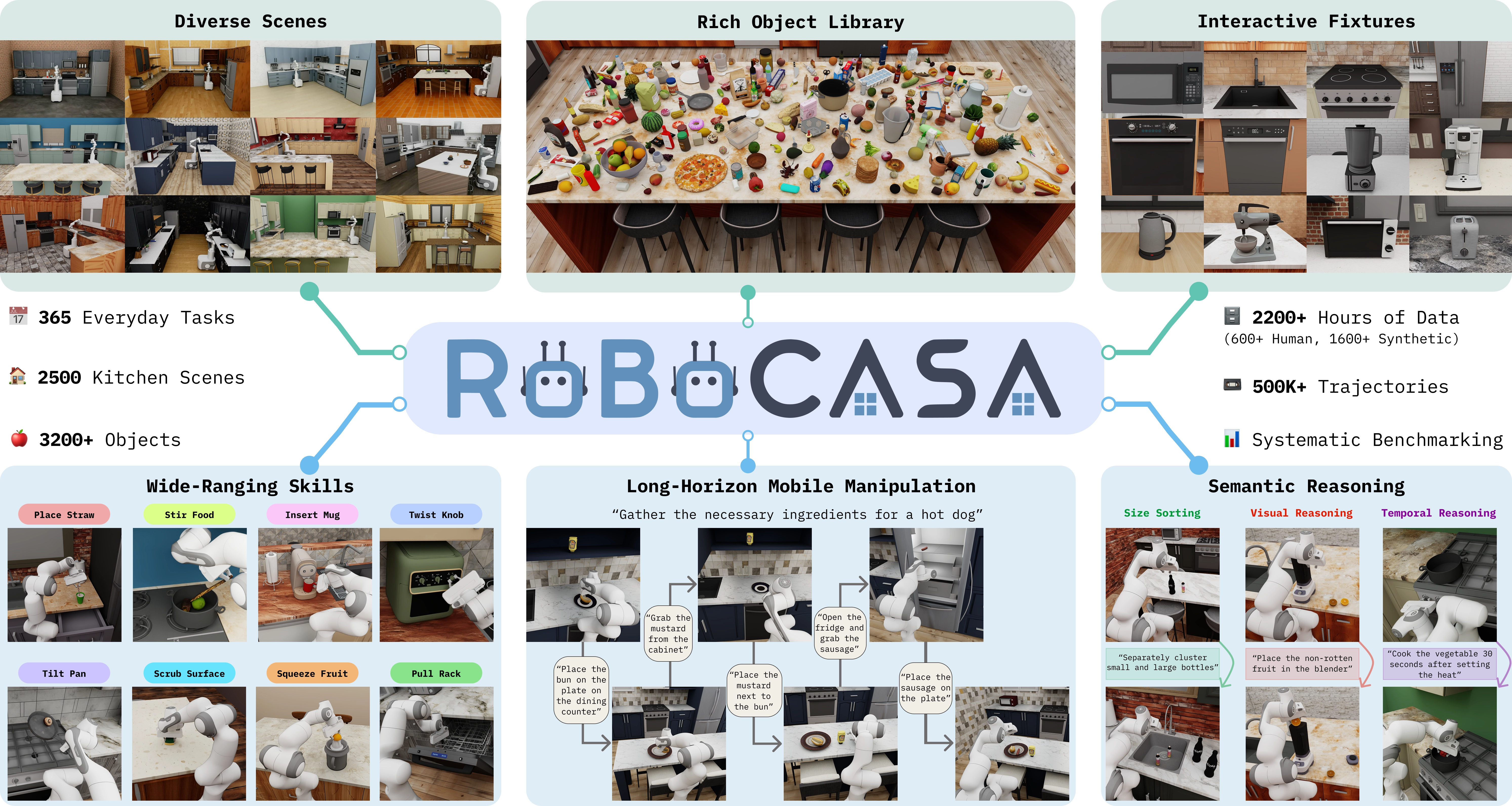
In the real world, mobile manipulation robots must perform complex object interactions and make multi-step decisions, often relying on task-relevant information that is no longer o…

In the real world, mobile manipulation robots must perform complex object interactions and make multi-step decisions, often relying on task-relevant information that is no longer observable. However, existing benchmarks provide limited evaluation of such memory-dependent decision-making in mobile manipulation. To address this gap, we introduce RoboCasa-Mem, a new benchmark comprising nine mobile manipulation tasks that require agents to use interaction history at key decision points. Specifically, the tasks are grouped into two categories of memory: One is environment memory, which captures spatial locations, object attributes, and object relationships. The other is process memory, which captures single-task progress and multi-task scheduling. Particularly, we introduce Behavior-Conditioned Evaluation. For tasks with multiple valid execution paths, instead of fixing a single target or trajectory, the evaluator derives later task constraints from the robot's earlier actions. This allows us to evaluate whether later behavior is consistent with the robot's own interaction history while reducing shortcuts based on fixed target assignments. We provide 1,800 successful demonstrations for policy training. We also develop a baseline on our benchmark, namely Hierarchical Memory-Augmented Policy(HMAP). Its high-level planner uses structured entity and process memories to generate subtasks. Its low-level VLA controller uses subgoal-conditioned queries to incorporate VGGT-Omega geometry into action generation. Together, RoboCasa-Mem and HMAP baseline support systematic evaluation of memory-dependent behavior and the development of memory-aware mobile manipulation policies.

cs.ROrobotmanipulationVLA

兴趣:robot manipulation and grasping with learned policies

#132026-11-0486

Which Physical Tactile Cues Matter for Contact-Rich Imitation Learning? A Controlled Real-Robot Study

Xuhao Qin, Xiyan Huang, Haoyu Dong, Xi Zhang, Chenxi Xiao

Vision-based tactile sensors capture multiple aspects of physical interaction within a single image stream, including contact appearance, geometry, indentation depth, and tangentia…

Vision-based tactile sensors capture multiple aspects of physical interaction within a single image stream, including contact appearance, geometry, indentation depth, and tangential deformation. However, existing visuo-tactile policies often directly process tactile observations as images, making it difficult to determine which physical cues contribute to policy learning. This paper presents a controlled real-robot study that compares physically interpretable tactile signals using the LeRobot platform, enhanced with our visuo-tactile perception system. From the same tactile stream, we derive tactile RGB images, normal/depth maps, and marker-flow fields, representing contact appearance, geometry, and tangential deformation, respectively. Using identical task demonstrations and the same policy backbone, we evaluate the individual and combined contributions of these tactile cues. We further compare tactile encoders and visuo-tactile fusion strategies. Evaluation across 720 real-robot trials yields four key findings: (1) tactile perception substantially improves the overall success rate from 57.8% to 78.9%, although its contribution varies across task stages; (2) marker flow is the most effective individual cue, achieving a success rate of 74.4% and playing a particularly important role in regulating established contact; (3) cue-factorized encoding consistently improves performance, highlighting that different physical cues require tailored processing techniques; and (4) although the effectiveness of tactile fusion is task-dependent, cross-attention offers a lightweight solution with performance comparable to that of pretrained tactile encoders.

cs.ROrobotimitation learningtactile

兴趣:dexterous hands and tactile sensing

#142026-11-0486

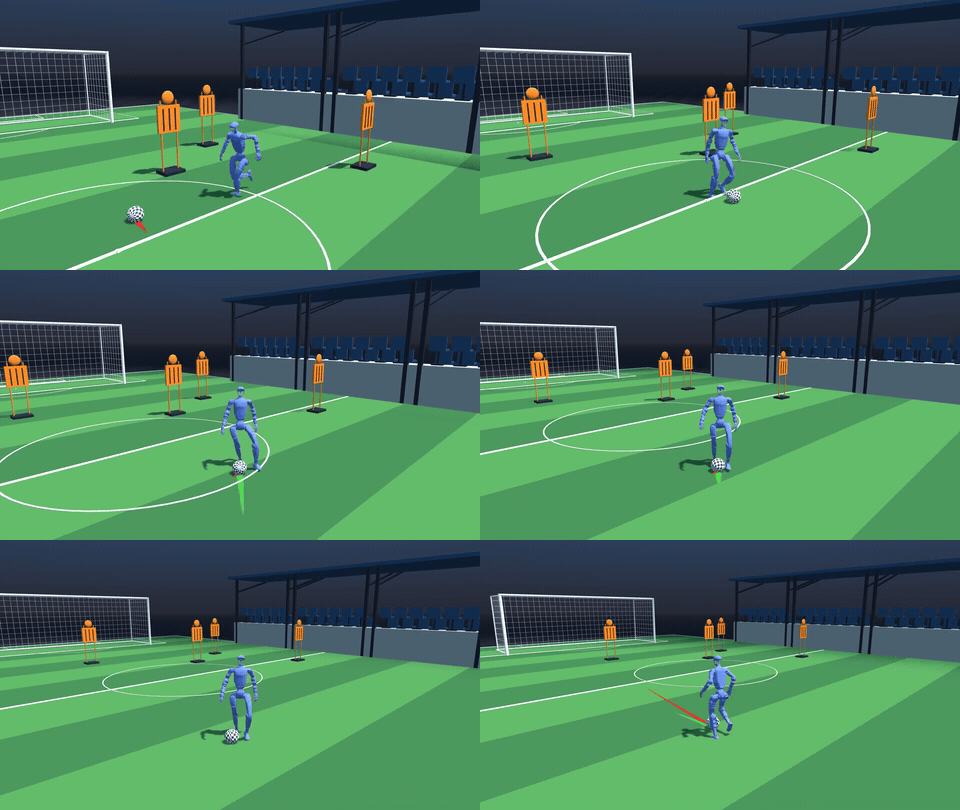
Playing Soccer Like Humans Do: Learning Versatile and Agile Humanoid Soccer via Latent Motion Priors

Haoyu Shao, Yunshen Wang, Jingze Zhang, Shaohang Zhu, Yong-Lu Li, Tianzhu Zhang 等

Humanoid soccer requires a robot to seamlessly combine agile locomotion, ball manipulation, and impact-rich contact dynamics across a continuous, dynamic behavioral spectrum. Yet e…

Humanoid soccer requires a robot to seamlessly combine agile locomotion, ball manipulation, and impact-rich contact dynamics across a continuous, dynamic behavioral spectrum. Yet existing approaches either cover only a limited set of skills, or forego motion priors entirely and produce unnatural behaviors, leaving the combination of a unified skill set and human-like motion quality unaddressed. We present soccerbot, a hierarchical reinforcement learning framework that resolves both limitations through a structured latent motion prior distilled from large-scale human soccer motion capture data. By constraining policy learning within this dynamically plausible motion manifold, a single skill-conditioned policy naturally learns to perform moving, dribbling, trapping, and kicking in a unified formulation, while inherently producing human-like motion and fluid transitions during commanded skill switching. Augmented by robustness-oriented simulation design, soccerbot transfers zero-shot to the Unitree G1 humanoid robot, demonstrating agile, natural, and robust execution of the full soccer skill repertoire under real-world conditions.

cs.ROrobotmanipulationhumanoidlocomotion

兴趣:reinforcement learning for legged locomotion and sim-to-real transfer

#152026-11-0484

Perceptive Humanoid Motion from Simulation

Siyuan Hu, Abulikemu Abuduweili, Yue Meng, Shipeng Liu, Quentin Leboutet, Chen Chen 等

Humanoid robots have the potential to automate a wide range of physical tasks. Progress toward generalist humanoid autonomy, however, remains constrained by a data bottleneck: mapp…

Humanoid robots have the potential to automate a wide range of physical tasks. Progress toward generalist humanoid autonomy, however, remains constrained by a data bottleneck: mapping pixels and free-form language to low-level joint commands requires paired supervision, and no corpus of such data exists at sufficiently large scale. Some approaches rely on human teleoperation and wearable capture devices, which require at least an hour of human time to produce an hour of data. We present HALO, a humanoid autonomy system powered by a pipeline that synthesizes vision-language-motion data across a thousand procedurally generated homes. The corpus scales with compute rather than human labor. HALO acquires a repertoire of physical skills, including sitting on chairs, navigating to named objects, stepping sideways through half-open doors, crouching and crawling beneath tables, and pushing boxes. It orchestrates these skills to solve composite, long-horizon tasks. Without ever seeing a real home during training, HALO transfers zero-shot to the physical world, achieving a 91% success rate across 360 trials in six unmapped real-world environments. See https://apple-aiml-research.github.io/ml-halo/ for code and videos.

cs.ROcs.AIcs.CVcs.LGhumanoid

兴趣:humanoid robots and whole-body control

#162026-11-0384

Contact-Implicit Whole-Body Trajectory Optimization for Dynamic Humanoid Locomotion on Parameterizable Uneven Terrain

Roberto Mauceri, Stefano Dafarra, Giulio Romualdi, Marco Gabiccini, Daniele Pucci

This letter presents a trajectory planner for humanoid robots to perform dynamic motions on complex, parameterizable terrains using a contact-implicit whole-body optimization frame…

This letter presents a trajectory planner for humanoid robots to perform dynamic motions on complex, parameterizable terrains using a contact-implicit whole-body optimization framework. The planner generates feasible movements without predefined contact sequences, considering the robot's full dynamics and kinematics. To plan bipedal locomotion on steps, ramps, and other terrains, we propose a mathematical model to approximate ground geometry with a smooth surface. The rigid interaction between the robot and the ground is modeled via novel contact constraints, extending the domain of applicability from flat and horizontal surfaces to any arbitrary smooth surface. Effectiveness is demonstrated using nonlinear programming to plan motions on various terrain topologies. We also explore dynamic trajectory generation by embedding high-level requirements in the cost function and the initial guess. Preliminary feasibility tests were conducted over non-coplanar terrains, both in simulation and on the real robot ErgoCub.

cs.ROrobothumanoidlocomotion

兴趣:humanoid robots and whole-body control

#172026-11-04追踪学者 · Yuke Zhu追踪学者 · Ken Goldberg83

VABAR: A Variational Automation Benchmark for Agentic Robotics

Shuangyu Xie, Kaiyuan Chen, Uksang Yoo, Xinyue Zhu, Meadow Shen, Jaimyn Drake 等

For robots to operate reliably in commercial and industrial applications, they must persistently perform specific tasks with known variations in object shape and pose. We call this…

For robots to operate reliably in commercial and industrial applications, they must persistently perform specific tasks with known variations in object shape and pose. We call this Variational Automation (VA) to differentiate these settings from fixed automation. Inspired by recent papers on Agentic Robotics, where pretrained LLM and VLM coding agents combine interpretable robot programming with the open-world adaptability of model free policies, we propose a general set of agentic robotics benchmark design criteria that includes accessibility, repeatability, diversity, relevance to agentic robotics and practical applications, physical realizability, resistance to benchmark saturation, and computational efficiency. We instantiate these principles in six manipulation task classes spanning industrial, medical, and infrastructure applications: tool sorting, tool hanging, gear meshing, syringe packing, cable insertion, and cable routing. We introduce the Variational Automation Benchmark for Agentic Robotics (VABAR), an open, easily replicable, simulation-based manipulation benchmark to systematically evaluating agentic robotics systems. Built fully on open-source tools, VABAR features detailed implementations using the Newton physics engine, standardized task variations, difficulty tiers, success metrics, and a library of 33 generalizable skills with human-authored programmatic reference solutions. We provide initial baseline evaluations using an open agentic manipulation harness, Graph-as-Policy (GaP), and Isaac Lab Arena.

cs.ROrobotmanipulation

追踪学者:Yuke Zhu、Ken Goldberg;兴趣:robot manipulation and grasping with learned policies

#182026-11-03追踪学者 · Animesh Garg83

MESA: An Evaluation Framework for Compositional, Semantic, and Spatial Generalization in Robotics

Albert Wilcox, Frank Chang, Nhi Nguyen, Aishani Chakraborty, Jeremy A. Collins, Vaibhav Saxena 等

Despite growing interest in foundation models for robotic manipulation, systematic evaluation of their capabilities remains elusive. Existing benchmarks are either narrow and satur…

Despite growing interest in foundation models for robotic manipulation, systematic evaluation of their capabilities remains elusive. Existing benchmarks are either narrow and saturated, offering little signal on SOTA methods, broadly scoped, providing diversity at the cost of controlled experimentation, or require training on large, messy open-source datasets. We introduce MESA, an evaluation framework designed for precise, reproducible measurement of language-conditioned policy generalization. MESA provides five evaluation suites that isolate in-distribution performance and four distinct axes of generalization: spatial configuration, object instance, object category, and subtask composition, enabling researchers to diagnose where and why policies fail, not just whether they fail. To populate these suites at scale, we develop MESA-Gen, a pipeline for task and demonstration generation built by improving MimicGen. We instantiate the framework on two platforms and release both: the single-arm MESA suite, and BiMESA, the first large-scale benchmark for bimanual generalization. We evaluate seven baseline methods spanning diffusion policies, VLM-based approaches, and pretrained VLAs, finding that the strongest model achieves only 52% on MESA and 49% on BiMESA, providing meaningful signal while leaving ample room for progress. MESA rankings are broadly consistent with RoboArena scores, suggesting that MESA captures method-level differences relevant beyond simulation. Project website: https://pairlab.github.io/MESA.

cs.ROcs.AImanipulation

追踪学者:Animesh Garg;兴趣:large language models for robot task planning and reasoning

#192026-11-0479

PyRUA-REAL: Robot Exploration and Adaptive Learning through RSI in the Real World

Qiang Wang, Jianxin Bi, Shulong Jiang, Ruiyang Si, Wenbo Huang, Kaiqi Chen 等

Coding agents powered by models such as GPT-6-Astra connect spatial reasoning with executable robot behavior, raising the question of how such agents can produce lasting improvemen…

Coding agents powered by models such as GPT-6-Astra connect spatial reasoning with executable robot behavior, raising the question of how such agents can produce lasting improvements in robot capabilities from physical interaction. In this work, we study embodied recursive self-improvement (RSI) through real-world exploration, code refinement, and deployment using PyRUA-REAL, a framework in which coding agents retain interaction experience as persistent memory and reusable executable skills that inform subsequent exploration and improvement. Our empirical study places physical manipulation at the center of the improvement process, examining how agents collaborate, what kinds of execution feedback support effective code refinement, and how task specifications and previously acquired skills influence robustness and task transfer. We further investigate the efficiency and capability of the resulting programs when deployed without involving an online agent for decision-making. Across eight real-world tasks, PyRUA-REAL achieves an average success rate of 91.1%. In complementary evaluation on 42 tasks from the RoboDojo benchmark, it achieves an average success rate of 84.4%. This study provides empirical guidance for turning physical exploration into reusable robot skills that support continued improvement and robust, efficient deployment.

cs.ROrobotmanipulationembodied

兴趣:imitation learning and diffusion policies for robot control

#202026-11-0479

Reinforcement Learning Enables Scaling Generalist Robot Policy Improvement

Michal Korniak, Marco Bagatella, Ralf Römer, Michal Nauman, Yarden As, Pranav Vignesh 等

The introduction of generalist robot policies has enabled a single, large model to learn to perform a variety of tasks from a vast pre-training corpus. While these models often exh…

The introduction of generalist robot policies has enabled a single, large model to learn to perform a variety of tasks from a vast pre-training corpus. While these models often exhibit powerful zero-shot generalization capabilities, they typically require an adaptation phase to achieve sufficient performance in deployment. Iterated self-improvement via reinforcement learning (RL) has demonstrated promise in enabling this adaptation, yet such approaches have been largely explored in single-task settings - where the goal is to simply improve on a narrow deployment task - which lies in stark contrast to the multi-task capabilities of the base policy. In this work we ask whether generalist robot policies are capable of multi-task, generalist improvement in deployment - targeting many diverse tasks simultaneously - and what algorithmic recipe enables this. To answer this question, we first develop a set of structured evaluations to test generalist improvement capabilities, and systematically evaluate algorithmic and practical design choices regarding value estimation, policy extraction and resource allocation. We show that not only can generalist policies be improved online across diverse tasks, but that the right recipe can enable generalization and increase performance on tasks not considered during online training. We characterize when this generalization occurs and show that both the training task distribution and the use of value-based RL are critical. To the best of our knowledge, this is among the first evidence for online generalist improvement for robot foundation models.

cs.LGcs.ROrobot

兴趣:imitation learning and diffusion policies for robot control

#212026-11-0479

Where Is VLA Inference Time Spent? Bottlenecks and Optimization Interactions Across GPUs

Muhammad Danish Waseem, Ahmed Ali-Eldin Hassan

Vision-language-action (VLA) models map camera observations and language instructions to robot actions. However, their large backbones and repeated action generation can make infer…

Vision-language-action (VLA) models map camera observations and language instructions to robot actions. However, their large backbones and repeated action generation can make inference take longer than the robot's real-time requirements for its next action. To reduce the load of VLA computations, researchers have proposed multiple optimization approaches, including quantization and pruning. These optimizations can be combined with other general optimizations such as better kernel compilation or using CUDA graphs instead of the eager mode. However, most of these optimization results are usually reported on a single GPU type, typically for a few VLA models, with no analysis of what the real bottlenecks are for a model on a particular hardware or how these optimizations would generalize beyond the reported results. In this paper, we provide a comprehensive measurement study of seven families of inference optimization methods, from CUDA graphs and compilation to token pruning and quantization, on seven state-of-the-art VLAs evaluated on four GPU families ranging from a datacenter H100 to an embedded Jetson Thor. We analyse how CPU launch overhead, memory bandwidth, and kernel efficiency jointly shape optimization gains, and how applying one method changes the benefit of another. From this analysis, we derive VLA-Triage, guidelines for stacking optimizations under latency budgets. The guidelines identify which stages can provide the required savings and which combinations need testing in the deployed execution mode.

cs.ROrobotVLAvision-language-action

兴趣:vision-language-action (VLA) models and foundation models for robots

#222026-11-0477

Zero-Shot Coordination among LLM Agents

Adrian Hayler, Shashank Reddy Chirra, Andrei Lupu, Johannes Forkel, Bidipta Sarkar, Siheng Feng 等

We study zero-shot coordination (ZSC), where independently developed agents must coordinate at test time. While ZSC has been well studied in the RL literature, far less is known ab…

We study zero-shot coordination (ZSC), where independently developed agents must coordinate at test time. While ZSC has been well studied in the RL literature, far less is known about the performance of LLM agents despite their increasing deployment in such settings. Existing work on LLM coordination often relies on specialised scaffolding that independently developed agents are unlikely to share in practice. Moreover, evaluations on complex environments (e.g., Hanabi) make it difficult to pinpoint the sources of coordination failure. In contrast, we focus on simple, general-purpose scaffolds in minimal environments designed to isolate specific coordination challenges. Our results show that even in these controlled settings, frontier LLM agents struggle to coordinate, largely due to limited understanding of the coordination problem and weak reasoning about their partner's beliefs. While LLMs introduce semantic information as an additional axis for coordination, they nonetheless fail to exploit this structure effectively. Towards this, we propose Coordination-friendly definitions (CFDs) as a principled approach for enabling robust coordination among LLM agents. Finally, we show that CFDs can be discovered automatically, removing the need for manual engineering. Code is available at https://github.com/ahayler/zsc-llm-agents.

兴趣:multi-agent systems and LLM agents

#232026-11-0476

UniCompress: From Multi-LoRA Experts to One Compact Model for Edge Intelligence

Mingkang Liu, Peipei Jiao, Weiming Meng, Tianyuan Liu, Lichen Pang, Junyan Li

Embodied and edge systems increasingly rely on vision-language models (VLMs) to support heterogeneous skills, yet deploying a separate task adapter for each skill while retaining a…

Embodied and edge systems increasingly rely on vision-language models (VLMs) to support heterogeneous skills, yet deploying a separate task adapter for each skill while retaining a high-precision backbone creates substantial memory and management costs. We present UniCompress, a deployment-oriented framework that converts multi-task expertise into one compact, adapter-free model. Starting from a consolidated BF16 Qwen3-VL-4B teacher, UniCompress constructs an asymmetric INT2 student using GPTQ initialization and teacher-guided quantization recovery. The approach jointly quantizes and recovers the projection weights in the vision encoder and language backbone, enabling aggressive compression of the complete vision-language model while preserving its multi-task behavior. We evaluate UniCompress on four heterogeneous embodied tasks: posture recognition, household-safety understanding, multimodal dialogue routing, and mobile-GUI action prediction. UniCompress reduces the approximate weight storage from 8.9 GB in BF16 to 2.1 GB in INT2, corresponding to a reduction of approximately 76%. It improves the INT2 macro task score by 34.3 percentage points over GPTQ-INT2 while remaining within 0.9 points of the consolidated BF16 teacher. These results demonstrate the potential of teacher-guided joint vision-language INT2 recovery for deploying a single multi-skill VLM on resource-constrained embodied platforms.

cs.AIembodied

兴趣:vision-language-action (VLA) models and foundation models for robots
#242026-11-0476

TwinBridge: Digital Twin-Driven Policy and Reward Transfer for Real-World Reinforcement Learning in Laboratory Robotics

Shu'ang Sun, Yibo Qiu, Haoliang Ye, Zan Huang, Ao Tian, Kan Ding 等

Online reinforcement learning offers an effective approach to precise laboratory manipulation, yet costly real-world demonstrations and limited access to dense process rewards hind…

Online reinforcement learning offers an effective approach to precise laboratory manipulation, yet costly real-world demonstrations and limited access to dense process rewards hinder its practical application. We present TwinBridge, a digital twin-driven framework that supplies policy initialization and dense visual rewards for real-world online learning. We construct digital twins by combining 3D Gaussian splatting with physics simulation. Here, simulator states provide task events and geometric progress under physical prerequisites and ordering constraints, yielding rewards for policy pretraining with simulated demonstrations and reinforcement learning. We distill this supervision into a visual reward model. During real-world interaction, its predictions are combined with execution history to compute dense rewards for human-in-the-loop policy refinement. Across five real-world laboratory tasks, TwinBridge achieves a final mean autonomous success rate of 98% with at most 25 minutes of real-world interaction per task. Experiments show that dense rewards improve interaction efficiency over sparse rewards, and simulation-based policy initialization further accelerates learning.

cs.ROmanipulation

兴趣:imitation learning and diffusion policies for robot control

#252026-11-0475

Online Adaptation to Latent Physical Properties for Learning from Demonstration

Kotaro Kajitsuka, Masaki Murooka, Fumio Kanehiro

Manipulating visually identical objects with different physical properties requires adapting actions based on information acquired through interaction. We address the problem of le…

Manipulating visually identical objects with different physical properties requires adapting actions based on information acquired through interaction. We address the problem of learning from demonstrations how to adapt manipulation actions, such as regrasping and changing contact locations, based on physical-property information acquired during interaction. To this end, we propose a learning-from-demonstration method that learns latent representations of physical properties needed to predict object responses and conditions a policy on online estimates of these representations. A dynamics model and object-specific latent representations are jointly learned from demonstrations that include behaviors adapting to the objects' physical properties, and the learned representations are then used to condition an imitation policy. During execution, the dynamics model and policy weights remain fixed, while the latent representation is updated based on the discrepancy between predicted and actual observations, allowing interaction with the object to inform action generation. Real-world and simulation experiments with objects whose centers of mass differ suggest that online adaptation through latent representations of physical properties can improve task success rates. However, in simulation, success rates on center-of-mass locations absent from the demonstrations remained around 30%, indicating limited adaptation to unseen physical properties. Project page: https://isri-aist.github.io/latent-dynamics-project-page/

cs.ROmanipulation

兴趣:imitation learning and diffusion policies for robot control

#262026-11-0474

TouchéWorld tech report : Towards Online Unified Camera--Hand Exploration in Generative Worlds

Jiaao Yu, Yanjian Zhang, Haoyang Jiang, Guillaume Wisniewski, Nadi Tomeh, Shijie Jia

Recent video world models allow users to explore generated environments through camera navigation. Continuous hand motion provides a fine-grained action channel for interacting wit…

Recent video world models allow users to explore generated environments through camera navigation. Continuous hand motion provides a fine-grained action channel for interacting with the people and objects encountered during exploration. We present TouchéWorld, a framework that integrates gesture-driven interaction into a camera-controlled video world model. Given an initial image and a scene-description prompt, the model generates video conditioned on temporally aligned camera and hand controls. We construct joint camera--hand training data from heterogeneous egocentric videos through annotation completion, consistency-based filtering, and temporal alignment. Building on a pretrained camera-controlled world model, we combine spatial hand-skeleton conditioning with numerical hand-motion features through parameter-efficient adaptation. Causal adaptation and few-step distillation support chunk-level online generation, allowing users to update their controls based on generated visual feedback. We further introduce TouchéBench to evaluate hand-motion following, camera--hand coordination, online interaction, and object response. Together, these components establish a framework for studying continuous exploration and hand-driven interaction within generative worlds.

cs.CVcs.AIworld model

兴趣:world models and video prediction for embodied agents

#272026-11-0473

Beyond Terminal Constraints: Reliable Robot Control with Learned Safe Sets

Gianni Lunardi, Elias Fontanari, Matteo Saveriano, Andrea Del Prete

Ensuring safety in advanced robot control methods such as Model Predictive Control (MPC) and Reinforcement Learning remains an open challenge. A common approach relies on control-i…

Ensuring safety in advanced robot control methods such as Model Predictive Control (MPC) and Reinforcement Learning remains an open challenge. A common approach relies on control-invariant sets, yet their exact computation for nonlinear systems is generally intractable, and numerical approximations compromise theoretical guarantees. In this work, we show that safety does not need to rely exclusively on control invariance. We introduce novel classes of safe sets, each broader than classical control-invariant sets, and analyze corresponding MPC schemes that guarantee recursive feasibility by constraining different nodes of the prediction horizon rather than only the terminal state. Furthermore, when the safe set is an inner approximation of a suitable control-invariant set, our methods can ensure safety through a safe-abort strategy, even in the absence of recursive feasibility. We validate our approaches in extensive simulations on a 6-joint robot manipulator, showing fewer constraint violations than state-of-the-art methods while maintaining comparable tracking performance and computational efficiency. Hardware experiments further demonstrate the practicality of our schemes for real-world robotic applications.

cs.ROrobot

兴趣:imitation learning and diffusion policies for robot control

#282026-11-0473

LumiTac: Compact, High-Rate Six-Axis Optical Tactile Sensing for Human-Robot Interaction

Hao Wu, Haotian Guo, Yu Feng, Yutong Wang, Jianshu Zhou

Integrating six-axis tactile feedback into robotic interfaces requires compact sensors with accurate load measurement and rapid online reconstruction. This paper presents LumiTac, …

Integrating six-axis tactile feedback into robotic interfaces requires compact sensors with accurate load measurement and rapid online reconstruction. This paper presents LumiTac, a low-profile, camera-free optoelectronic tactile sensor combining spatially distributed illumination with spectral encoding. Five photoemitters and five RGBW photoreceivers are mounted on opposing circuit boards coupled through translucent silicone. Load-induced interlayer motion modulates the internal light field under compression, shear, bending, and torsion. The sensing head measures 12 mm in diameter and 4.75 mm in thickness, weighs less than 2 g, and has a component cost of approximately USD 7. A compact multilayer perceptron reconstructs three force and three moment components from 20 optical channels. Independent testing yielded coefficients of determination (R-squared) of 0.9657-0.9941, with mean absolute errors of 0.054-0.190 N for forces and 0.304-1.419 mN m for moments. Online prediction achieved an average update rate of 303.57 Hz and a median software processing latency of 0.722 ms. Experiments involving combined loading, light weights, and rapid tapping evaluated load tracking, sensitivity to small forces, and transient response, respectively. Robotic demonstrations further validated its applicability to tactile-guided manipulation and physical human-robot interaction. This study paves the way for compact, high-rate optical tactile sensing in robotic manipulation and human-robot interaction.

cs.ROrobotmanipulationtactile

兴趣:dexterous hands and tactile sensing

#292026-11-0473

Compounding Physical RSI: Turning Execution Failure into Inherited Capability

Yixuan Yang, Qiang Chen, Run Shao, Shuwei Dong, Wenhao Li, Yunpeng Wang 等

Generalist robot policies are trained on static offline datasets, yet physical manipulation unfolds sequentially across stages. Because a weakness in a downstream stage remains uno…

Generalist robot policies are trained on static offline datasets, yet physical manipulation unfolds sequentially across stages. Because a weakness in a downstream stage remains unobservable until the policy passes earlier ones, each resolved bottleneck exposes the next hidden failure mode. This staged structure calls for Recursive Self-Improvement (RSI), in which a policy iteratively executes, diagnoses failures, and updates itself. Moreover, because task completion behaves like a product of stage-level pass rates, recursive gains can multiply across generations. In physical environments, three bottlenecks obstruct compounding: terminal execution feedback rarely localizes the stage that caused a failure, failed trajectories do not supply the corrective action, and updating shared parameters can degrade previously mastered skills. We propose Compounding Physical RSI, a self-evolving policy framework that turns execution failures into heritable capability. First, automated capability-gap assessment traces failed rollouts to the task stage where progression breaks down and formulates a structured improvement objective. Second, conditioned on this objective, our remedy stage curates validated, stage-relevant experience and refines the policy via behavior-regularized offline reinforcement learning, without requiring costly online rollouts at each optimization step. Third, to safeguard existing skills, our retention stage constructs weight-space candidates between the inherited reference policy and the refined policy, evaluates them across the task suite, and promotes the best candidate as the reference state for the next generation. Evaluated across all 42 tasks of the RoboDojo-Sim benchmark, CSU-AI-07 ranks first on the leaderboard with a three-seed mean Overall Score of 26.15 and Success Rate of 20.70%, outperforming the next-best entry by 5.92 points and 5.82 percentage points.

cs.ROrobotmanipulation

兴趣:imitation learning and diffusion policies for robot control

#302026-11-0473

STARE: Scene Text-Aware multimodal Retrieval for Everyday objects

Kento Tokura, Ryosuke Korekata, Daichi Yashima, Kei Katsumata, Kanon Amemiya, Miyu Goko 等

In this study, we focus on service robots that retrieve and transport everyday objects based on free-form instructions that may refer to visual features and scene text. This is cha…

In this study, we focus on service robots that retrieve and transport everyday objects based on free-form instructions that may refer to visual features and scene text. This is challenging because it requires a multimodal understanding of the visual features and spatial relationships of objects, as well as scene text embedded in the environment. To address this, we propose Scene Text-Aware multimodal Retrieval for Everyday objects (STARE), which leverages visual and textual cues in response to free-form instructions. STARE introduces Crosslingual Visual Prompt to enhance scene text interpretation, and models the complex relationships between named entities in the instructions and their corresponding objects. We evaluate STARE using two novel benchmarks, GoGetIt and TextCaps-test, both of which consist of real-world indoor/outdoor images and instructions involving object manipulation and navigation. The results show that STARE outperforms all baseline methods on standard multimodal retrieval metrics. Furthermore, in physical experiments conducted under a zero-shot transfer setting, STARE achieves an overall success rate of 80%. Our project page and code are provided in the Supplementary Materials.

cs.CVmanipulation

兴趣:vision-language-action (VLA) models and foundation models for robots

#312026-11-0473

BEAKER: An Expert-Curated Benchmark for Embodied Brains in Self-Driving Chemical Laboratories

Fei Lin, Tengchao Zhang, Ziyang Gong, Xiaotong Yu, Bohan Zhang, Yifan Zhou 等

Self-Driving Chemical Laboratories (SDCLs) are moving chemical experimentation toward embodied automation, where machines must perceive laboratory scenes, reason about experimental…

Self-Driving Chemical Laboratories (SDCLs) are moving chemical experimentation toward embodied automation, where machines must perceive laboratory scenes, reason about experimental states, and act under physical, procedural, and safety constraints. Although Multimodal Large Language Models (MLLMs) are increasingly considered as embodied brains for such systems, existing laboratory benchmarks mainly focus on safety, anomaly detection, or general scientific understanding, leaving their execution-oriented embodied capabilities underexplored. To fill this gap, we introduce BEAKER, a Benchmark for evaluating Embodied Actionability, Knowledge, Experimentation, and Reasoning in SDCLs. BEAKER contains 1,000 expert-curated question-answer samples across 11 image and video task types, covering key judgments required for chemical laboratory execution, including affordance grounding, trajectory planning, equipment, state, and safety recognition, apparatus setup, operation and step reasoning, and temporal procedure reasoning. All questions and annotations are manually created and reviewed by chemistry and embodied Artificial Intelligence (AI) experts, without AI-assisted generation or annotation. We evaluate 28 general-purpose, science-oriented, chemistry-specialized, and embodied MLLMs in an offline, single-turn setting. Results show that current models can follow coarse experimental procedures in videos, but still struggle to ground actions into operable regions and feasible trajectories, to recognize fine-grained laboratory apparatus, states, and safety norms, and to order steps in mid-length procedures. BEAKER thus reveals a clear gap between coarse procedural understanding and the precise, action-grounded perception required for laboratory execution, providing a diagnostic benchmark for future MLLMs in SDCLs.

cs.AIembodied

兴趣:world models and video prediction for embodied agents

#322026-11-0472

Diversity-Aware Experience Replay via Statistical Leverage Scores

Shaifalee Saxena, Alexander Scheinker

Off-policy deep reinforcement learning trains on random samples from a replay buffer of past experience. In physical robot settings, that buffer is dominated by routine: thousands …

Off-policy deep reinforcement learning trains on random samples from a replay buffer of past experience. In physical robot settings, that buffer is dominated by routine: thousands of near-identical transitions from normal operation, while the rare events that define the edges of the task are rarely sampled. We propose scoring every stored transition by its statistical leverage, which measures how unusual it is relative to the buffer's own data, computed from the stored numbers alone, with no labels, rewards, or value network. We draw each mini-batch from a mixture of this score and uniform sampling. First, the natural way to build the score along the directions where the data varies most turns out to be blind when actions are stored as one-hot indicators, because indicator columns always win the variance ranking; we instead select the feature columns with the heaviest tails (largest kurtosis) where small far-away populations are revealed. Second, the importance weights that prioritized replay uses to keep gradients unbiased cancel the method exactly: with full correction, training matches uniform sampling, so we drop the correction and deliberately optimize the rebalanced objective. Third, when the rare situations of a log are relational, visible only in how a stretch of behavior relates to its goal, not in any single stored coordinate-per-transition scores are blind; applying the same tail rule to short trajectory windows described relative to their goal restores the signal, and on a three-joint arm that must push an object around an obstacle it raises the rare-task success from 0.49 to 0.69 against a labeled-oracle ceiling of 0.74.

cs.ROcs.LGrobot

兴趣:imitation learning and diffusion policies for robot control

#332026-11-0472

Dynamic Shape Control of Soft Trunk Robots

Hehui Zheng, Marc Stampanoni, Roshan S. Kaundinya, Ronan Hinchet, George Haller, Robert K. Katzschmann

Controlling the shape profile of soft trunk robots extends their reach into complex regions of the workspace and enhances their use in practical applications. Recent advances in so…

Controlling the shape profile of soft trunk robots extends their reach into complex regions of the workspace and enhances their use in practical applications. Recent advances in soft robot design have enabled soft trunk robots to achieve greater flexibility in conforming to complex shapes. Specifically, trunk robots whose geometries are designed as helicoids have been shown to enable extreme shape-changing capabilities. Their compliance makes them highly nonlinear, which in turn makes shape control difficult. On similar tendon-driven trunk robots, model-based controllers based on the theory of adiabatic spectral submanifolds (aSSMs) have achieved high accuracy in closed-loop end-effector tracking. We extend this approach by learning an aSSM model of the full body of a trimmed-helicoid soft trunk robot from data and use this in a model predictive control (MPC) scheme to demonstrate a range of shape control tasks on hardware. On closed-loop dynamic shape regulation, our method outperforms the available linear baselines by a factor of 10. In human-in-the-loop interactive demos, our method completes section-by-section shaping and balances a tennis ball for over 25 seconds, while the linear baselines fall short. A model-free reinforcement learning policy trained for 12 hours on hardware fails on the same balancing task. These results establish aSSM-based MPC as a practical route to full-body shape control on real soft hardware.

cs.ROrobot

兴趣:humanoid robots and whole-body control

#342026-11-0472

Graph-Mediated Large Language Model Systems in the Agentic Era: Reasoning, Knowledge, Retrieval, Execution, and Coordination

Haihui Liu, Yang Chen, Zice Qiu, Yun Zhang, Jialun Zhong, Wenhua Wang 等

Graphs play an increasingly important role in large language model (LLM) systems, supporting structural reasoning, knowledge grounding, retrieval, and memory. As these systems evol…

Graphs play an increasingly important role in large language model (LLM) systems, supporting structural reasoning, knowledge grounding, retrieval, and memory. As these systems evolve toward the agentic era, graphs also organize execution dependencies and multi-agent communication, linking intermediate observations and retained information to subsequent decisions. However, understanding their contribution requires distinguishing the function of each graph operation, the component responsible for its computation, and the subsequent use of its output. This survey introduces an operation-level role--locus taxonomy for reasoning, knowledge and evidence, retrieval and memory, execution, and coordination. We compare how graph observations and external computations guide decisions, how memory representations and updates support later tasks, and how dependencies constrain execution and information delivery. These comparisons distinguish improvements in local metrics from downstream task performance while retaining the conditions under which results were reported. We then organize benchmarks, comparison designs, process diagnostics, and system costs into an evaluation framework. Finally, we identify open challenges in adaptive computation and stopping, memory maintenance, and dependency-aware recovery. The survey provides a basis for assessing when graph mechanisms are useful and for evaluating their effects across components and stages.

兴趣:large language models for robot task planning and reasoning

#352026-11-0472

Interactive World Simulation with Cosmos for Physical AI

NVIDIA, :, Anis Ahmad, Jon Allen, Malik Aqeel Anwar, Jesse Archer 等

We present a shared framework that adapts Cosmos world foundation models for real-time interactive world simulation in Physical AI. By streaming visual observations in response to …

We present a shared framework that adapts Cosmos world foundation models for real-time interactive world simulation in Physical AI. By streaming visual observations in response to actions and scene controls, the framework enables users and embodied agents to interact with evolving virtual environments. It supports both predicting the visual consequences of actions and generating observations from physical state maintained by an external simulator. We demonstrate this approach across camera navigation and robot manipulation, controllable video transfer, and multi-view autonomous vehicle (AV) simulation. These examples provide a shared foundation for developing interactive virtual environments for Physical AI training and evaluation. Our code and model checkpoints are available at https://github.com/nvidia/cosmos and https://huggingface.co/collections/nvidia/cosmos3-examples. The project website is available at https://research.nvidia.com/labs/cosmos-lab/cosmos-simulation.

cs.AIcs.CVcs.LGcs.ROrobotmanipulationembodied

兴趣:world models and video prediction for embodied agents

#362026-11-04追踪学者 · C. Karen Liu71

Can Astra Solve RoboMME without Breaking the Bank?

Bingao Chen, Haoquan Fang, C. Karen Liu

Robotic manipulation often requires remembering information that is no longer visible, such as an object's location before occlusion or the order of a demonstrated action sequence.…

Robotic manipulation often requires remembering information that is no longer visible, such as an object's location before occlusion or the order of a demonstrated action sequence. A large vision-language planner can read this history, but calling it before every action chunk is slow and costly. We present a three-tier system for the RoboMME benchmark. GPT-6 Astra (System 2) selects a grounded subtask from stored visual history, a $π_{0.5}$ vision-language-action policy (System 1) executes it, and a fine-tuned Qwen3-VL-4B monitor (System 1.5) checks after each action chunk whether the subtask is finished. The instruction is kept until the monitor reports completion or a task-specific event occurs, while the policy keeps acting on new observations. On RoboMME, the system succeeds in 79.13% of episodes with an average of 3.63 Astra calls and 80.84 seconds per episode. This is 34.62 points above the best published non-oracle baseline and 4.95 points below GroundSG+Oracle, which gives the low-level policy ground-truth subgoals.

cs.ROmanipulationvision-language-action

追踪学者:C. Karen Liu;兴趣:vision-language-action (VLA) models and foundation models for robots

#372026-11-0371

OdorSpaces: Visual-Olfactory Embodied Navigation in 3D Environments

Changyeon Lee, Kelin Yu, Zheng Wei, Shuna Ni, Ruohan Gao

Olfaction provides critical information about airborne chemical cues, yet it remains largely underexplored in embodied AI, with limited prior machine olfaction work focusing primar…

Olfaction provides critical information about airborne chemical cues, yet it remains largely underexplored in embodied AI, with limited prior machine olfaction work focusing primarily on semantic odor perception. We introduce OdorSpaces, a physics-based simulation platform and benchmark for visual-olfactory embodied navigation. OdorSpaces augments Habitat-Sim with 3D odor transport and dispersion simulated by Fire Dynamics Simulator (FDS), enabling agents to navigate photorealistic indoor environments using both visual and olfactory observations. The benchmark includes two representative source-seeking scenarios: invisible gas-leak localization and early-stage fire localization. We develop an initial multimodal reinforcement learning policy that integrates visual observations and olfactory measurements over time. Experiments show that the policy outperforms a diverse set of baselines, establishing a strong reference for future research on visual-olfactory embodied navigation.

cs.ROcs.AIcs.CVcs.LGembodied

兴趣:world models and video prediction for embodied agents

#382026-11-0471

RACE: Calibrated Cumulative Scoring for Rollout-Free Robot Policy Checkpoint Selection

Changyeon Kim, Yekyung Nah, Kimin Lee

Assessing the deployment performance of learned robot policies during training is challenging, as directly measuring task success requires costly real-world trials for each candida…

Assessing the deployment performance of learned robot policies during training is challenging, as directly measuring task success requires costly real-world trials for each candidate checkpoint. Averaged validation loss offers a rollout-free alternative, but its checkpoint rankings can be inconsistent with deployment performance. We analyze two limitations of this criterion: it penalizes action deviations without considering whether the policy can recover from them, and gives later reference predictions equal weight even when earlier deviations may lead execution away from the reference. We propose RACE, a novel rollout-free metric for ranking checkpoints using a fixed set of held-out successful trajectories. RACE calibrates action deviations against state-conditional thresholds derived from action differences at similar states in these trajectories. We aggregate these scores through a running product, so that a substantial deviation reduces the contribution of subsequent reference predictions. Averaging the resulting cumulative scores over time and across trajectories yields the checkpoint score. In simulation, RACE outperforms baselines across validation sources, while several baselines degrade sharply when the validation set changes. On real robots, its rankings align with deployment success across the evaluated policy backbones and tasks of varying difficulty. Perturbation analyses further show that RACE distinguishes deviations with markedly different effects on task success, even when baselines respond similarly.

cs.ROcs.AIcs.LGrobot

兴趣:imitation learning and diffusion policies for robot control

#392026-11-0471

Detecting Silent Action-Interface Mismatch with Calibrated Relational World Models

Rui Zhu, Xurui Li, Haixu Tang

A robot action can satisfy shape and range constraints yet carry the wrong semantics: axes may be permuted, signs inverted, rotations rescaled, or gripper polarity reversed. We stu…

A robot action can satisfy shape and range constraints yet carry the wrong semantics: axes may be permuted, signs inverted, rotations rescaled, or gripper polarity reversed. We study learned state-action-effect relations as offline contracts for detecting these mismatches and ranking their likely fields. Clean held-out transitions calibrate alarms; a fixed inverse vocabulary supports closed-set localization. On ten LIBERO Spatial tasks comprising 432 source episodes, a capacity-controlled comparison at 2.5% empirical clean false-positive rate gives 46.1% recall for a ridge forward residual, 61.0% for a four-component joint Gaussian mixture, and 65.7% for the exact conditional of that same mixture. The joint score retains a 14.9 percentage-point advantage over ridge, while conditioning improves recall by a further 4.7 points. Joint scoring instead has higher localization: 95.8% versus 94.6%. These matched-rate comparisons are retrospective diagnostics, not deployment calibration guarantees. Earlier Object/Goal results broaden tasks within the LIBERO convention; DROID, all three HYDRA tasks, short temporal faults, small offsets, exact repair, and simulated mitigation fail their respective gates, while xArm contributes one task only. The evidence supports a bounded offline diagnostic and a detection-localization tradeoff, rather than joint-density superiority or cross-robot safety.

cs.ROcs.LGrobot

兴趣:vision-language-action (VLA) models and foundation models for robots

#402026-11-0470

HarnessFlow: MCTS-Guided Harness Optimization for LLM Agents

Zhi Hong, Qianlong Wang, Hongchen Wei, Aidan Wu, Daohong Ying, Mingze Kong 等

The performance of large language model (LLM) agents depends on both the underlying model and the harness that governs interaction with tools and the environment. Yet harness desig…

The performance of large language model (LLM) agents depends on both the underlying model and the harness that governs interaction with tools and the environment. Yet harness design remains largely manual, and automating it requires navigating an open-ended search space through costly end-to-end evaluations. We introduce HarnessFlow, a framework for optimizing complete executable harnesses under a limited candidate-evaluation budget, with the model and task environment held fixed. HarnessFlow organizes candidates and their evaluation histories in a refinement tree, using a Monte Carlo Tree Search (MCTS)-based policy to balance exploitation and exploration. A coding agent refines selected harnesses using archived code, execution feedback, and a library of reusable harness mechanisms. With 15 refinement attempts per benchmark, HarnessFlow achieves the highest mean test scores among the compared methods on six benchmarks spanning agentic tasks, coding, and web interaction. The optimized harnesses achieve an average score of 69.48%, outperforming the initial harnesses and Meta-Harness by 10.89 and 3.95 percentage points, respectively, while incurring lower average per-task execution costs than hand-engineered baselines. These results suggest that structured harness search offers a promising route toward automating the design of capable and efficient LLM agents.

兴趣:multi-agent systems and LLM agents

#412026-11-0470

On Turn-Level Best-of-N Sampling for Scaling LLM Agents

Jalaj Bhandari, Dhawal Gupta, Hongli Zhan, Zhenting Wang, Varad Pimpalkhute, Zhengzhong Liu 等

In this work, we evaluate a simple inference-time scaling approach based on turn-level best-of-N sampling (\method) for large language model (LLM) agents on complex, long-horizon t…

In this work, we evaluate a simple inference-time scaling approach based on turn-level best-of-N sampling (\method) for large language model (LLM) agents on complex, long-horizon tasks. We instantiate this using a generator-selector framework with two LLMs; at each turn, a generator model generates $N$ candidate actions and a selector model selects one of them, which is then executed in the environment. This paper is closely related to the work of \cite{zainullina2025guided} who used critic models for guided search at inference time. Different from their work, we evaluate if off-the-shelf, open-weight LLMs can be effective at comparing different candidate actions directly. Experiments on long-horizon terminal tasks show that \method can lead to significant performance improvements, both in terms of accuracy (5--10%) and consistency across repeated attempts. Analysis of agent trajectories reveal a shift in agent behaviour towards desirable patterns such as reduction in number of attempts to solve the task, improved task instruction following, debugging and testing.

兴趣:multi-agent systems and LLM agents

#422026-11-0470

MotoVerse: A Benchmark for Predictive Perception of Motorized Two-Wheelers in Dense Unstructured Traffic

Varun A. Paturkar, Shankar Gangisetty, C. V. Jawahar

Motorized Two-Wheelers (MTWs) dominate personal transport across much of the Global South, yet remain largely overlooked in predictive perception research for autonomous driving an…

Motorized Two-Wheelers (MTWs) dominate personal transport across much of the Global South, yet remain largely overlooked in predictive perception research for autonomous driving and ADAS. We introduce MotoVerse, a benchmark for predictive perception from an MTW's ego-centric perspective. MotoVerse comprises 949 maneuver clips collected in dense, unstructured traffic and trajectory annotations for over 31,000 surrounding road agents, including over 16,000 MTWs, enabling two complementary tasks: Ego-Rider Maneuver Anticipation (ERMA) and Traffic Agent Trajectory Prediction (TATP). Each clip is further annotated with an MTW-specific challenge taxonomy comprising dynamic ego-motion, weak traffic structure and contextual occlusion, enabling challenge-aware evaluation. We benchmark established conventional prediction models, general-purpose Vision-Language Models (VLMs), driving-specific VLMs and vision-language-action models. Our experiments reveal three key insights: (i) video backbones reach most of their full-observation accuracy from the first fifth of a maneuver, whereas zero-shot VLMs need most of the maneuver to be observed; (ii) zero-shot VLMs, whether general-purpose or driving-specific, largely remain close to simple baselines on both tasks; a preliminary LoRA study shows that adaptation lifts anticipation sharply but leaves trajectory prediction behind conventional models; and (iii) the rider's own motion drives forecasting difficulty: for every model, including a static baseline, errors are highest during left turns and rise under dynamic ego-motion. We believe MotoVerse will serve as a challenging benchmark for safer and more robust predictive AI for intelligent two-wheelers. The dataset and evaluation code are publicly available at https://github.com/VarunIIITH/MotoVerse.

cs.CVvision-language-action

兴趣:world models and video prediction for embodied agents

#432026-11-0470

EviSeek: An Evidence-Centric Agentic Framework for Embodied Active Information Seeking

Jintao Li, Zhiyong Cao, Baihua Xiao, Yu Bai, Börje F. Karlsson

Active embodied question answering requires agents to acquire evidence through viewpoint changes and physical interaction. The central challenge is to avoid undirected interaction:…

Active embodied question answering requires agents to acquire evidence through viewpoint changes and physical interaction. The central challenge is to avoid undirected interaction: taking plausible actions without specifying what evidence they should reveal for answering the question. Action plans and accumulated histories alone can leave the informational purpose of an interaction implicit. We introduce EviSeek, a training-free framework that makes question-derived evidence demands explicit acquisition objectives, linking observation-conditioned actions and selectively retained evidence to the information the agent seeks. On 3,436 ESI-Bench questions, EviSeek improves accuracy over the Single-model agent by 7.1 percentage points with Qwen3-VL-32B and 3.7 points with Gemini 3.1 Pro, while improving visual-support-weighted accuracy and reducing mean token usage. These findings support making the informational purpose of interaction explicit, with action selection and evidence retention organized around what the agent needs to learn to answer the question.

cs.AIembodied

兴趣:world models and video prediction for embodied agents

#442026-11-0470

Riemannian Optimization-based Whole-body Obstacle Avoidance for Mobile Continuum Robots in Cluttered Environments

Duo Tang, Ping Deng, Sophie Armanini, Yajing Shen, Toshio Fukuda, Cosimo Della Santina 等

Inspired by the coordination of global motion and local shape adaptation in snakes, elephant trunks, and octopus arms, we propose a unified planning and control framework for mobil…

Inspired by the coordination of global motion and local shape adaptation in snakes, elephant trunks, and octopus arms, we propose a unified planning and control framework for mobile continuum robots in cluttered and confined environments. Existing approaches often address high-level path planning and local motion control separately, limiting coordinated base-arm motion, kinematic consistency, and collision avoidance. Our framework integrates long-horizon trajectory planning with real-time geometric refinement under kinematic and environmental constraints. The global layer combines A* search with minimum-jerk planning to generate smooth reference trajectories. The local layer uses a geometry-consistent inverse kinematics solver and Riemannian optimization to coordinate mobile-base motion and continuum deformation while avoiding obstacles. We evaluate the framework through simulated pipe-traversal tasks with multiple baseline planners and real-world experiments involving navigation among dense obstacles and manipulation in confined spaces. Results demonstrate improved motion consistency, feasibility, and adaptability, supporting coordinated whole-body motion of mobile continuum robots in constrained environments.

cs.ROmanipulation

兴趣:humanoid robots and whole-body control

#452026-11-0470

Rethinking Self-Repair in Code-as-Policy Agents: What Drives Retry Success?

Siddharth Aphale, Ayushman Singh

Code-as-policy agents often use execution feedback to retry failed programs. Additional sampling and task guidance can also improve success, leaving the contribution of failure-spe…

Code-as-policy agents often use execution feedback to retry failed programs. Additional sampling and task guidance can also improve success, leaving the contribution of failure-specific feedback unclear. We study this question in simulated robot manipulation. A fixed lookup selects feedback templates using failure labels and the API variant. A frozen code model generates a fresh program after each scene reset. On the same 252 initial failures, Qwen2.5-Coder-7B recovers 85.3% within five retries, compared with 68.3% for resampling with the same retry cap. The advantage persists under fixed total-token budgets. Feedback from other episodes and fixed task guidance yield similar recovery point estimates, with no detected benefit from matching the coarse failure label. In a separate study, a fixed guided prompt used from the first attempt achieves an observed overall success rate similar to that of template-based feedback. Template-based feedback also lowers recovery on a nut-insertion task requiring a rim grasp, consistent with an incompatible center-grasp instruction. Evaluations of robot self-repair should include resampling, mismatched feedback, and concise, task-compatible static guidance as baselines.

cs.ROrobotmanipulationgrasp

兴趣:imitation learning and diffusion policies for robot control

#462026-11-0370

Jev with Foresight: Safe Language-Guided Autonomous Driving via a Language World Model

Yansong Qu, Jiancong Chen, Samuel Labi

Large language models understand passengers' driving commands, but as driving agents they reason in generated text for seconds and must infer each action's consequences implicitly …

Large language models understand passengers' driving commands, but as driving agents they reason in generated text for seconds and must infer each action's consequences implicitly from the scene. We present Jev-AD, which pairs Jev, a typed decision model that answers predefined questions with probabilities, not generated text, with a language world model that predicts for every candidate action how nearby vehicles move over the next two seconds. Code turns these predictions into foreseen consequences, which Jev compares instead of inferring them from coordinates. In simulated highway merging (500 car-episodes), this foresight lowers the same decision model's collision rate from 26.0% to 2.4% at 0.25 seconds per decision, and Jev-AD achieves the passenger's intent in 93% of free-form command trials. In 500 replayed real-world NGSIM episodes, foresight lowers the collision rate from 48.2% to 2.8%, and the world model, learned from this traffic, foresees 93% of dangerous actions. Project page: https://ys-qu.github.io/jev-ad-website.

cs.ROcs.AIworld model

兴趣:large language models for robot task planning and reasoning

#472026-11-0470

A Systematic Benchmark for Evaluating Multimodal Personalized Reasoning of Vision-Language Models

Dohyun Kim, Junyong Lhim, Kwanyong Park

People often make decisions by holistically reasoning over heterogeneous forms of personal information. In this paper, we study the relatively underexplored capability of multimoda…

People often make decisions by holistically reasoning over heterogeneous forms of personal information. In this paper, we study the relatively underexplored capability of multimodal personalized reasoning in multimodal large language models (MLLMs). To this end, we introduce MPRBench, a novel and comprehensive benchmark specifically designed to evaluate personalized reasoning across a wide range of tasks and real-world challenges. MPRBench consists of 12 sub-tasks and additionally supports interpretable analysis of representative error cases. Through extensive experiments, we find that current personalized MLLMs still struggle with personalized reasoning due to several key challenges, including inaccurate recognition of personalized concepts and sensitivity to irrelevant personal information. We hope that MPRBench will stimulate further research on personalized reasoning in MLLMs. Code and data are available at https://github.com/kkdh15/MPRBench

兴趣:large language models for robot task planning and reasoning

#482026-11-0470

FlyHash for LLM Agent Memory: An Empirical Validation and a New Application

Mohan Bheemadolu, Chrisogonas O. Odhiambo

Large language model (LLM) agents increasingly rely on external memory stores to retain information across conversations, typically via dense vector embeddings searched with approx…

Large language model (LLM) agents increasingly rely on external memory stores to retain information across conversations, typically via dense vector embeddings searched with approximate nearest-neighbor methods. The fruit fly's olfactory circuit computes a locality-sensitive hash of sensory input using a strikingly different mechanism - sparse random projection followed by winner-take-all competition - and prior work (Dasgupta et al., 2017) showed this scheme, dubbed FlyHash, preserves neighbor structure better per bit than conventional random-hyperplane hashing (SimHash) on several benchmarks. We apply FlyHash, to our knowledge for the first time, to LLM agent memory retrieval, and ask three questions a practitioner actually needs answered: does the quality advantage hold under a correctly matched-bit protocol (it does, robustly, across 10 seeds and four datasets spanning two modalities, with one specific, previously undocumented comparison pitfall identified and corrected along the way); does that advantage translate into real memory and latency savings, including against the dense-vector indexing (HNSW) practitioners default to today (no: at equal bits FlyHash's codes are larger and slower to compare than SimHash's, and HNSW dominates both hash methods at ordinary scale; a sparse-set comparison we introduce recovers most but not all of a naive latency gap, leaving hashing's practical case narrower and more specific than the quality result alone implies); and does the advantage survive genuine, non-circular agent-memory relevance labels rather than the nearest-neighbor-by-embedding proxy this literature otherwise relies on (it does). We report all three answers precisely, including the two that narrow rather than flatter the headline result, and release our implementation, a working agent-memory demo, and a full account of the methodological pitfalls we found and corrected.

cs.AIcs.LGLLM agent

兴趣:multi-agent systems and LLM agents

#492026-11-0470

Beyond Scene Shortcuts: Action-Centric Video-Text Alignment for Fine-Grained Action Understanding

Zhiliang Zhu, Jiazheng Huang, Dawei Zhao

Fine-grained action understanding requires vision-language models to ground what an agent does, how it acts, and why it acts in spatio-temporal evidence. However, richer supervisio…

Fine-grained action understanding requires vision-language models to ground what an agent does, how it acts, and why it acts in spatio-temporal evidence. However, richer supervision can backfire: fine-tuned models may generate detailed action descriptions grounded in static scenes and salient objects rather than motion, a failure we call Environment-Grounded Action Hallucination (EGAH). To mitigate EGAH, we propose Staged Attention Rectification and Reinforcement (STARR), an action-centric video-text alignment framework that breaks scene-action shortcuts through Action-Environment Dissociation and reinforces action-focused grounding with an Attention Consistency Reward within Group Relative Policy Optimization. We further construct FineActionR&R, combining temporally localized captions with hierarchical and temporal-causal reasoning data. Built on Qwen2.5-VL-7B, FineActionVLM-R1 improves average MotionBench accuracy by 3.01 percentage points over its base model and achieves 91.50% on HAU-MCQ-Bench. Qualitative comparisons further indicate more faithful fine-grained action descriptions with fewer environment-induced hallucinations.

兴趣:vision-language-action (VLA) models and foundation models for robots

#502026-11-0469

Fluidic Body: Swarm Robots as a Fluid Extension of the Hand

Michikuni Eguchi, Shigeo Yoshida, Mai Nishimura, Takefumi Hiraki

Swarm robots have attracted growing interest as a physical interface for human--computer interaction, since a swarm can reshape its formation to fit the objects and surroundings it…

Swarm robots have attracted growing interest as a physical interface for human--computer interaction, since a swarm can reshape its formation to fit the objects and surroundings it works with. For a human operator, however, adapting the swarm's behavior remains difficult. Most existing methods require the user to specify where the swarm should go, and they offer no intuitive way to change the collective's behavior as each task demands. We present Fluidic Body, a system that lets a person operate a swarm of fluid-imitating robots as an extension of the hand. The system places a virtual fluid between the hand and the swarm, and the user adapts the swarm's behavior to each task by changing the fluid's properties through simple hand movements. When the user opens the hand, the swarm becomes soft enough to deform and flow around obstacles. Closing the hand turns it into a hard, cohesive body that can push objects. We evaluated the controller's performance and its operability in two simulation experiments and one demonstration with physical robots. First, our controller handled both obstacle avoidance and object transportation better than an existing method that behaves the same way in every task. Second, in a VR user study, 17 participants completed the combined avoidance-and-transportation task faster and more reliably than with that method. They also reported a lower workload and a stronger sense of agency. Finally, this experience carried over to physical robots in a real-world demonstration (88 participants). These results suggest that treating a swarm as a fluid, a material people already understand, allows a robot swarm to work as a deformable extension of the human body.

cs.HCcs.ROrobot

兴趣:humanoid robots and whole-body control

GitHub 项目

#12026-10-30★ 23 +7新项目77

anashoussaini/Dexsuite

Python

A Modular Robot Simulation Framework for Dexterous Manipulation

A Modular Robot Simulation Framework for Dexterous Manipulation

dexterityimitation-learningreinforcement-learningroboticsrobotics-simulationsimulationrobotmanipulationdexterous

兴趣:robot manipulation and grasping with learned policies

#22024-12-08★ 4.4k +1876

datawhalechina/every-embodied

Jupyter Notebook

仅需Python基础,从0构建自己的具身智能机器人;从0逐步构建VLA/OpenVLA/SmolVLA/Pi0, 深入理解具身智能

仅需Python基础,从0构建自己的具身智能机器人;从0逐步构建VLA/OpenVLA/SmolVLA/Pi0, 深入理解具身智能

embodied-agentembodied-aiembodied-intelligenceopenvlasmolvlavision-language-action-modelVLAvision-language-actionembodied

兴趣:world models and video prediction for embodied agents

#32026-09-30★ 352 +3275

groundingpi/GroundingPI

Python

A 4B grounding foundation model for physical intelligence. Unifies detection, referring, pointing, OCR, GUI, and layout grounding, achieving SOTA overall across 34 benchmarks and i…

A 4B grounding foundation model for physical intelligence. Unifies detection, referring, pointing, OCR, GUI, and layout grounding, achieving SOTA overall across 34 benchmarks and improving robot generalization and data efficiency in controlled evaluations.

embodied-aigui-groundingobject-detectionocrphysical-intelligencepointingrobot-learningvision-language-modelrobotVLAembodied

兴趣:vision-language-action (VLA) models and foundation models for robots

#42026-10-05★ 225 +274

AetherLabsAI/Video2World

Python

Benchmarking Coding Agents for Interactive World Modeling from Embodied Videos - Rethinking Embodied Real2Sim from a Software Engineering Perspective

Benchmarking Coding Agents for Interactive World Modeling from Embodied Videos - Rethinking Embodied Real2Sim from a Software Engineering Perspective

benchmarkcoding-agentembodied-aifoundation-modelsreal-to-simrobot-learningroboticssimulationrobotembodied

兴趣:world models and video prediction for embodied agents

#52025-10-09★ 3.9k +673

starVLA/starVLA

Python

StarVLA: A Lego-like Codebase for Vision-Language-Action Model Developing

StarVLA: A Lego-like Codebase for Vision-Language-Action Model Developing

robotic-foundation-modelroboticsvision-language-action-modelworld-action-modelvision-language-action

兴趣:vision-language-action (VLA) models and foundation models for robots

#62026-06-26★ 741 +1271

robocurve/inspect-robots

Python

Open source evals for physical AI. Run any LLM/VLA on any arm/humanoid against any real/sim benchmark.

Open source evals for physical AI. Run any LLM/VLA on any arm/humanoid against any real/sim benchmark.

benchmarkembodied-aievaluationphysical-airerunroboticsvision-language-actionvlaVLAvision-language-actionhumanoidembodied

兴趣:vision-language-action (VLA) models and foundation models for robots

#72026-09-16★ 85 +571

waltstephen/CaPtain

Python

CaPtain: A Pipeline for Post-Training Code-as-Policy Robot Agents — CaPtain-Harness, SFT and RL training code, benchmark adapters

CaPtain: A Pipeline for Post-Training Code-as-Policy Robot Agents — CaPtain-Harness, SFT and RL training code, benchmark adapters

code-as-policyembodied-ailiberollm-agentrobot-learningroboticsvision-language-modelrobotembodied

兴趣:vision-language-action (VLA) models and foundation models for robots

#82026-10-12★ 337 +9新项目71

robosimstudio/robosimstudio

Python

An open agentic toolkit for physics-based Real2Sim of Robot Manipulation Tasks

An open agentic toolkit for physics-based Real2Sim of Robot Manipulation Tasks

agentinverse-physicsreal2simreal2sim2realroboticssimulationrobotmanipulation

兴趣:humanoid robots and whole-body control

#92024-01-26★ 28.7k +1970

huggingface/lerobot

Python

🤗 LeRobot: Making AI for Robotics more accessible with end-to-end learning

🤗 LeRobot: Making AI for Robotics more accessible with end-to-end learning

兴趣:imitation learning and diffusion policies for robot control

#102026-07-19★ 700 +570

RealXiaoze/humanoid-motion-intelligence

人形机器人运动智能论文、开源项目、产业与求职知识库

人形机器人运动智能论文、开源项目、产业与求职知识库

embodied-aihumanoid-roboticslocomotionmotion-controlreinforcement-learningrobot-learningsim2realvlarobotVLAhumanoidlocomotionembodied

兴趣:humanoid robots and whole-body control

#122024-02-29★ 17070

RobotControlStack/robot-control-stack

Python

A lean, ROS-free sim-to-real framework for training and deploying Vision-Language-Action (VLA) models and RL agents. Native MuJoCo Gymnasium wrappers with synchronous execution for…

A lean, ROS-free sim-to-real framework for training and deploying Vision-Language-Action (VLA) models and RL agents. Native MuJoCo Gymnasium wrappers with synchronous execution for Franka, UR5e, xArm, SO101, YAM and Rizon.

frankagymnasiummujocoreinforcement-learningrobot-learningrobot-manipulationsim-to-realvision-language-actions-modelsrobotmanipulationVLAvision-language-actionsim-to-real

兴趣:vision-language-action (VLA) models and foundation models for robots
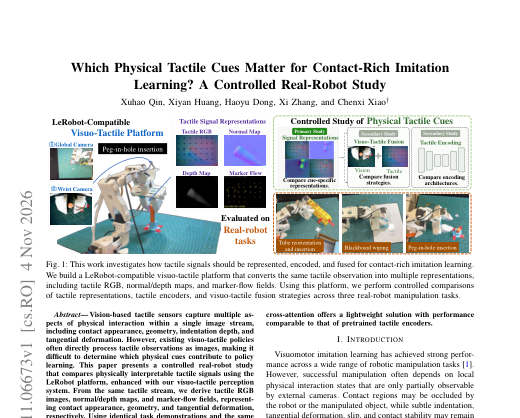
#132026-09-08★ 7268

lok-i/vibe

Python

Post-training humanoid whole-body trackers for perceptive control tasks

Post-training humanoid whole-body trackers for perceptive control tasks

humanoid-controlmjlabperceptive-locomotionpporeinforcement-learningrobot-learningviberobothumanoidlocomotion

兴趣:humanoid robots and whole-body control

#142026-10-21★ 30 +1新项目68

xuyicheng-zju/TARSphere

Python

A robot-oriented full-stack framework for long-horizon embodied agents in evolving physical and social environments.

A robot-oriented full-stack framework for long-horizon embodied agents in evolving physical and social environments.

benchmarkembodied-aiisaac-simroboticsrobotembodied

兴趣:world models and video prediction for embodied agents

#152026-11-01★ 15新项目68

LENS-Lab-AI/Awesome-Frontier-Model-Robotics

Curated evaluations of frontier language and multimodal models in robotics: control, reasoning, coding agents, safety, and benchmarks.

Curated evaluations of frontier language and multimodal models in robotics: control, reasoning, coding agents, safety, and benchmarks.

awesomeawesome-listbenchmarksembodied-aifrontier-modelslarge-language-modelsmultimodal-modelsrobot-learningrobotembodied

兴趣:vision-language-action (VLA) models and foundation models for robots

#162026-08-26★ 405 +268

OpenMOSS/EasyWAM

Python

A unified framework for training, fine-tuning, and evaluating World Action Models

A unified framework for training, fine-tuning, and evaluating World Action Models

benchmarkcodebaseembodied-aifoundation-modelsloraroboticsvision-language-actionworld-action-modelvision-language-actionembodied

兴趣:vision-language-action (VLA) models and foundation models for robots

#172025-04-04★ 1.9k68

RoboVerseOrg/RoboVerse

Python

RoboVerse: Towards a Unified Platform, Dataset and Benchmark for Scalable and Generalizable Robot Learning

RoboVerse: Towards a Unified Platform, Dataset and Benchmark for Scalable and Generalizable Robot Learning

imitation-learningreinforcement-learningroboticssimulationrobot

兴趣:imitation learning and diffusion policies for robot control

#182025-11-23★ 75968

sou350121/VLA-Handbook

HTML

本项目旨在为致力于进入VLA(Vision-Language-Action)领域的算法工程师提供一份全中文、实战导向的学习/面试手册。 不同于通用的 CV/NLP 面试指南,本项目聚焦于 Robotics 特有的挑战

本项目旨在为致力于进入VLA(Vision-Language-Action)领域的算法工程师提供一份全中文、实战导向的学习/面试手册。 不同于通用的 CV/NLP 面试指南,本项目聚焦于 Robotics 特有的挑战

chinesedeep-learningembodied-aillmrobot-learningroboticsvision-language-actionvlarobotVLAvision-language-actionembodied

兴趣:vision-language-action (VLA) models and foundation models for robots

#192026-08-29★ 10668

OpenBMB/SimpleMemVLA

Python

Native-video memory for vision-language-action models, using timestamped visual history and exact streaming inference for long-horizon robot manipulation.

Native-video memory for vision-language-action models, using timestamped visual history and exact streaming inference for long-horizon robot manipulation.

embodied-ailong-horizon-roboticsmultimodal-learningnative-video-memoryrobot-learningrobot-manipulationstreaming-inferencevideo-understandingrobotmanipulationVLAvision-language-actionembodied

兴趣:vision-language-action (VLA) models and foundation models for robots

#202026-02-08★ 537 +468

XPolicyLab/XPolicyLab

Python

[IROS 26 ScaleInfra Workshop Best Tool Paper] Involving over 50 Advanced Manipulation Policies

[IROS 26 ScaleInfra Workshop Best Tool Paper] Involving over 50 Advanced Manipulation Policies

embodied-aimanipulationpolicymanipulationembodied

兴趣:robot manipulation and grasping with learned policies

#212025-08-14★ 5.6k +567

RLinf/RLinf

Python

RLinf: Reinforcement Learning Infrastructure for Embodied and Agentic AI

RLinf: Reinforcement Learning Infrastructure for Embodied and Agentic AI

agentic-aiembodied-aireinforcement-learningrl-infrarlinfvla-rlVLAembodied

兴趣:vision-language-action (VLA) models and foundation models for robots

#222026-10-29★ 26 +-25新项目67

cair-vinuni/roboworm

Python

RoboWorM: Evaluating Movement Realism, Consistency and Acceleration Affects in Embodied Video World Models

RoboWorM: Evaluating Movement Realism, Consistency and Acceleration Affects in Embodied Video World Models

roboticsvlaworld-modelsVLAembodied

兴趣:world models and video prediction for embodied agents

#232024-09-29★ 3.7k +667

enactic/openarm

MDX

A fully open-source humanoid arm for physical AI research and deployment in contact-rich environments.

A fully open-source humanoid arm for physical AI research and deployment in contact-rich environments.

bilateral-teleoperationforce-feedbackgenesisgravity-compensationhumanoid-robotimitation-learningmachine-learningmoveit2robothumanoid

兴趣:humanoid robots and whole-body control

#242025-09-11★ 7.6k +2167

vllm-project/vllm-omni

Python

A framework for efficient model inference with omni-modality models

A framework for efficient model inference with omni-modality models

audio-generationdiffusionimage-generationinferencemodel-servingmultimodalpytorchtransformer

兴趣:vision-language-action (VLA) models and foundation models for robots

#252025-07-30★ 760 +167

HorizonRobotics/HoloMotion

Python

A Foundation Model for Whole-Body Humanoid Control

A Foundation Model for Whole-Body Humanoid Control

foundation-modelshumanoid-robotmotion-trackingroboticswhole-body-controlrobothumanoid

兴趣:humanoid robots and whole-body control

#262022-11-16★ 8.6k +767

isaac-sim/IsaacLab

Python

Unified framework for robot learning with multi-physics/renderer support

Unified framework for robot learning with multi-physics/renderer support

isaac-simomniverse-kit-extensionrobot-learningroboticsrobot

兴趣:3D perception, point clouds and scene understanding for robotics

#272026-04-22★ 25.6k +21267

earthtojake/text-to-cad

Python

Design physical products with AI

Design physical products with AI

agentsai-agentscadmechanical-engineeringroboticsstepstlstp

兴趣:humanoid robots and whole-body control

#282024-12-24★ 38766

manumerous/wb_humanoid_mpc

C++

Whole-Body Nonlinear MPC for Realtime Humanoid Loco-Manipulation Planning and Control

Whole-Body Nonlinear MPC for Realtime Humanoid Loco-Manipulation Planning and Control

aidata-generationhumanoidhumanoid-robotlocomotionmpcnonlinearoptimizationrobotmanipulationhumanoidlocomotion

兴趣:humanoid robots and whole-body control
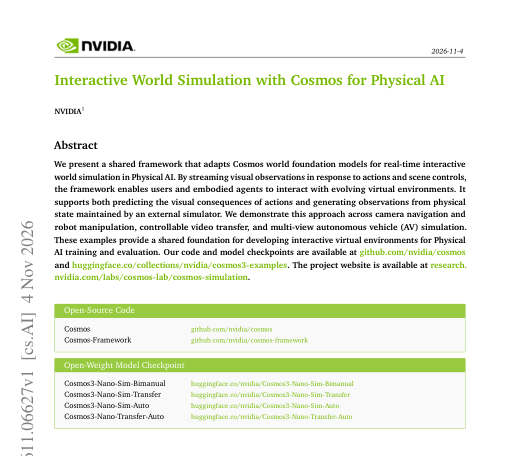
#292024-05-11★ 1.9k +266

robocasa/robocasa

Python

RoboCasa: Large-Scale Simulation of Everyday Tasks for Generalist Robots

RoboCasa: Large-Scale Simulation of Everyday Tasks for Generalist Robots

humanoid-robotphysics-simulationrobot-learningroboticsrobothumanoid

兴趣:humanoid robots and whole-body control

#302026-09-29★ 186 +366

zqc3117/Spotter

Python

Official codebase for Spotter: Let the Embodied Model Lead, and the VLM Reflect for It

Official codebase for Spotter: Let the Embodied Model Lead, and the VLM Reflect for It

embodied-aillm-agentqwenrobocasarobodojorobot-learningrobot-manipulationroboticsrobotmanipulationembodied

兴趣:vision-language-action (VLA) models and foundation models for robots