Tech Station

2026-11-02

50 篇论文 · 30 个项目 ← 2026-11-01 · 2026-11-03 →

论文

#12026-10-2999

From Teleoperation to Long-Horizon Dexterity: Evaluating Visuomotor Skills and Offline Proxies for Dexterous Manipulation

Ammar N. Abbas, Aayush Jain, Prashanth Viswanath, Nivesh Gadipudi, Giulia Vilone, Jim Gibbons

Imitation learning policies are intended to make robotic manipulation robust to variations in object pose, appearance, and environment that challenge pre-programmed motion. However…

Imitation learning policies are intended to make robotic manipulation robust to variations in object pose, appearance, and environment that challenge pre-programmed motion. However, real-world performance remains difficult to predict, as conventional optimization signals such as validation loss show no consistent relationship with robot success. To identify the design choices that govern real-world performance, 281 imitation-learning policies spanning seven policy families were evaluated in approximately 1,700 real-robot trials of RJ45 connector grasping and insertion using a five-fingered robotic hand. Controlled ablations showed that observation and action representations dominated conventional optimizer and sampling choices. For point-cloud policies, region-of-interest cropping, representation in the robot-base frame, and normalization within the point encoder each improved success by 70-100 percentage points. For the vision-language-action policy, absolute rather than relative action prediction improved insertion success by up to 70 percentage points. Skill decomposition, multi-view perception, and recovery demonstrations were associated with the strongest-performing systems, although their effects were not independently isolated. Of 67 offline metrics evaluated, only five measures of predicted-motion smoothness and directness reliably correlated with insertion success (r = -0.70 to -0.80), and only within a single policy family. These results identify representation choices as key determinants of real-world imitation-learning performance and show that offline metrics can shortlist policies, but cannot replace real-robot evaluation.

cs.ROcs.AIcs.LGeess.SYrobotmanipulationvision-language-actionimitation learningdexterous

兴趣:imitation learning and diffusion policies for robot control

#22026-10-3096

SACQ: Structure-Aware Codebook Quantization for Ultra-Low-Bit Vision-Language-Action Models

Haesung Lee, Insu Han

Vision-Language-Action (VLA) models enable capable robot behavior, but their large memory footprint limits deployment on resource-constrained robotic platforms. Weight quantization…

Vision-Language-Action (VLA) models enable capable robot behavior, but their large memory footprint limits deployment on resource-constrained robotic platforms. Weight quantization is a natural remedy, yet post-training quantization (PTQ) recipes inherited from large language models degrade when applied to VLAs at ultra-low precision. Existing low-bit PTQ methods often fail to explicitly account for the structure of downstream operations and allocate precision without considering its effect on the policy actions. We introduce SACQ, an ultra- low-bit weight-only vector-codebook quantization framework for VLAs. SACQ combines (1) structure-aware codebook fitting with role-specific quadratic metrics that reflect input statistics and downstream sensitivity; (2) action-aware mixed-bit allocation based on the increase in final-action error as individual layers are compressed; and (3) two-stage post-quantization refinement that reassigns codeword indices with second-order error compensation and calibrates codebooks and row-group scales against the decoded action. Using GR00T N1.7, SACQ achieves 93.85% average success across four LIBERO suites at 1.5 bits per language/action weight while reducing model memory by 4.83x. With INT8 activation quantization and low-precision attention, it retains 93.55% success while running 1.51x faster than BF16. On SimplER, SACQ further achieves 63.76% and 52.27% success under Visual Matching and Variant Aggregation at 2 bits per language/action weight, compared to 58.90% and 53.45% for BF16, respectively.

cs.CVcs.LGcs.ROrobotVLAvision-language-action

兴趣:vision-language-action (VLA) models and foundation models for robots

#32026-10-3095

FOCUS: First-Order Control Using Optimal Transport Supervision for Imitation from Observations

João A. Cândido Ramos, Lionel Blondé, Hugues Vinzant, Jacopo Castellini, Alexandros Kalousis

Imitation learning from observations must recover behavior from state-only demonstrations without known temporal correspondence. Differentiable simulators provide pathwise policy g…

Imitation learning from observations must recover behavior from state-only demonstrations without known temporal correspondence. Differentiable simulators provide pathwise policy gradients, but differentiating through long, contact-rich trajectories can make optimization unstable. We introduce FOCUS, which combines local optimal-transport alignment with short-horizon differentiable actor-critic learning. FOCUS matches agent rollout windows to multiple sampled expert segments using a soft best-of-$K$ objective that emphasizes locally compatible matches. The resulting transport-based costs provide differentiable imitation rewards, while a learned critic bootstraps value beyond the rollout horizon. FOCUS requires neither temporally aligned trajectories nor expert-aligned initialization or teacher forcing. Across contact-rich locomotion tasks in DFlex, including a musculoskeletal humanoid controlled by 152 muscle activations, FOCUS improves sample efficiency and training stability over adversarial imitation-from-observation methods and prior differentiable imitation baselines.

cs.LGcs.ROimitation learninghumanoidlocomotion

兴趣:imitation learning and diffusion policies for robot control

#42026-10-3093

HandMimicX: Learning Human-Like Dexterous Manipulation via an Object-Centric Policy from Egocentric Videos

Zihan Gao, Yufei Liu, Yuhong Zhang, Zhen Yu, Xinhao Huang, Zhinan You 等

Learning dexterous manipulation from human videos remains an open challenge, particularly in the context of transferring a single demonstration into a spatially generalizable robot…

Learning dexterous manipulation from human videos remains an open challenge, particularly in the context of transferring a single demonstration into a spatially generalizable robotic skill and maintaining physically plausible human-like interactions. Unlike prior works that emphasize hand-motion imitation, we introduce an object-centric framework for acquiring dexterous skills from egocentric human RGB-D videos. Within our framework, we formulate the reinforcement learning (RL) objective in terms of object motion to decouple the underlying skill from the specific hand trajectory and impose constraints on hand-object interaction states to promote more anatomically natural hand configurations. Extensive experiments in simulation and on real robots demonstrate that our method enables efficient learning from human videos and generalizable skill transfer across novel spatial configurations.

cs.ROmanipulationdexterous

兴趣:robot manipulation and grasping with learned policies

#52026-10-2991

CaPtain: A Pipeline for Post-Training Code-as-Policy Robot Agents

Yijia Fan, Xilin He, Yilei Jiang, Dongming Wu, Jiaxu Wang, Xiangyu Yue

Across coding, web, and tool-use tasks, language-model agents are now routinely trained with the same recipe: supervised fine-tuning (SFT) to learn the interface, then multi-turn r…

Across coding, web, and tool-use tasks, language-model agents are now routinely trained with the same recipe: supervised fine-tuning (SFT) to learn the interface, then multi-turn reinforcement learning (RL) to master it. Code-as-policy (CaP) casts robot manipulation in the same form, as the policy writes code against robot APIs and reads back the results, so the same recipe should apply. Yet existing CaP agents sidestep training: they either prompt closed frontier models or delegate manipulation to pre-trained vision-language-action models (VLAs) and high-level skills, while small open vision-language models (VLMs) fail outright. We present CaPtain, an open post-training pipeline that turns a small open VLM into a capable CaP agent, with no VLA, frontier model, or privileged state at test time. CaPtain trains and deploys the policy inside CaPtain-Harness, which exposes low-level perception, geometry, and guarded-motion primitives across simulation and real hardware. We first align the base model via SFT on synthetic trajectories generated with GPT-6 Astra, then apply multi-turn RL. Multi-turn RL must credit tens of agent requests, whose physical effects often surface turns later, from a single end-of-episode outcome. We therefore introduce a physical critic that reads privileged simulator state, never seen by the policy, and credits each request by how much it changes the predicted chance of success. Starting from Qwen3.5-4B (0% zero-shot), CaPtain-4B reaches 55.4% held-out LIBERO success after SFT and 73.8% after RL. On LIBERO-PRO, it reaches 78.5%, surpassing several frontier-model agents, and its RL gains persist across three perturbation suites (+17.6 to +21.2 points). Without target-domain training, it attains 83.3% on SimplerEnv WidowX, exceeds frontier models on CaP-Bench, and runs on a real robot after simulation-only adaptation. We release all code, data, and model weights.

cs.ROrobotmanipulationVLAvision-language-action

兴趣:vision-language-action (VLA) models and foundation models for robots

#62026-10-3091

MolmoSpaces-CommonSense: Evaluating Commonsense in Robotic Manipulation Policies

Arjun Guru, Max Argus, Jae Sung Park, Jiafei Duan, Ali Farhadi, Ranjay Krishna

Real-world robotic manipulation requires reasoning about cluttered scenes, partially observable or hidden objects, and semantically appropriate actions, in addition to low-level ex…

Real-world robotic manipulation requires reasoning about cluttered scenes, partially observable or hidden objects, and semantically appropriate actions, in addition to low-level execution within those scenes. However, existing simulation benchmarks primarily test the latter and remain dominated by comparatively clean environments with limited clutter and narrowly scoped task structure, leaving many forms of commonsense reasoning untested. We address this by introducing a taxonomy of reasoning processes for robotic manipulation grounded in developmental cognitive science. We operationalize this taxonomy through a new benchmark of robot tasks, MolmoSpaces-CommonSense, that requires reasoning about occlusion, containment, support relations, semantically correct grasp points, spatial affordances, and hidden objects. These evaluations require policies not only to recognize relevant scene structure but also to execute correct actions in them. We evaluate several zero-shot generalist manipulation policies. Across model types and architectures, we observe consistent failures in commonsense reasoning: success rates in cluttered scenes drop by over 50% as distractors increase, policies act on incorrect objects in cluttered settings 30% of the time, and affordance-sensitive grasping remains unreliable even with highly specific language prompts, with correct object part selection happening only about 50% of the time. Further, VLM-based success estimation struggles to reliably evaluate rollouts in these settings, suggesting that the challenge extends beyond control to the broader perception-reasoning-action stack. Our results suggest that existing benchmarks may substantially overestimate zero-shot real-world readiness. Code and policy leaderboard link at https://github.com/allenai/molmospaces.

cs.ROrobotmanipulationgrasp

兴趣:robot manipulation and grasping with learned policies

#72026-10-2990

Contact Imitation Interface: Transferring Dexterous Skills by Showing How Contact Unfolds

Zhixuan Xu, Yichen Li, Bingchen Wu, Rui Wang, Yiwen Hou, Zixuan Liu 等

Robot-free human demonstrations offer a promising route to scaling dexterous manipulation data. The key challenge is to preserve the demonstrator's natural dexterity while producin…

Robot-free human demonstrations offer a promising route to scaling dexterous manipulation data. The key challenge is to preserve the demonstrator's natural dexterity while producing contact-grounded observations and actions that transfer to robot hands. We present Contact Imitation Interface (CIMI), a framework with contact-grounded demonstration and learning interfaces. The demonstration interface combines shared contact geometry and fingertip RGB views with contact-alignment-first retargeting and reprojection of wider scene views. The learning interface introduces a hierarchical policy in which a contact-surface planner predicts relative contact-surface trajectories and a controller coordinates wrist and finger commands to improve contact alignment. CIMI combines contact-grounded observations, retargeting, and action representations, improving mean final-stage success by at least 50 percentage points over baseline policies across six hand-task pairs on LEAP and Wuji. Hardware designs and software are publicly available.

cs.ROrobotmanipulationdexterous

兴趣:robot manipulation and grasping with learned policies

#82026-10-2990

STAR: Steering Action Representations during Inference

Guangyu Zhao, Yongchang Zhang, Haoxuan Ru, Kaichen He, Haoran Wen, Kun Zhan 等

Vision-language-action models (VLAs) map language instructions and visual observations to robot actions, showing strong capabilities across robotic manipulation tasks. However, in …

Vision-language-action models (VLAs) map language instructions and visual observations to robot actions, showing strong capabilities across robotic manipulation tasks. However, in our probing experiment, we find that action representations near the action output do not fully preserve task-relevant visual grounding. Motivated by this late-layer grounding gap, we introduce STAR, for STeering Action Representations, a training-free inference method for pre-trained VLAs. STAR applies an exponential moving average over late-layer residual updates, allowing later action representations to inherit object-aware update directions from earlier layers without model updates or architectural changes. It further uses recent proprioceptive states to adapt the mixing strength, using conservative mixing when execution dynamics change rapidly. Experiments on robot manipulation benchmarks show that STAR improves late-layer object awareness and increases average task success rates by 4.0 percentage points. Our code is available at https://github.com/PKU-VaLuE-Lab/STAR.

cs.ROcs.AIrobotmanipulationvision-language-action

兴趣:vision-language-action (VLA) models and foundation models for robots

#92026-10-3089

Online Learning of Heterogeneous Locomotion Dynamics under Reinforcement Learning Policies for Precise Loco-Manipulation

Tianlin Zhang, Weipeng Xia, Lingwei Zhang, Yiyang Shao, Zhongyu Li, Yun-Hui Liu

How to reuse a pretrained locomotion policy for precise loco-manipulation is still an open problem. We propose an online method to learn the closed-loop dynamics under a frozen loc…

How to reuse a pretrained locomotion policy for precise loco-manipulation is still an open problem. We propose an online method to learn the closed-loop dynamics under a frozen locomotion policy. The learned model predicts floating-base motion and improves loco-manipulation accuracy. However, unobserved latent conditions of the policy introduce heterogeneous responses, meaning that the same observed state will lead to different motions. Direct learning without accounting for this heterogeneity introduces bias and fluctuations into dynamics estimates, degrading floating-base prediction and end-effector tracking. To address this problem, a contaminated Gaussian model is proposed to approximate the effects of latent conditions. The model uses two Gaussian components to approximate predictable and unpredictable responses under the same observed state. Then, the contaminated Gaussian model is combined with a Gaussian process to construct an online learner using random Fourier features (RFFs). The learner estimates each response's probability of belonging to the predictable component and uses it to weight online updates, capturing predictable responses while reducing bias and fluctuations caused by heterogeneous observations. With consistent and unbiased dynamics estimates, model predictive control (MPC) predicts floating-base motion accurately and enables precise loco-manipulation. A finite-sample error bound is established to ensure uniform convergence in online learning. Simulation and hardware experiments demonstrate consistent end-effector tracking across different manipulator configurations and tasks, with errors of 0.01 m.

cs.ROmanipulationlocomotion

兴趣:reinforcement learning for legged locomotion and sim-to-real transfer

#102026-10-3089

Nexus-VLA: Bridging Human and Robot Experiences via a Shared Hierarchical Semantic Latent Space

Biaoliang Guan, Tingyu Yuan, Wen Ye, Ziming Ji, Xu Yang, Yan Huang 等

Large-scale egocentric human videos provide rich and scalable manipulation experience for robot policy learning, yet substantial embodiment gaps in visual appearance, kinematic str…

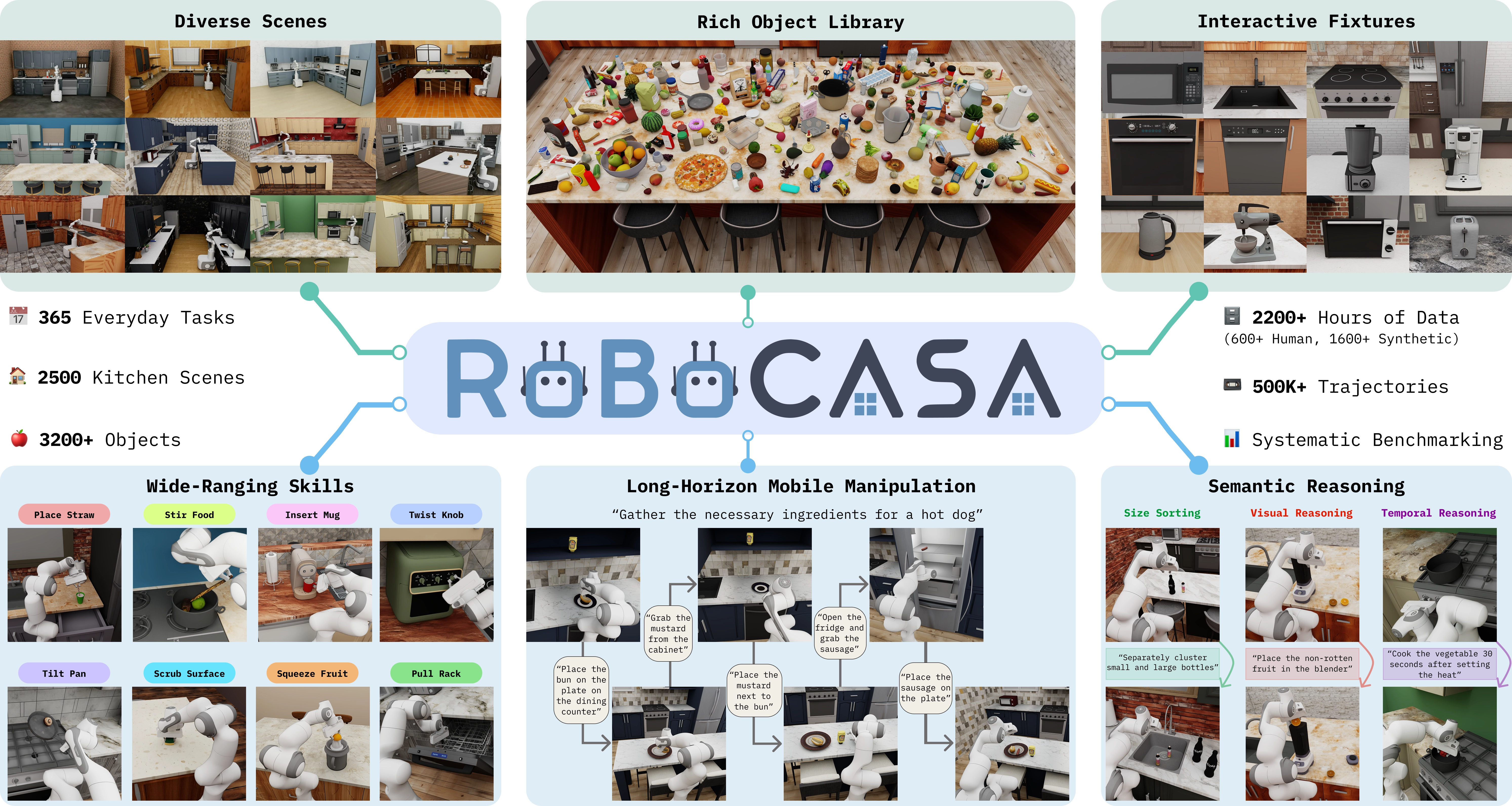
Large-scale egocentric human videos provide rich and scalable manipulation experience for robot policy learning, yet substantial embodiment gaps in visual appearance, kinematic structure, and action spaces hinder effective knowledge transfer. Existing methods often decouple cross-embodiment knowledge alignment from robot policy learning, making it difficult for human manipulation knowledge to directly and fully contribute to robot action learning. To address this issue, we propose Nexus-VLA, a hybrid policy learning framework that enables cross-embodiment knowledge transfer through end-to-end human-robot joint training, allowing human manipulation experience to directly contribute to robot policy learning. We first introduce a hierarchical cross-embodiment semantic alignment paradigm that progressively establishes shared manipulation semantics from task intent to fine-grained interactions, enabling more complete use of the manipulation knowledge contained in human videos. Building on this hierarchy, we design a shared manipulation latent representation that jointly encodes multi-level shared knowledge into an internal representation directly used for continuous action generation, improving policy learning efficiency while effectively leveraging human knowledge. Across RoboCasa-GR1, OOD settings, and real-world robot experiments, Nexus-VLA achieves an 80.5% task success rate on RoboCasa-GR1 and demonstrates strong advantages in human-data utilization, learning efficiency, and cross-scenario generalization.

cs.ROrobotmanipulationVLA

兴趣:robot manipulation and grasping with learned policies

#112026-10-2989

WorldBridge: Bridging Video and Action for Task Generalization in World Action Models

Jun Cen, Yubo Guo, Hao Li, Liangkai Li, Yaoxu Lyu, Meng Wei 等

Achieving the broad task generalization of embodied models in physical environments remains a central challenge in robot learning. We study this challenge in World Action Models (W…

Achieving the broad task generalization of embodied models in physical environments remains a central challenge in robot learning. We study this challenge in World Action Models (WAMs) through two complementary capabilities: video generalization, which predicts the visual evolution of new tasks, and action generalization, which translates these predictions into executable behavior through a video-to-action bridge. By varying video and action supervision for tasks outside an initial training set, we examine their respective contributions to task transfer. On RoboTwin 2.0, using only in-distribution video-action supervision yields a 25.07% success rate on out-of-distribution tasks. Introducing videos of these tasks without their action labels raises success to 55.90%, while adding just one action-labeled demonstration per task further improves it to 70.70%. These findings suggest that broader video coverage enables task transfer by leveraging existing inverse-dynamics capabilities, while even sparse action supervision further strengthens those capabilities. Guided by this perspective, we introduce WorldBridge, a WAM with separate video and action experts connected through structured attention and trained with joint flow matching. WorldBridge incorporates visual memory at two temporal scales and action forcing, alongside a unified data processing pipeline that standardizes and filters heterogeneous robot trajectories and egocentric hand-derived supervision. Across multiple manipulation benchmarks, WorldBridge achieves state-of-the-art performance among the compared methods, including 96.23% on RoboTwin 2.0 full data setting and 80.9% on clean to random setting, 82.8% on RoboCasa GR1 TableTop, and 57.6% on DOMINO Level-1. Our study highlights the complementary roles of video prediction and action grounding in developing robots that generalize across tasks.

cs.ROrobotmanipulationembodied

兴趣:world models and video prediction for embodied agents

#122026-10-30追踪学者 · Hao Dong88

ResMerge: Residual Policy Learning and Merging for Continual Adaptation of Pre-trained Robot Policies

Kefei Zhu, Lingyun Xu, Yue Xin, Xiaoqi Li, Caixin Guo, Xincheng Du 等

Continual adaptation to new tasks is essential for robots deployed in the real world, but adapting pre-trained policies remains challenging due to parameter growth and the need for…

Continual adaptation to new tasks is essential for robots deployed in the real world, but adapting pre-trained policies remains challenging due to parameter growth and the need for continual demonstration collection. Parameter-Efficient Continual Fine-Tuning (PECFT) isolates task-specific updates, but adapter-per-task designs require demonstrations and grow with the task set. We propose ResMerge, a two-stage framework that learns mergeable residual policies atop a frozen pre-trained policy: residual reinforcement learning (RL) acquires task-specific corrections without additional expert demonstrations during adaptation, and parameter-space merging consolidates compatible residuals to reduce stored parameters. We introduce Residual-Field Consistency (RFC), a simple, bounded, and interpretable metric that assesses compatibility in residual action-field space by comparing correction direction and magnitude. Experiments on LIBERO across two backbones and on a real-world Franka robot show improved continual learning performance over strong PECFT baselines, while selective merging reduces the residual-parameter footprint. Project website: https://resmerge.github.io/.

追踪学者:Hao Dong;兴趣:imitation learning and diffusion policies for robot control

#132026-10-3088

When the Past Shapes Action: Understanding Embodied Memory

Siqi Li, Ziyi Bai, Xinrun Xu, Tinglei Huang, Börje F. Karlsson

Recent advances in generative foundation models have expanded the capabilities of embodied AI, enabling increasingly general navigation, manipulation, and long-horizon task executi…

Recent advances in generative foundation models have expanded the capabilities of embodied AI, enabling increasingly general navigation, manipulation, and long-horizon task execution. However, effective interaction with dynamic environments requires more than only strong perception and reasoning: agents must act with partial knowledge and retain, retrieve, and update information from past observations, actions, and experiences. This survey examines embodied memory as a mechanism for preserving decision-relevant information beyond the current observation. We organize existing approaches along two complementary dimensions: six fundamental memory requirements, spanning world-state persistence, task progress, belief maintenance, and experiential learning; and eight architectural categories, including recurrent states, fast weights, visual and symbolic representations, spatial memory, and experience-based systems. We analyze their capabilities and limitations, and examine how existing benchmarks evaluate memory-dependent behavior, distinguishing genuine use of historical information from general task performance. Finally, we identify open challenges in selecting relevant experiences, maintaining consistent beliefs in changing environments, and consolidating knowledge across episodes. Our analysis provides a framework for understanding memory as an essential component of reliable, adaptive, and lifelong-horizon embodied intelligence.

cs.ROcs.AIcs.LGmanipulationembodied

兴趣:world models and video prediction for embodied agents

#142026-10-30追踪学者 · Lerrel Pinto追踪学者 · Yann LeCun87

Hierarchical World Models with Implicit Dynamics

Gaoyue Zhou, Yvonne Wu, Zichen Jeff Cui, Nicolas Ballas, Mido Assran, Lerrel Pinto 等

Planning with world models enables test-time adaptation for embodied agents, offering superior generalization over direct policy learning. However, long-horizon tasks remain hinder…

Planning with world models enables test-time adaptation for embodied agents, offering superior generalization over direct policy learning. However, long-horizon tasks remain hindered by cumulative errors and search complexity. Existing hierarchical methods often use rigid macro-actions or latent skills, leading to brittle representations and limited fine-grained control. We introduce ID-WM (Implicit Dynamics World Models), a hierarchical world model that decouples state-space reachability from local control. Our framework utilizes a high-level model to sample feasible transitions across the state manifold and a low-level world model as an inverse dynamics solver to ground these transitions into precise actions. This allows the planner to identify reachable subgoals without being constrained by low-level execution details. By prioritizing local physical feasibility over global behavioral patterns, ID-WM synthesizes novel long-horizon plans from short segments, transcending the specific behavioral modes seen during training. We demonstrate its effectiveness across three navigation and manipulation suites, achieving a 38.5% improvement over state-of-the-art policy and diffusion-based planners. Crucially, by leveraging this hierarchical structure to mitigate compounding errors, our approach yields a 135% performance gain over single-level world model MPC, particularly in complex, unseen configurations for long-horizon tasks. Videos can be viewed at https://id-wm.github.io

cs.ROcs.AImanipulationembodiedworld model

追踪学者:Lerrel Pinto、Yann LeCun;兴趣:world models and video prediction for embodied agents

#152026-10-3087

RoboArchitect: Automating the Design of Robotic Agents with Persistent Memory

Shengguang Wu, Suning Huang, Cherie Ho, Ria Doshi, Hao Zhu, Serena Yeung-Levy

Recent work shows that a frozen robot policy performs far better inside an agent harness, where control code decides when to query the policy, consult vision tools, or command the …

Recent work shows that a frozen robot policy performs far better inside an agent harness, where control code decides when to query the policy, consult vision tools, or command the arm directly. Yet today these harnesses are built by hand and redesigned for each new robot or benchmark. We show that harness design can be automated, offering a strong alternative to finetuning on a novel setup. In RoboArchitect, a coding model observes a robot's rollouts, diagnoses failures, and iteratively revises the harness around the frozen policy. The harness evolves on a set of episodes for its optimization and is evaluated on held-out scenes and tasks. Without updating any model weights, RoboArchitect raises average success from 9.7% to 43.3% on unseen scenes (4.5x) and from 12.7% to 40.2% on unseen tasks (3.2x), across multiple benchmarks and policies. The gains are largest where the benchmark is far from the policy's training data: wrapping a general-purpose policy, the evolved harness yields a specialist that often outperforms even the finetuned version. Intuitive control strategies are automatically designed, such as lifting a jammed arm clear or reaching in horizontally when an obstacle blocks the way from above. The harness also evolves its own persistent memory, carrying learned experience, such as effective grasp depths, into later decisions. These results suggest that substantial headroom in robotic manipulation lies in the agent harness, and its design can be effectively automated and optimized without weight updates.

cs.ROcs.AIcs.CVrobotmanipulationgrasp

兴趣:robot manipulation and grasping with learned policies

#162026-10-3086

TRACE: Target-State Risk-Aligned Conditional Execution for Embodied Tracking

Mingyang Lyu, Gongce Cao, Yiyang Jia, Lu Jia, Erliang Lin, Yuhao Zhang 等

Embodied visual tracking requires a robot to follow a language-specified person under occlusion, look-alike distractors, and ambiguous instructions. We show that improving tracking…

Embodied visual tracking requires a robot to follow a language-specified person under occlusion, look-alike distractors, and ambiguous instructions. We show that improving tracking persistence can simultaneously increase safety violations. Using a compact 0.6B vision-language-action (VLA) tracker with a frozen backbone, we update only the planner head with proximal policy optimization (PPO). PPO improves success and following rates across all three EVT-Bench settings, but increases the collision rate on distracted tracking because episodes that previously ended in target loss can instead end in contact. We introduce TRACE, an execution-time target-state risk gate that preserves the learned policy and intervenes selectively. A lightweight risk head processes 84 cues, including candidate boxes, identity margins, a learned range-and-bearing probe, and the policy's commands. When the calibrated risk exceeds a threshold, TRACE rescales the translational component of the next waypoint while leaving yaw unchanged. The executed action is identical to PPO's on more than 98% of steps. In paired evaluations on identical episodes, TRACE reduces the distracted-tracking collision rate by 3.96 percentage points, while further improving success and following rates. Matched slowdown controls without target-state timing do not reproduce this improvement. Concurrent evaluation reproduces a collision reduction of 3.77 points, compared with 0.29 points for identical-arm null pairs, indicating that the effect exceeds evaluation variability. These results show that target-state-aware execution can recover the safety cost of policy post-training with minimal intervention.

cs.ROrobotVLAvision-language-actionembodied

你点赞过:TANGO: Humanoid Navigation in Cluttered Environments with a

#172026-10-3086

Learning from Physical Experience:Context-Space Adaptation for Robotic Manipulation

Yihan Zeng, Yisu Li, Kaixin Huang, Marc WuDunn, Amelia Kovacs, Mikael Harseno 等

Recent multimodal foundation models exhibit strong perception, reasoning, and in-context learning capabilities, but translating these capabilities into physical action remains chal…

Recent multimodal foundation models exhibit strong perception, reasoning, and in-context learning capabilities, but translating these capabilities into physical action remains challenging. Through real-world experiments across diverse manipulation tasks, we find that ChatGPT-6-Astra, a state-of-the-art general-purpose reasoner, can serve as a physically actionable, context-responsive manipulation policy, demonstrating effective fine manipulation and spatial reasoning. Building on these findings, we introduce LEXP, a harness for learning from physical experience through context-space adaptation. LEXP combines task-level planning with an experience module that interprets execution evidence, extracts and retains lessons with applicability conditions, and reuses relevant lessons to generate contextual feedback for subsequent actions. Model weights and the action interface remain fixed throughout. Across 12 real-world manipulation tasks, LEXP achieves $23/36$ successful trials (63.9%), compared with $19/36$ (52.8%) with memory alone and $2/36$ (5.6%) for vanilla Astra. On three tasks, bread transfer, sort trash and toiletries, and retrieve drawer, removing planning reduces success from $7/9$ to $4/9$, while removing retained experience reduces it to $3/9$. Execution traces illustrate feedback-guided corrections and cross-episode reuse of an inspection strategy. Execution analyses illustrate how task structure and experience-derived feedback guide task progression, action correction, and experience reuse. These results support context-space adaptation as a practical mechanism for turning physical interaction into reusable guidance for robotic manipulation.

cs.ROmanipulation

兴趣:robot manipulation and grasping with learned policies

#182026-10-3085

$\nabla$Mimic: Ultra-Efficient Humanoid Control with Differentiable Simulation

Weyl Lu, Yubei Chen

Robot policy learning is dominated by zeroth-order methods such as PPO, which treat the simulator as a black box and pay for it with enormous sample counts. First-order policy lear…

Robot policy learning is dominated by zeroth-order methods such as PPO, which treat the simulator as a black box and pay for it with enormous sample counts. First-order policy learning differentiates through the dynamics, but on contact-rich whole-body control it has rarely worked: its gradients explode. A recent world-model method showed that derivative information can make humanoid motion tracking far more efficient, using surrogate gradients of a learned model. We show that exact gradients of the simulator itself do better, once two obstacles are removed. Exact gradients contain rare unbounded samples, because contact dynamics is not differentiable everywhere and its derivative diverges near some events; and they are expensive, because the simulator's adjoint has to replay the contact solve. $\nabla$Mimic bounds these samples with median-relative per-sample gradient clipping at every step of the backward pass, and reuses each costly simulated window by multistep regression onto gradient-derived action targets, which bounds every action target independently of the gradient scale. NablaEngine, a differentiable GPU simulation engine for the Unitree G1, removes the cost: it computes MuJoCo's full contact dynamics with fused per-world kernels and the adjoint of a whole control step as a single megakernel, with analytic gradients that match float64 finite differences, $11.5\times$ faster than the available MuJoCo Warp adjoint. On whole-body tracking of all 40 LAFAN1 clips with one policy on one GPU, $\nabla$Mimic reaches the score reported by the state-of-the-art world-model method, 0.82, in 20 minutes instead of 1.2 h, and 0.874 in 1.8 h. SHAC, the standard first-order baseline, stops on exploding gradients within minutes. We release NablaEngine and $\nabla$Mimic as open-source infrastructure for first-order humanoid policy learning.

cs.ROcs.LGrobothumanoid

兴趣:imitation learning and diffusion policies for robot control

#192026-10-3084

DiffWBC: Unlocking Steerable General Humanoid Motion Tracking via One-Step Diffusion Whole-Body Control

Yifei Huang, Yazhao Yang, Weijia Li, Zhiheng Ma, Dian Shen

General humanoid motion trackers typically rely on deterministic policies that cannot adapt online without brittle reference editing or costly retraining. We present DiffWBC, shift…

General humanoid motion trackers typically rely on deterministic policies that cannot adapt online without brittle reference editing or costly retraining. We present DiffWBC, shifting whole-body control to a generative paradigm via a one-step diffusion model. By modeling distributions over future trajectories, DiffWBC unifies general tracking, test-time steering, and simulation-free failure discovery within a single controller: (1) Generative general tracking: DiffWBC requires a single forward pass per 50 Hz control step and can be distilled from an RL teacher or trained from scratch via model-based RL, achieving the lowest local tracking error among six general trackers on held-out benchmarks (20.1 mm on BONES) and deploying on a physical Unitree G1. (2) Zero-shot test-time steering: differentiable cost gradients and body-group masks modulate the frozen controller online, substantially outperforming kinematic reference editing (0.84 clean pass at 1.25 m ceiling vs. 0.10) and zero-shot generalizing across hurdles, spatial reaching, actuator faults, and tray balancing. (3) Simulation-free failure discovery: plan dispersion across generation noise effectively identifies physical tracking failures (91% precision in top 2%) without physics simulations; targeted fine-tuning on flagged clips resolves 50% of failure cases. Videos and interactive demonstrations are available at https://diffwbc.github.io/#selfassess.

兴趣:humanoid robots and whole-body control

#202026-10-3084

Cross-Embodiment Motion Planning by Coupling Body-Agnostic World Model with Differentiable Ego-Dynamics

Zhidong Wang, Zirui Li, Haoran Xu, Yujie Yan, Zitong Shan, Jingsong Liang 等

Motion planning in clutter is embodiment-specific: the feasible free space and reachable commands depend on each robot's geometry and dynamics. Existing cross-embodiment policies o…

Motion planning in clutter is embodiment-specific: the feasible free space and reachable commands depend on each robot's geometry and dynamics. Existing cross-embodiment policies output normalized commands that disregard these differences, or compensate through per-robot training and distillation. World models can in principle pool cross-embodiment data, yet command-conditioned models bind their latent dynamics to a single action space, while pose-conditioned models omit the mapping from commands to body-specific motion. On flat ground, however, embodiment affects the planner's observations only through the camera ego-motion. This letter proposes Hourglass, an hourglass-shaped architecture that factorizes cross-embodiment motion planning at this interface: a body-agnostic world model and each robot's differentiable ego-dynamics, which map commands to that ego-motion, are coupled only through it. The world model is trained on data pooled across embodiments and camera mounts; each robot's ego-dynamics is a reduced-order template with identified physical parameters. A generalist parameter-conditioned policy is learned once at this junction: each imagined step rolls out the template and then the world model, and imagination training through each robot's template makes the policy body-aware. On seven simulated robots of five locomotion types, the generalist policy outperforms imitation-learning and diffusion-policy baselines on the same world model by 3.8--10.6 percentage points in success rate and matches per-robot specialists without dedicated training, while approaching its parameter-conditioned MPPI teacher within 1.4--2.8 points without an online map. After three minutes of teleoperated driving for identification, the synthetic-data-trained model transfers zero-shot to a real skid-steer robot unseen in training, navigating unseen indoor scenes.

cs.ROrobotlocomotionworld model

兴趣:imitation learning and diffusion policies for robot control

#212026-10-3083

HIPC: Humanoid Iterative Planning and Control via Goal-Conditioned Motion Closure

Yi Han, Xingyu Chen, Zixuan Lang, Qianyang Wu, Yuhang Lin, Ji Ma 等

Recent generative models are widely used to provide whole-body motion for humanoid tracking. Current methods combine motion generators with controllers in an open-loop paradigm, wh…

Recent generative models are widely used to provide whole-body motion for humanoid tracking. Current methods combine motion generators with controllers in an open-loop paradigm, which leads to critical issues: tracking errors can accumulate into spatial drift, and the planner cannot adapt to unexpected physical disturbances without feedback from physical execution. However, directly feeding realized states back to the planner in a closed loop can cause discontinuities, resulting in physical jitter and even falls, since such states are out of distribution during training. To bridge this gap, we propose HIPC, a real-time Humanoid Iterative Planning and Control framework that couples a generative model with motion tracking into a unified planning-and-control paradigm. HIPC introduces a goal-conditioned motion planning trained with a canonical motion representation that avoids gimbal-lock singularities under extreme orientations and supports motion generation on diverse geometric and semantic conditions. Then, HIPC adopts two strategies, deviation-decayed recovery and history re-anchoring, to mitigate the out-of-distribution shift caused by realized-state feedback. Finally, HIPC operates a real-time asynchronous planning-and-control system, with latency compensation to reduce temporal mismatch for inference delay. Extensive experiments confirm the effectiveness of HIPC under switching and composition of diverse conditions. Results show that HIPC achieves state-of-the-art goal-reaching accuracy among existing methods while simultaneously demonstrating robustness to physical perturbations and the ability to recover from falls.

cs.ROeess.SYhumanoid

兴趣:humanoid robots and whole-body control

#222026-10-3081

Movens-Zero: Scaling Humanoid Motion Foundation Models with Large-Scale Human Videos

Wendong Bu, Tinghong Ye, Qizhou Wang, Jiacheng Li, Zhiqi Ge, Yuze Lin 等

Scaling humanoid motion foundation models is constrained by the scarcity of diverse, robot-executable data and by the difficulty of jointly learning from heterogeneous multimodal i…

Scaling humanoid motion foundation models is constrained by the scarcity of diverse, robot-executable data and by the difficulty of jointly learning from heterogeneous multimodal inputs while supporting real-time closed-loop control. We present Movens-5M, constructed from raw Internet videos through clip generation, quality filtering, semantic annotation, motion recovery, and physical refinement with humanoid retargeting and execution verification. It contains 15 million human-motion sequences and 5 million physically executable humanoid-motion sequences spanning over 10,000 hours, aligned with text, RGB video, speech, and music. Building on this data, we introduce Movens-Zero, a scalable understanding-generation-execution architecture that supports joint learning across modalities and real-time closed-loop execution. Task-mixed flow-matching training jointly optimizes a single action expert across seven generation tasks, enabling direct motion generation from text, speech, music, and video. Multimodal Real-Time Chunking connects overlapping chunks under continuously updated instructions and robot states for continuous closed-loop execution. We further introduce Movens-Intent, a four-track benchmark with 8,192 expert-verified condition-motion pairs across text, speech, music, and video. Experiments show consistent gains across all four modalities when scaling execution-verified data from 1% to 100% and action-expert capacity from 64M to 911M parameters, while demonstrating that data quality and cross-modal supervision improve generation and execution.

cs.ROcs.CVrobothumanoid

兴趣:humanoid robots and whole-body control

#232026-10-3081

META-Robot: Self-Cognition and Capability Scaling in Agentic Robots

Xuanzhi Feng, Zeyu Liu, Weiheng Gao, Xinchen Li, Jiankun Tang, Fangqi Zhu 等

LLM-based robotic agent systems can generate programs for robot control, yet their generalization to new tasks often depends on elaborate scaffolding. Expanding their skill reperto…

LLM-based robotic agent systems can generate programs for robot control, yet their generalization to new tasks often depends on elaborate scaffolding. Expanding their skill repertoires alone offers limited guidance on how to assess new capabilities or identify what remains beyond their reach. We introduce META-Robot, a framework that couples self cognition with capability scaling by expanding the criteria through which an agent evaluates and develops its skills. At its core, action-level predicates make execution outcomes explicit and available for LLM reasoning. The agent uses these assessments to identify its own limitations, extend relevant evaluation criteria, and guide the structured expansion of its skills. Proprioceptive feedback further grounds this process in the robot's physical state, enriching the evidence available for self-cognition. Experiments in simulation and on real robots demonstrate stronger overall task performance, generalization to new tasks, continued expansion of skills and evaluation criteria, and effective use of non-visual proprioceptive signals.

cs.ROrobot

兴趣:multi-agent systems and LLM agents

#242026-10-3080

RTPolicy: Real-Time (32.9 Hz) Multi-View Visuomotor Policy for Robotic Manipulation on Edge Devices

Xianbao Hou, Zehao Ni, Yonghao He, Lingfeng Qian, Xin Shi, Hu Su 等

Low inference latency is critical for closed-loop robotic manipulation, especially under asynchronous inference, where action chunks must be updated promptly to correct accumulated…

Low inference latency is critical for closed-loop robotic manipulation, especially under asynchronous inference, where action chunks must be updated promptly to correct accumulated deviations. However, existing visuomotor policies rely on computationally expensive visual backbones, resulting in high inference latency and deployment overhead. In this paper, we propose RTPolicy, a multi-view visuomotor policy that attains accurate manipulation with high inference efficiency. Its core design combines view-aware feature fusion with visual compression to aggregate complementary information across camera views into a compact token representation. The representation conditions a flow-matching action generator with the robot state and flow time, reducing the cost of action generation. Extensive experiments demonstrate that this design reduces the computational cost of visual representation and action generation while preserving visual information required for manipulation. On the RoboTwin~2.0 single-task clean evaluation across 50 tasks, RTPolicy attains a mean success rate of 52.26%, outperforming the strongest leaderboard baseline $π_0$ (46.4%). We further evaluate RTPolicy under asynchronous streaming inference on a real bimanual platform, where RTPolicy attains a mean success rate of 72.0% and sustains real-time inference at 30.35 ms (32.9 Hz) on the RDK S600 and 149.72 ms (6.7 Hz) on the RDK S100, both in INT16. Project Page: https://d-robotics-ai-lab.github.io/RTPolicy.project.

cs.ROrobotmanipulation

兴趣:robot manipulation and grasping with learned policies

#252026-10-3079

VLA Policies Do Not Know When Not to Act: Unintended Task Execution and Start Suppression

Minsu Jang, Jae-Woo Choi, Youngwoo Yoon, Dohyung Kim

A robot should act only on an instruction from a person or on an intent that the robot explicitly represents and generates. Unintended actions taken without such an instruction can…

A robot should act only on an instruction from a person or on an intent that the robot explicitly represents and generates. Unintended actions taken without such an instruction can cause risk or inconvenience to people and the environment. We examine how recent vision-language-action (VLA) policies respond when the instruction is missing or meaningless. We apply a paired protocol with empty, neutral, nonsense, infeasible, and wrong-task instructions to six model checkpoints in LIBERO-Goal simulation. Holding the initial state fixed and varying only the instruction, we ask three questions: whether the robot starts to move, which task it completes, and what the instruction determines. Even when the instruction was empty, the robot started moving in every episode with all six checkpoints, and with five of them it often completed a task that the instruction had not specified. On two GR00T checkpoints, the instruction determined which task was executed but not whether the robot started moving; the robot moved even on infeasible instructions. We then tested three methods for suppressing the start: prepending "if no task is given do not move" to the instruction; a gate that holds the robot when the first action chunk for the given instruction nearly equals that for an empty instruction; and fine-tuning the policy to hold still on non-task inputs. The prefix stopped the robot in none of the six checkpoints, and the gate held it on non-task inputs in five of the six checkpoints. The fine-tuned policy never completed a task on non-task inputs, but it did not reliably keep the robot still, and it failed to suppress the start on infeasible instructions.

cs.ROcs.AIrobotVLAvision-language-action

兴趣:vision-language-action (VLA) models and foundation models for robots

#262026-10-3078

TinyAstral: Transferring Self-Evolving Harnesses to Tiny Generalist Manipulation Agents

Kehong Gong, Xiaoxu Zheng, Guanli Hou, Seunghun Lee, Mengqi Guo, Runjia Tan 等

Robot agents built on vision-language models depend on both the planner and its harness: the tools, feedback, memory, and recovery logic around it. Can improvements to a large teac…

Robot agents built on vision-language models depend on both the planner and its harness: the tools, feedback, memory, and recovery logic around it. Can improvements to a large teacher's harness be carried into a compact agent with lower inference compute cost? We present TinyAstral, a two-stage approach. We first freeze an open-weight teacher and improve its harness through recursive self-improvement (RSI): frontier LLM agents read the teacher's trajectories and propose harness edits, and each edit is accepted only if it passes a paired statistical test. We then freeze the final harness, collect teacher trajectories with reasoning and failure recovery, and distill a small student that replaces the teacher in the same harness. On RoboTwin, harness evolution raises the teacher's success from 33.4% to 63.6%; the final 4B student reaches 62.8%. Across four harness versions, distilled 4B students score close to their corresponding teachers, and later versions yield stronger students, showing that harness evolution gains carry into compact models. The harness gains also transfer to other frozen planners without retraining. On identical episodes, the final 4B student outperforms open 4B agents, the open 27B harness-RSI model SenseNova-RoboRSI, and our own teacher model placed in three competitors' harnesses. It stays close to its teacher on all three training benchmarks, and on three benchmarks never used for RSI or training it scores close to a 552B planner running the same harness. On the measured deployment episodes, it uses about one fifth of its teacher's accelerator time.

cs.ROcs.CVrobotmanipulation

兴趣:imitation learning and diffusion policies for robot control

#272026-10-29追踪学者 · Jiajun Wu77

DyCraft: An Agentic System for Long-Horizon 4D Scene Generation

Jeff Tan, Hang Dai, Zeqian Long, Yanzhe Lyu, R. Kenny Jones, Shangzhe Wu 等

While frontier coding agents can generate high-quality 3D scenes and articulated assets, they struggle to create coherent long-horizon animations. When equipped with general-purpos…

While frontier coding agents can generate high-quality 3D scenes and articulated assets, they struggle to create coherent long-horizon animations. When equipped with general-purpose harnesses, they frequently produce physically implausible outputs, generating objects that interpenetrate, lack physical support, or move unnaturally. Such bare agents struggle to repair these errors because they default to scripting the full animation in one pass, making it difficult to verify their work and disentangle complex spatiotemporal constraints. Drawing on the practice of human animators, we introduce DyCraft, a system for animated 3D scene generation that breaks animation into steps that coding agents can more reliably solve. DyCraft first expands the user's prompt into a detailed plan and builds a static scene. It then creates a 3D storyboard of key animation poses, where each frame is a static 3D scene that the agent can build and debug in isolation. Storyboarding decomposes the problem into pairs of verified start and end states, allowing the agent to author local motion between them with a collection of motion authoring tools. We evaluate DyCraft on 24 long-horizon, multi-shot animation tasks covering humanoid robots, human and animal characters, and physical mechanisms. Compared with a native GPT-6 agent in Codex and prior agentic baselines, DyCraft substantially reduces physical violations and generates higher-quality animated 3D scenes that are more often preferred by human raters.

追踪学者:Jiajun Wu;兴趣:world models and video prediction for embodied agents

#282026-10-3076

Geometry-Aware Humanoid Retargeting via Manifold ODEs

Pengyu Zhu, Heye Wang, Xi Wang, Xuyang Wu, He Kong, Guodong Shi

In this paper, we focus on interaction-preserving motion retargeting, which transfers human demonstrations to humanoids while maintaining spatial relationships with objects and ter…

In this paper, we focus on interaction-preserving motion retargeting, which transfers human demonstrations to humanoids while maintaining spatial relationships with objects and terrain. Previous work, such as OmniRetarget, addresses this task through temporally coupled constrained optimization, requiring repeated sequential quadratic programming (SQP) iterations at each frame. We study this problem from an ordinary differential equation (ODE) perspective by modeling the continuous-time limit of its framewise Karush-Kuhn-Tucker (KKT) conditions as an ODE on the robot configuration manifold. This viewpoint offers two benefits: (i) it connects OmniRetarget's SQP iterations to a backward discretization of the ODE, enabling us to establish their local convergence under suitable regularity assumptions; and (ii) it leads to TaSP-KKT (tangent-space parametrization for KKT flow), a new retargeting method based on a forward discretization of the KKT flow. The proposed method achieves the same first-order convergence to the ODE solution as the corresponding backward scheme while requiring only one weighted tangent-cone projection and a closed-form manifold update per step, thereby avoiding repeated inner SQP iterations. Numerical experiments show that TaSP-KKT achieves retargeting quality comparable to, though slightly lower than, that of OmniRetarget while running approximately twice as fast.

cs.ROrobothumanoid

兴趣:humanoid robots and whole-body control

#292026-10-3075

Sensorium: An Open-Source Multimodal Data Collection and Curation Library for Embodied Surgical AI

Lorenzo Mazza, Ariel Rodriguez, Stefanie Speidel

Embodied surgical AI requires reliable multimodal data, yet surgical data collection remains costly, difficult to repeat, and strongly dependent on the hardware setup. We present S…

Embodied surgical AI requires reliable multimodal data, yet surgical data collection remains costly, difficult to repeat, and strongly dependent on the hardware setup. We present Sensorium, an open-source Python library for recording, processing, annotating, and curating multimodal surgical data from configurable robot and sensor streams using the Robot Operating System (ROS) and ROS2 middleware. The library combines operator-facing data acquisition, configurable processing, semantic annotation, and episodic dataset generation. We evaluate Sensorium across 1516 recordings of phantom, ex vivo, and in vivo porcine experiments involving multiple surgical tasks and sensing configurations, and report preliminary usability feedback.

cs.AIcs.ROrobotembodied

兴趣:world models and video prediction for embodied agents

#302026-10-3075

ROOF: Learning Humanoid Fall Recovery under Overhead Constraints

Yidan Lu, Jiayuan Yu, Zongrui Cai, Jingwen Sun, Jinrui Han, Jing Wang 等

A fallen humanoid beneath an overhead obstacle faces a coupled recovery problem. It must create clearance while organizing support for a stable rise, since attempting to stand befo…

A fallen humanoid beneath an overhead obstacle faces a coupled recovery problem. It must create clearance while organizing support for a stable rise, since attempting to stand before making room can further increase obstruction. We introduce a reinforcement learning method with contact-supported geometric escape guidance, which rewards incremental reduction of robot-obstacle overlap without prescribing an escape path. To achieve this, a learned motion prior, together with posture-dependent support and joint-stall costs, is proposed to shape a single policy that learns when to clear the obstacle, how to establish support, and when to complete the rise, all using proprioception alone. In simulation, it recovers in 88.5% of trials beneath plates that can only be lifted, compared with 18.9% without geometric guidance, and in 98.6% of trials beneath free plates with randomized size, mass and placement. On a Unitree G1, the deployed policy recovered in 95 of 150 attempts across seven real-world obstacle scenes, including furniture and multi-object arrangements absent from training. Project page: https://lu-yidan.github.io/ROOF/

cs.ROrobothumanoid

兴趣:reinforcement learning for legged locomotion and sim-to-real transfer

#312026-10-3075

Direct Action-Manifold Modeling for Efficient and Robust Bimanual Manipulation

Hongren Wang, Mingyu You, Zihan Li, Zhipeng Wang, Shuo Jiang, Bin He

Diffusion and flow matching visuomotor policies require iterative denoising or numerical integration for multimodal action generation, introducing latency and execution mismatch. W…

Diffusion and flow matching visuomotor policies require iterative denoising or numerical integration for multimodal action generation, introducing latency and execution mismatch. We instead consider a different formulation: conditioned on vision and proprioception, demonstrated bimanual action chunks concentrate in a structured observation-dependent region of joint-action space, making the action target more direct to model than the generative process. Based on this view, we propose the Direct Manifold Action Transformer (DMAT), which reformulates action generation as the direct modeling of clean, observation-conditioned joint-space action chunks from stochastic interpolants, thereby enabling single-step inference without relying on iterative generative inference or auxiliary trajectory-straightening procedures. Within DMAT, local 3D geometry anchors predictions to spatial structure, while State-Consistent Spectral-Time Refinement (STR) reconciles predicted chunks with proprioception and suppresses high-frequency residuals. Across 567 standard and out-of-distribution (OOD) trials per method, DMAT outperformed Improved 3D Diffusion Policy (IDP3) and DiTFlow3D in aggregate success rate, achieving relative improvements of 129.1% and 95.7%, respectively, while generating action chunks 2.06x and 1.34x faster and remaining robust under repeated 50 N interventions. These results pave the way for a novel generative paradigm for efficient and robust bimanual manipulation.

cs.ROmanipulationdiffusion policy

兴趣:robot manipulation and grasping with learned policies

#322026-10-3074

Joint-Health-Aware Reinforcement Learning for Robust Robot Control Under Actuator Degradation

Haifa Zhang, Yijing Wang, Zhiqiang Zuo

Robots deployed in unstructured environments are susceptible to actuator-authority degradation, which reduces the effective control authority of individual actuators and can cause …

Robots deployed in unstructured environments are susceptible to actuator-authority degradation, which reduces the effective control authority of individual actuators and can cause reinforcement learning policies trained under nominal dynamics to fail. Existing robustness approaches rely on discrete fault labels, broad domain randomization, or global latent variables, often without explicitly modeling continuous per-joint residual actuation capability. We propose a joint-health-aware reinforcement learning framework for robust robot control under simulated actuator degradation. Our framework encodes actuator condition in a continuous joint-health vector and models degradation as multiplicative attenuation of executed actions. A dedicated HealthNet estimator infers per-joint health from recent observations and actions, allowing the policy to redistribute control effort across healthy and degraded joints. We evaluate the method on Walker, Go2, Cassie, and Panda-based ManiSkill manipulation tasks under diverse degradation masks and severity levels. The method outperforms nominal and degradation-trained no-health baselines on the main evaluated metrics. Relative to the nominal baseline, task-level locomotion returns improve by up to 250.1% and manipulation success rates by up to 15.2 percentage points; in the high-degradation Cassie group, return increases from 3.94 to 40.50 (+928.0%). Ablations support the contribution of per-joint health estimation, action-degradation modeling, and health-conditioned control.

cs.ROcs.CVrobotmanipulationlocomotion

兴趣:imitation learning and diffusion policies for robot control

#332026-10-3073

FlowMoDE: Coarse-to-fine Flow Matching for Detail-aware Sim-to-Real Monocular Depth Estimation

Liangjing Shao, Wanhao Liu, Jinsong Lin, Zhiwei Fang, Hongliang Ren

Monocular depth estimation is a fundamental capability for 3D spatial perception in robotic and intelligent systems. While data-driven discriminative methods have achieved compelli…

Monocular depth estimation is a fundamental capability for 3D spatial perception in robotic and intelligent systems. While data-driven discriminative methods have achieved compelling performance for monocular depth estimation, generative approaches can reconstruct fine structural details with stronger generalization. However, most existing generative diffusion models suffer from low inference efficiency caused by multi-step sampling, whereas single-step diffusion models struggle to recover high-fidelity depth maps. To mitigate these drawbacks, this paper presents FlowMoDE, a coarse-to-fine flow-matching-based framework for efficient, structure-aware monocular depth estimation supporting sim-to-real and cross-scene generalization. The core architecture first conducts coarse-level decoding conditioned on diffused features extracted from a pre-trained semantic encoder, and subsequently restores fine-grained structural patterns via expanded decoding layers. Trained exclusively on a single synthetic indoor dataset, our proposed method outperforms prior methods across five real-world indoor and outdoor datasets, yielding an average 14.1% reduction in relative error against state-of-the-art works as well as 9.9% reduction in chamfer distance for point cloud reconstruction. We further validate the generalization capability of FlowMoDE on realistic robotic scenes, with qualitative comparisons against state-of-the-art methods. The project page is https://flowmode-shao.netlify.app/

cs.CVsim-to-real

兴趣:3D perception, point clouds and scene understanding for robotics

#342026-10-3073

REA: A Routed Embodied Agent Runtime for Asynchronous Brain-Cerebellum Control

Pengfei Zhou, Yixing Ma, Zhengfeiyang Zhang, Haoyuan Chen, Zhenglin Wan, Hexin Wang 等

Foundation models are becoming remarkably reliable at high-level reasoning, yet they remain too slow and costly to serve as fine-grained controllers. Conversely, fast policies like…

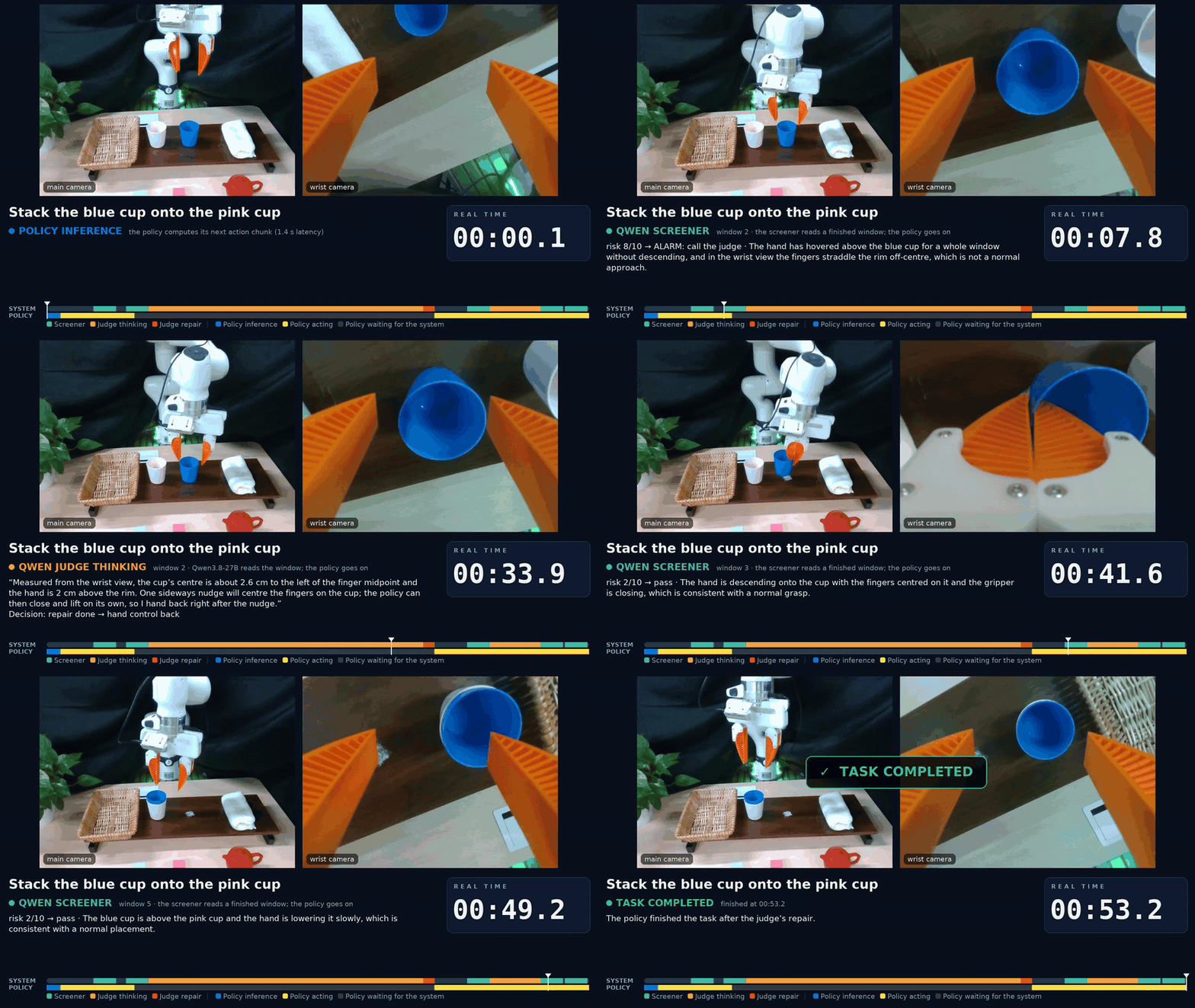
Foundation models are becoming remarkably reliable at high-level reasoning, yet they remain too slow and costly to serve as fine-grained controllers. Conversely, fast policies like VLAs and whole-body controllers offer more efficient reflexes, but struggle to generalize. While pairing a deliberative brain (foundation models) with a reactive cerebellum (fast policies) seems natural for embodied systems, two obstacles remain: methods are built and scored on incompatible stacks, and their asynchronous coordination is difficult. For example, an agent that calls the VLA in the agentic loop can stall the fast execution, while a VLA that calls the agent on errors tends to re-trigger fallbacks repeatedly or completely miss silent failures. To address this, we propose REA (Routed Embodied Agent), a unified runtime where a deliberative System 2, an embodied router System 1 and reactive System 0 policies cooperate under a single golden rule - no running policy waits on the brain. Instead of querying the brain at each failure, REA employs a route memory that stores each policy's measured success ahead of time, a boundary-triggered judge gate that consults the brain on policy execution, and a shared-budget escalation ladder for bounded recovery. Evaluated on 3,000 test episodes across 60 LIBERO-Pro tasks, REA reaches 95.9% success and beats the best single-agent baseline in its own policy pool (94.7%) while reducing control steps by 25% and control time by 17%. In a separate 100-episode RoboTwin 2.0 study, REA achieves 84% success with VLA policies and 86% with VLA+code, compared with 80% for the strongest single VLA baseline MEDex. These results demonstrate learned and programmatic policies operating within the same runtime. REA also transfers to BEHAVIOR-1K and a real Unitree G1 humanoid, achieving the highest observed success among the compared methods.

cs.ROcs.CVVLAhumanoidembodied

兴趣:world models and video prediction for embodied agents

#352026-10-3073

SketchMate: Agentic Geometric Reasoning for Zero-Shot Precision Insertion

Jiaming Wang

Inserting an unseen part requires sub-millimetre precision and the correct orientation of keyed features. Current zero-shot agentic manipulation methods built on vision-language mo…

Inserting an unseen part requires sub-millimetre precision and the correct orientation of keyed features. Current zero-shot agentic manipulation methods built on vision-language models (VLMs) produce spatial outputs that are far too coarse for this. We propose to let a VLM build a sketch model of the task, i.e., a few geometric primitives and two mate frames, which a VLM agent measures with geometric tools in multi-view depth and which a standard planner and compliant controller execute. Because a sketch describes the parts independently of their placement, the robot needs to build it only once per task. A sketch memory stores each agent run and transfers the stored sketch to later placements by point-cloud registration, so that the VLM is called only for unfamiliar parts. After grasping the part, the robot inspects both mating faces at close range and corrects the sketch by shape matching. On 69 simulated insertion episodes, our method inserts 88% of the parts at the assembled pose in a strict kinematic test, while ReKep and MOKA with the same VLM insert none. On new placements of eight tasks, reusing one stored run inserts as many parts as calling the agent in each episode, and it produces the sketch in 3.4 s instead of about 90 s.

cs.ROrobotmanipulation

兴趣:vision-language-action (VLA) models and foundation models for robots

#362026-10-2973

Capability-Grounded Agentic Planning

Shikha Shrestha, William Yeoh, Ning Zhang, Yevgeniy Vorobeychik

LLM agents serve natural-language requests through tools, data sources, and other agents, and even simple requests often need several interdependent calls. Typically, the LLM picks…

LLM agents serve natural-language requests through tools, data sources, and other agents, and even simple requests often need several interdependent calls. Typically, the LLM picks these calls by trial and error, with no guarantee of an executable plan. We present Capability-Grounded Agentic Planning (CGAP), which instead reasons about what a request requires and what tools provide. CGAP compiles the tool catalog deterministically into a PDDL model, uses an LLM to turn the request into goals, and solves the model with a classical planner. Since tool outputs are unknown in advance, the model is abstract, tracking which inputs are available, not their values. During execution, an LLM adds entity-specific calls that abstract plans omit, and deterministic checks reject any that break the plan. Every argument is drawn from a cited source, such as a conversation span or an earlier tool response, and each requested result counts as delivered only after an LLM verifier checks it against the request. With three LLMs on ToolSandbox, ComplexFuncBench, BFCL multi-turn, and $τ^2$-bench retail, CGAP outperforms a standard tool-calling agent by up to 28.9 points.

cs.AIcs.CL

兴趣:multi-agent systems and LLM agents

#372026-10-3072

When Depth Lies: Benchmarking Vision-Language Models on Mirror-Induced RGB-D Ambiguity

Hao Yin, Tianchen Guo, Heming Du, Yan Ke, Yanbin Liu, Xin Yu

Vision-language models (VLMs) have made significant progress in spatial reasoning, particularly by integrating RGB images with depth data, which is often assumed to faithfully refl…

Vision-language models (VLMs) have made significant progress in spatial reasoning, particularly by integrating RGB images with depth data, which is often assumed to faithfully reflect physical distances. However, mirrors violate this assumption: they distort depth readings while reproducing object appearances, making reflections difficult to distinguish from real objects. As existing benchmarks rarely consider such reflective scenarios, VLM performance in mirror scenes remains largely unexplored. In this work, we introduce a mirror-centric RGB-D dataset from reflective scenes to evaluate the spatial reasoning capabilities of state-of-the-art VLMs in these scenarios. Specifically, we collect 1,011 RGB-D images from 525 real-world scenes, spanning diverse indoor and outdoor environments, six reflective surface types, and both daytime and nighttime conditions. All images are annotated with reflective surface region masks and mask annotations for both directly observed and mirror-reflected objects. Then, we curate a benchmark named MIRA-Bench (Mirror-Induced Reasoning Ambiguity Benchmark), comprising 14,140 QA pairs across eight sub-tasks organized into three cognitive levels: Reflection-aware Perception, Spatial Reasoning, and Scene-level Decision-making. We evaluate state-of-the-art VLMs on MIRA-Bench and find consistent failures across tasks: models misclassify whether objects are directly observed or reflected, fail to match reflected instances to their real-world counterparts, and produce erroneous spatial inferences. Remarkably, providing depth data actually degrades reasoning performance, implying that VLMs cannot identify incorrect depth in mirror scenes. The code and data are available at https://github.com/EvaYin-cloud/MIRA-Bench

兴趣:3D perception, point clouds and scene understanding for robotics

#382026-10-3071

CausalWAM: Learning the Causes of Actions in World Action Models

Juntao Cheng, Jinzhou Tang, Fan Feng, Henrik I. Christensen, Yujia Zheng

World action models (WAMs) learn latent variables from observations and use these to both predict the evolution of the scene and to generate actions. The prediction has to be of th…

World action models (WAMs) learn latent variables from observations and use these to both predict the evolution of the scene and to generate actions. The prediction has to be of the whole scene, whereas only a portion of the scene causes actions. WAMs fitted to demonstrations do not, in general, guarantee that they will generate actions solely from the latent causes of the demonstrated actions (the action-relevant latent variables), as the model could just as well learn to imitate in this way whilst entangling the action-relevant latent variables with the nuisance variables. We therefore separate out what causes action from what prediction depends on. We prove that under a sparsity constraint the latent variables used to generate actions are an invertible function of the action-relevant latent variables alone and the true structure is identified up to a permutation of the latent variables. This requires neither sufficient temporal dependence nor any assumptions on how the unobserved regimes evolve and holds even when the action-relevant latent variables are statistically dependent on the rest. We therefore propose CWAM (Causal WAM), which incorporates the constraint into a pretrained WAM by adding a sparse routing path to its action head, with the world modeling objective remaining unchanged. Experiments on both synthetic data and real-world robots validate the theory as well as showcase the improved efficiency in closed-loop success.

cs.AIcs.ROstat.ML

兴趣:world models and video prediction for embodied agents

#392026-10-3071

AC-SMPC: Differentiable Actor--Critic MPC with State Constraints for Safe and Fast Robot Navigation

Chaoran Wu, Jiayu Fan, Qichen Tan, Yuyi Liu, Jin Wang

Achieving safe navigation in confined dynamic environments remains a challenging problem, as robots must balance navigation efficiency with safety. Existing actor--critic MPC archi…

Achieving safe navigation in confined dynamic environments remains a challenging problem, as robots must balance navigation efficiency with safety. Existing actor--critic MPC architectures typically employ differentiable MPC layers, but this way cannot readily accommodate explicit state constraints, making it intractable to involve collision avoidance within learning-based planning. To address this issue, we propose an actor--critic model predictive control framework with state constraints. We first use vertices to represent the robot and obstacles, and half-spaces to represent the workspace. Based on these, the nonlinear robot dynamics is locally linearized and the hyperplane-based collision avoidance constraints are convexified into the differentiable MPC layer, and then the actor exploits closed-loop feedback to adjust the MPC objective parameters that shape local motion behavior, while the critic evaluates long-term task performance. We further relax the convexified constraints with bounded and penalized slack variables to form an elastic quadratic program, accommodating cases where the local constraint approximations cannot be satisfied simultaneously. Simulation tests and experiments, involving dynamic collision avoidance for multi-robot in narrow cases, illustrate the advantages of the proposed framework in adaptively adjusting the learned policy and improving navigation efficiency over existing approaches while maintaining the motion safety.

cs.ROrobot

兴趣:imitation learning and diffusion policies for robot control

#402026-10-3071

CalibSwitch: Observation-Driven Camera-LiDAR Extrinsic Recovery and Selective Maintenance for Multimodal Perception

Haifa Zhang, Yijing Wang, Zhiqiang Zuo

Camera--LiDAR perception on mobile robots and intelligent vehicles depends on reliable sensor geometry throughout deployment. Installation variations create uncertainty in the init…

Camera--LiDAR perception on mobile robots and intelligent vehicles depends on reliable sensor geometry throughout deployment. Installation variations create uncertainty in the initial extrinsics, while changing observation quality makes frame-wise estimates fluctuate during operation. This paper presents CalibSwitch, an observation-driven framework that separates absolute extrinsic recovery from selective state maintenance. A cross-modal absolute extrinsic generator (CAEG) combines projection-free bidirectional feature interaction with geometry-regularized learning to recover complete SE(3) candidates from image--point observations and coarse view context, without a supplied numerical initial transform. A selective recurrent calibration policy (SRCP) combines observation quality and temporal history to determine when a candidate should replace the working geometry consumed by a frozen multimodal detector. On nuScenes, CAEG achieves mean translation and rotation errors of 0.248 m and 5.884$^\circ$. Under sustained geometric transitions, SRCP reaches a mean composite error of 1.46 with 9.70% candidate commitments, outperforming quality-based and temporal-consistency gating at comparable commitment rates. Relative to unconditional per-frame updating, it improves frozen-detector mAP and NDS by 1.43 and 0.92 points. Paired geometry--observation uncertainty tests, two real-vehicle platforms, and 13.5-FPS single-camera Jetson execution demonstrate the system value of selective geometric-state maintenance for continuous perception.

cs.ROcs.CV

兴趣:3D perception, point clouds and scene understanding for robotics

#412026-10-2971

CuPIQP: A Batched and Differentiable QP Solver on GPUs for Robot Learning and Control

Fenglong Song, Roland Schwan, Yuwen Chen, Yuning Jiang, Colin N. Jones

Quadratic programs (QPs) are fundamental building blocks of many robotic tasks such as inverse kinematics, whole-body control, and model predictive control. Extending these methods…

Quadratic programs (QPs) are fundamental building blocks of many robotic tasks such as inverse kinematics, whole-body control, and model predictive control. Extending these methods to large-scale robot learning and control requires solving many QPs concurrently and, for end-to-end learning, differentiating through their solutions. Efficient batched optimization is therefore essential to bringing established model-based methods into GPU-based robotics pipelines. We present cuPIQP, a batched and differentiable QP solver on GPUs based on a proximal interior-point method, with unified support for dense, sparse, and multistage problems. The solver exploits parallelism across independent QPs and their internal structure while preserving per-problem numerical updates and termination decisions. Benchmarks with up to 16384 QPs per batch demonstrate solve-time speedups of up to $18.8\times$ over Moreau and $4.26\times$ over eight-core PIQP. In an end-to-end learning task, cuPIQP accelerates training by $4.6\times$ over QPAX and $7.8\times$ over Moreau. By reducing the computational cost, cuPIQP provides efficient, reusable infrastructure for integrating model-based optimization into large-scale robot learning and control.

math.OCcs.ROrobot

兴趣:reinforcement learning for legged locomotion and sim-to-real transfer

#422026-10-3071

MotorSense: A Video-EMG Dataset of Motoric Representations for Action Understanding

Eadom Dessalene, Michael Maynord, Amir-Hossein Shahidzadeh, Botao He, Yasamin Tabatabaee, Ruoshi Liu 等

Computer vision models learn hand action only from its visual consequences, without access to the underlying embodied motor signals. We address this absence with MotorSense, the fi…

Computer vision models learn hand action only from its visual consequences, without access to the underlying embodied motor signals. We address this absence with MotorSense, the first large-scale paired egocentric video and surface electromyography (EMG) dataset. MotorSense pairs bimanual EMG bands with egocentric video and yields synchronized video, bimanual EMG and IMU, and audio across 100 hours of unscripted manipulation. EMG offers a powerful scalable alternative to manual annotation: it captures finger movement, hand configuration, and the forces exerted between hand and environment as a dense signal free of occlusion and labeler bias, whereas manual annotation is costly, subjective, and unreliable under occlusion. We use MotorSense to learn sensorimotor alignment, producing an organization of action that is shared across the visual and motoric spaces, through cross-modal pre-training between video and EMG. The resultant vision models are then transferred to downstream tasks that benefit from sensorimotor alignment: in this case, action recognition, 3D hand reconstruction, and 3D contact reconstruction. We further demonstrate a generative application in which EMG motor signals are used to condition a video diffusion model, yielding videos of fine-grained hand manipulation. Across four action-centric computer vision tasks and eight popular video datasets, we demonstrate that sensorimotor alignment provides a stronger foundation for visual representation learning than conventional self-supervised learning methods over video, outperforming every baseline across all tasks and datasets evaluated.

cs.CVcs.ROmanipulationembodied

兴趣:dexterous hands and tactile sensing

#432026-10-3069

Latent-Lens: Visual Perception in Small Language Models Through Latent Communication

Mo Shahdloo, Faegheh Sardari, Mathew Salvaris

Bridging independent vision-language models (VLMs) and small language models (SLMs) in a modular multi-agent system typically forces them to exchange information as discrete text, …

Bridging independent vision-language models (VLMs) and small language models (SLMs) in a modular multi-agent system typically forces them to exchange information as discrete text, which creates a lossy bottleneck for spatial and fine-grained details. This constraint is especially acute for SLMs, whose limited capacity makes them more reliant on the quality of the input signal. Recent latent-communication methods exchange states between language models. How a VLM can pass visual information to a separately pretrained text-only SLM though remains unexplored. We propose Latent-Lens, a lightweight codec that bridges the representation gap between a frozen VLM and a frozen SLM directly in latent space, enabling them to communicate purely through hidden states. The codec consists of a domain encoder that projects hidden states from the VLM into the SLM's embedding space, and an attention decoder formalised as a LoRA that teaches the SLM to attend to these visual prefixes, while training only ${\sim}1.6$M parameters (0.2% of the combined model size). On visual question answering (CLEVR, GQA), Latent-Lens achieves $81.0\pm7.9$% and $65.4\pm5.4$%, compared with $58.3\pm5.7$% and $61.8\pm1.0$% for text communication with the same LoRA budget (+30.2--69.8pp relative to frozen text communication), while on image captioning (Flickr8k) it improves over the same baseline by +16.5 (+18.8 frozen). We also evaluate Latent-Lens with TinyLlama-1.1B and InternVL2-1B, which use different architectures, vocabularies, and hidden dimensions.

cs.LGcs.AI

兴趣:vision-language-action (VLA) models and foundation models for robots

#442026-10-2969

Dreams Are Cheaper Than Flights: Curated World-Model Data Improves Aerial Detection

Rugved Katole, Vedant Patil, Jenna Kline, Christopher Stewart

Robot perception is increasingly data driven, yet field data is slow, costly, and sometimes disruptive to collect. Video world models offer a cheaper source: seeded with real frame…

Robot perception is increasingly data driven, yet field data is slow, costly, and sometimes disruptive to collect. Video world models offer a cheaper source: seeded with real frames, they extend a recorded scene into new footage with the deployment's sensor, altitude, and environment. We ask whether such synthetic data matches the utility of real field data and whether detectors trained with it perform in the field. Seeding a 7B-parameter world model with wildlife drone video, we more than double the training set with curated frames. On held-out videos from the same drones, mAP@50--95 rises 4.3% when these frames are added to real data and 10.3% when they replace it, and up to 33.5% on an urban benchmark. Although an expert rejects an estimated 87.5% of generated clips, the data costs about \$1,100 of GPU time, against more than \$3,200 of field labor alone for a less useful real training set. Synthetic data thus shifts data costs from fieldwork to compute.

cs.CVcs.AIrobotworld model

兴趣:world models and video prediction for embodied agents

#452026-10-3069

Continual Reinforcement Learning Is an Integration Problem

Nis Meinert, Jakob Gawlikowski, Edward Grant, Max Cyprys, Nathan Schurr, Neil Boston 等

This paper presents an opinionated set of ten desiderata intended to inform the design and evaluation of reinforcement-learning agents that learn continually throughout a continuin…

This paper presents an opinionated set of ten desiderata intended to inform the design and evaluation of reinforcement-learning agents that learn continually throughout a continuing lifetime. We use these desiderata to examine a representative selection of existing approaches. Progress on individual desiderata is valuable, but the longer-term aim should be to integrate all ten within a single agent. To our knowledge, no published evaluation has yet provided evidence for such an integration. Likewise, the representative benchmarks we review probe different parts of this target, but separate evaluations do not establish that the corresponding properties coexist within one agent throughout a continuing lifetime. As a secondary contribution, we therefore present a compact persistent-world scenario as a playable companion to the desiderata and outline a proposed benchmark that examines a broad range of associated behavioral capabilities together within one such lifetime.

兴趣:imitation learning and diffusion policies for robot control
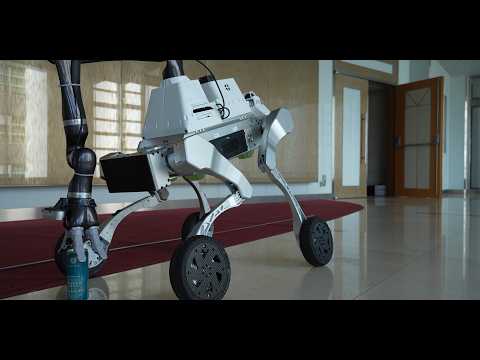
#462026-10-2969

Drone-PUR: From Visual Clue Discovery to Understanding and Reasoning in UAV Scenes

Jiahe Wu, Bing Cao, Xingyue Guo, Ruipu Zhao, Beiming Yu, Jiekang Feng 等

The reasoning capabilities of vision-language models (VLMs) can be limited by incomplete or inaccurate visual observations in the general domain. In unmanned aerial vehicle (UAV) s…

The reasoning capabilities of vision-language models (VLMs) can be limited by incomplete or inaccurate visual observations in the general domain. In unmanned aerial vehicle (UAV) scenes, small targets, subtle attributes, and changing viewpoints further complicate perception and understanding. Therefore, we introduce Drone-PUR, a dataset and benchmark organized around visual clue discovery, interpretation, and integration, corresponding to the three capability dimensions of perception, understanding, and reasoning. Reasoning samples are designed to require models to combine multiple visual clues to derive visually grounded conclusions. Its 11 tasks provide 175k training and 20k test samples spanning single images, image sequences, cross-modal images, and multiple viewpoints. All test samples undergo human review. Evaluating 22 general-purpose VLMs reveals persistent limitations in spatial judgment and cross-modal and cross-view reasoning. Across models, stronger perception is associated with better reasoning, while single-task fine-tuning further reveals selective bidirectional transfer between these capabilities. To examine domain adaptation, we develop UAV-PUR from Qwen3-VL through staged fine-tuning with auxiliary supervision. Its 4B and 8B variants improve overall multiple-choice accuracy by 18.33 and 17.52 percentage points over their pretrained counterparts, respectively. The dataset and project resources are available at https://drone-pur.github.io.

兴趣:3D perception, point clouds and scene understanding for robotics

#472026-10-3069

Flexibility-Aware Robotic Manipulation: Deformation Estimation, Kinematics, and Control via Distributed Inertial Measurement

Amir Hossein Barjini, Sadeq Yaqubi, Pauli Mustalahti, Jouni Mattila

Flexible robot links challenge the rigid-body assumption, making joint measurements alone insufficient for accurate manipulation. This paper introduces a flexibility-aware manipula…

Flexible robot links challenge the rigid-body assumption, making joint measurements alone insufficient for accurate manipulation. This paper introduces a flexibility-aware manipulation framework that connects structural dynamics directly to sensing, kinematics, and control. Instead of prescribing a dense inertial measurement unit (IMU) network, the dominant vibration modes of each flexible link are first identified from response-convergence and excitation-bandwidth criteria. Under a full-rank modal observability condition, $m$ retained modes require only $m$ independent slope measurements and one reference IMU, defining the minimum observable IMU configuration. The resulting measurements are used to reconstruct the continuous link deformation, which is then incorporated into flexibility-aware forward kinematics and a deformation-informed partial differential equation-based controller. Experiments on hydraulic single- and double-link manipulators evaluate the framework. On the long-reach double-link platform, the proposed kinematics achieves end-effector root mean square errors of $0.0107$~m, $0.0194$~m, and $0.0102$~rad while using fewer sensors than the piecewise-rigid method. Closed-loop reaching experiments further demonstrate real-time integration of IMU-estimated joint states and reconstructed deformation into the proposed controller. The results show that dominant modal information can determine sensing requirements and enable real-time flexibility-aware robotic manipulation.

cs.ROrobotmanipulation

兴趣:humanoid robots and whole-body control

#482026-10-3069

Capability-Conditioned Graph Control Barrier Functions for Zero-Shot Safe Navigation of Heterogeneous Mobile Robot Teams

Joonkyung Kim, Janghyun Cho, Jeehyun Lee, Changjoo Nam, Yiwei Lyu

Multi-robot systems are increasingly deployed as heterogeneous fleets with diverse kinematic and actuation capabilities. While graph control barrier function (GCBF) methods provide…

Multi-robot systems are increasingly deployed as heterogeneous fleets with diverse kinematic and actuation capabilities. While graph control barrier function (GCBF) methods provide a scalable framework for decentralized safe control, existing approaches typically assume homogeneous robot dynamics. Methods that directly encode robot classes can distinguish known types, but do not represent state-dependent motion capabilities or naturally transfer to unseen robot models. To address this challenge, we propose the Capability-Conditioned Heterogeneous Graph Control Barrier Function (CC-HGCBF), defined in a shared second-order reference-point operational space. This formulation provides a common geometric representation of safety across heterogeneous robots while retaining their model-specific dynamics and admissible control constraints. To enable zero-shot transfer, we introduce the Radial Capability Field (RCF), a compact, fixed-dimensional representation of each robot's state-dependent finite-horizon reachable velocity set. Conditioning the shared graph barrier and decentralized policy on the RCF enables them to adapt to changes in robot state, kinematic constraints, and control limits without relying on predefined robot identities. We jointly train the barrier and policy using proactive safety labeling and neural CBF-QP supervision, and evaluate them on mixed teams containing both seen and unseen robot models. Experiments demonstrate scalable safe coordination and zero-shot transfer to robot models and capability variations withheld during training. Physical-robot experiments further demonstrate zero-shot deployment to unseen kinematic models without retraining.

cs.ROrobot

兴趣:imitation learning and diffusion policies for robot control

#492026-10-3069

ImplicitHop: Evaluating knowledge integration across context and memory

Alexander Detkov, Dashiel Karish, Matthew Oleynikov, Matt Thomson

The ability to integrate new information and deduce its consequences is central to learning, understanding, and reasoning in large language models (LLMs). Whether information arriv…

The ability to integrate new information and deduce its consequences is central to learning, understanding, and reasoning in large language models (LLMs). Whether information arrives during training or in-context, models must not only store local facts, but propagate their long-range implications globally. To explore information integration in LLMs, we introduce two complementary natural language benchmarks for large-scale evaluation of deductive reasoning as a function of inference depth. The first is a formal graph benchmark enabling controlled evaluation over a wide range of graph topologies and integration tasks; the second is a knowledge composition benchmark grounded in real-world knowledge graphs. We use these benchmarks to compare knowledge integration from information encoded in context versus information encoded in model weights during pretraining, evaluating a set of open models implicitly, without chain of thought. We find that accuracy decays sharply with increased composition length for both pretrained and in-context knowledge. Information presented in-context, however, substantially outperforms deduction over information encoded in weights. These results quantify a fundamental limitation of current models with direct implications for prompt-based control of agent behavior and for continual learning strategies, and they provide a foundation for developing training, prompting, and integration methods that support deeper reasoning.

兴趣:large language models for robot task planning and reasoning

#502026-10-3069

rl_rob: A transparent, from-scratch Python library for teaching reinforcement learning from tabular methods to deep policy gradients

Abdulrahman Altahhan

rl_rob is an open-source Python library for teaching reinforcement learning. It implements the arc of a modern course, from tabular temporal-difference learning through linear func…

rl_rob is an open-source Python library for teaching reinforcement learning. It implements the arc of a modern course, from tabular temporal-difference learning through linear function approximation to deep value-based and policy-gradient methods, with every algorithm written from first principles so that its update rule is visible in a few lines of code. All agents share one interface, so learners can compare methods directly across stages and trace a deep reinforcement learning update from the temporal-difference error to the weight change. The library supports teaching and assessment in which students implement, modify and explain update rules, rather than only produce working code.

兴趣:imitation learning and diffusion policies for robot control

GitHub 项目

#12026-10-29★ 31新项目75

cair-vinuni/roboworm

Python

RoboWorM: Evaluating Movement Realism, Consistency and Acceleration Affects in Embodied Video World Models

RoboWorM: Evaluating Movement Realism, Consistency and Acceleration Affects in Embodied Video World Models

roboticsvlaworld-modelsVLAembodied

兴趣:world models and video prediction for embodied agents

#22025-10-09★ 3.9k +874

starVLA/starVLA

Python

StarVLA: A Lego-like Codebase for Vision-Language-Action Model Developing

StarVLA: A Lego-like Codebase for Vision-Language-Action Model Developing

robotic-foundation-modelroboticsvision-language-action-modelworld-action-modelvision-language-action

兴趣:vision-language-action (VLA) models and foundation models for robots

#32024-12-08★ 4.3k +2074

datawhalechina/every-embodied

Jupyter Notebook

仅需Python基础,从0构建自己的具身智能机器人;从0逐步构建VLA/OpenVLA/SmolVLA/Pi0, 深入理解具身智能

仅需Python基础,从0构建自己的具身智能机器人;从0逐步构建VLA/OpenVLA/SmolVLA/Pi0, 深入理解具身智能

embodied-agentembodied-aiembodied-intelligenceopenvlasmolvlavision-language-action-modelVLAvision-language-actionembodied

兴趣:world models and video prediction for embodied agents

#52026-10-05★ 230 +6新项目72

AetherLabsAI/Video2World

Python

Benchmarking Coding Agents for Interactive World Modeling from Embodied Videos - Rethinking Embodied Real2Sim from a Software Engineering Perspective

Benchmarking Coding Agents for Interactive World Modeling from Embodied Videos - Rethinking Embodied Real2Sim from a Software Engineering Perspective

benchmarkcoding-agentembodied-aifoundation-modelsreal-to-simrobot-learningroboticssimulationrobotembodied

兴趣:world models and video prediction for embodied agents

#62026-10-12★ 295 +13新项目72

robosimstudio/robosimstudio

Python

An open interactive toolkit that accelerates human and agentic physics-based Real2Sim of Robot Manipulation Tasks

An open interactive toolkit that accelerates human and agentic physics-based Real2Sim of Robot Manipulation Tasks

agentinverse-physicsreal2simreal2sim2realroboticssimulationrobotmanipulation

兴趣:vision-language-action (VLA) models and foundation models for robots

#72026-09-30★ 295 +1672

groundingpi/GroundingPI

Python

A 4B grounding foundation model for physical intelligence. Unifies detection, referring, pointing, OCR, GUI, and layout grounding, achieving SOTA overall across 34 benchmarks and i…

A 4B grounding foundation model for physical intelligence. Unifies detection, referring, pointing, OCR, GUI, and layout grounding, achieving SOTA overall across 34 benchmarks and improving robot generalization and data efficiency in controlled evaluations.

embodied-aigui-groundingobject-detectionocrphysical-intelligencepointingrobot-learningvision-language-modelrobotVLAembodied

兴趣:vision-language-action (VLA) models and foundation models for robots

#82026-10-29★ 122 +22新项目72

tuotuoLyu/FPO

Python

Official code for "Reinforcement Fine-Tuning of Flow-Matching Policies for Vision-Language-Action Models" (ICRA 2026): Flow Policy Optimization for pi0

Official code for "Reinforcement Fine-Tuning of Flow-Matching Policies for Vision-Language-Action Models" (ICRA 2026): Flow Policy Optimization for pi0

alohaflow-matchingicra2026jaxliberoreinforcement-learningrobot-learningvision-language-actionrobotvision-language-action

兴趣:vision-language-action (VLA) models and foundation models for robots

#92026-10-21★ 27 +3新项目71

xuyicheng-zju/TARSphere

Python

A robot-oriented full-stack framework for long-horizon embodied agents in evolving physical and social environments.

A robot-oriented full-stack framework for long-horizon embodied agents in evolving physical and social environments.

benchmarkembodied-aiisaac-simroboticsrobotembodied

兴趣:world models and video prediction for embodied agents

#102025-11-23★ 757 +271

sou350121/VLA-Handbook

HTML

本项目旨在为致力于进入VLA(Vision-Language-Action)领域的算法工程师提供一份全中文、实战导向的学习/面试手册。 不同于通用的 CV/NLP 面试指南,本项目聚焦于 Robotics 特有的挑战

本项目旨在为致力于进入VLA(Vision-Language-Action)领域的算法工程师提供一份全中文、实战导向的学习/面试手册。 不同于通用的 CV/NLP 面试指南,本项目聚焦于 Robotics 特有的挑战

chinesedeep-learningembodied-aillmrobot-learningroboticsvision-language-actionvlarobotVLAvision-language-actionembodied

兴趣:vision-language-action (VLA) models and foundation models for robots

#112026-08-29★ 104 +171

OpenBMB/SimpleMemVLA

Python

Native-video memory for vision-language-action models, using timestamped visual history and exact streaming inference for long-horizon robot manipulation.

Native-video memory for vision-language-action models, using timestamped visual history and exact streaming inference for long-horizon robot manipulation.

embodied-ailong-horizon-roboticsmultimodal-learningnative-video-memoryrobot-learningrobot-manipulationstreaming-inferencevideo-understandingrobotmanipulationVLAvision-language-actionembodied

兴趣:vision-language-action (VLA) models and foundation models for robots

#122026-07-19★ 693 +470

RealXiaoze/humanoid-motion-intelligence

人形机器人运动智能论文、开源项目、产业与求职知识库

人形机器人运动智能论文、开源项目、产业与求职知识库

embodied-aihumanoid-roboticslocomotionmotion-controlreinforcement-learningrobot-learningsim2realvlarobotVLAhumanoidlocomotionembodied

兴趣:humanoid robots and whole-body control

#132024-01-26★ 28.6k +2470

huggingface/lerobot

Python

🤗 LeRobot: Making AI for Robotics more accessible with end-to-end learning

🤗 LeRobot: Making AI for Robotics more accessible with end-to-end learning

兴趣:imitation learning and diffusion policies for robot control

#142025-07-30★ 753 +370

HorizonRobotics/HoloMotion

Python

A Foundation Model for Whole-Body Humanoid Control

A Foundation Model for Whole-Body Humanoid Control

foundation-modelshumanoid-robotmotion-trackingroboticswhole-body-controlrobothumanoid

兴趣:humanoid robots and whole-body control

#152025-04-04★ 1.9k +170

RoboVerseOrg/RoboVerse

Python

RoboVerse: Towards a Unified Platform, Dataset and Benchmark for Scalable and Generalizable Robot Learning

RoboVerse: Towards a Unified Platform, Dataset and Benchmark for Scalable and Generalizable Robot Learning

imitation-learningreinforcement-learningroboticssimulationrobot

兴趣:imitation learning and diffusion policies for robot control

#162026-10-18★ 52 +7新项目70

P90-RushB/robopaint-bench

Jupyter Notebook

A robot-painting benchmark for multimodal language models: reference images, text prompts, and custom goals. Built on AgentArk.

A robot-painting benchmark for multimodal language models: reference images, text prompts, and custom goals. Built on AgentArk.

agentarkbenchmarkembodied-aimultimodalroboticssimulationrobotembodied

兴趣:large language models for robot task planning and reasoning

#172026-09-08★ 7169

lok-i/vibe

Python

Post-training humanoid whole-body trackers for perceptive control tasks

Post-training humanoid whole-body trackers for perceptive control tasks

humanoid-controlmjlabperceptive-locomotionpporeinforcement-learningrobot-learningviberobothumanoidlocomotion

兴趣:humanoid robots and whole-body control

#182018-08-22★ 12k +43869

kornia/kornia

Python

🐍 Geometric Computer Vision Library for Spatial AI

🐍 Geometric Computer Vision Library for Spatial AI

artificial-intelligencecomputer-visiondeep-learninghacktoberfestimage-processingmachine-learningneural-networkpython

兴趣:3D perception, point clouds and scene understanding for robotics

#192026-02-08★ 521 +769

XPolicyLab/XPolicyLab

Python

[IROS 26 ScaleInfra Workshop Best Tool Paper] Involving over 50 Advanced Manipulation Policies

[IROS 26 ScaleInfra Workshop Best Tool Paper] Involving over 50 Advanced Manipulation Policies

embodied-aimanipulationpolicymanipulationembodied

兴趣:robot manipulation and grasping with learned policies

#202025-08-14★ 5.6k +1069

RLinf/RLinf

Python

RLinf: Reinforcement Learning Infrastructure for Embodied and Agentic AI

RLinf: Reinforcement Learning Infrastructure for Embodied and Agentic AI

agentic-aiembodied-aireinforcement-learningrl-infrarlinfvla-rlVLAembodied

兴趣:vision-language-action (VLA) models and foundation models for robots

#212024-02-29★ 17069

RobotControlStack/robot-control-stack

Python

A lean, ROS-free sim-to-real framework for training and deploying Vision-Language-Action (VLA) models and RL agents. Native MuJoCo Gymnasium wrappers with synchronous execution for…

A lean, ROS-free sim-to-real framework for training and deploying Vision-Language-Action (VLA) models and RL agents. Native MuJoCo Gymnasium wrappers with synchronous execution for Franka, UR5e, xArm, SO101, YAM and Rizon.

frankagymnasiummujocoreinforcement-learningrobot-learningrobot-manipulationsim-to-realvision-language-actions-modelsrobotmanipulationVLAvision-language-actionsim-to-real

兴趣:vision-language-action (VLA) models and foundation models for robots

#222026-07-06★ 2.3k +268

dexmal/opendm

Python

An Open-World Foundation Model for General-Purpose Embodied Intelligence.

An Open-World Foundation Model for General-Purpose Embodied Intelligence.

embodied-aiembodied-intelligenceroboticsvision-language-actionvlaVLAvision-language-actionembodied

兴趣:vision-language-action (VLA) models and foundation models for robots

#232024-12-24★ 38767

manumerous/wb_humanoid_mpc

C++

Whole-Body Nonlinear MPC for Realtime Humanoid Loco-Manipulation Planning and Control

Whole-Body Nonlinear MPC for Realtime Humanoid Loco-Manipulation Planning and Control
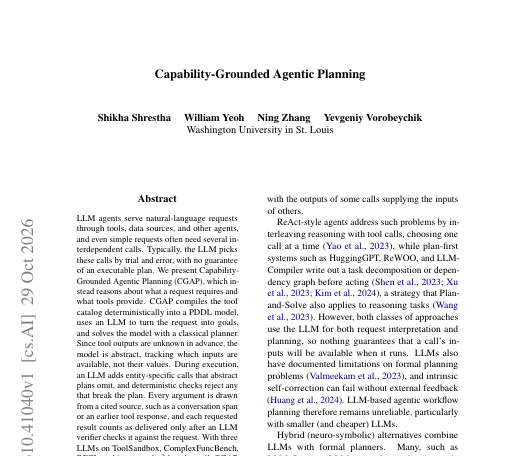
aidata-generationhumanoidhumanoid-robotlocomotionmpcnonlinearoptimizationrobotmanipulationhumanoidlocomotion

兴趣:humanoid robots and whole-body control

#242024-09-29★ 3.7k +667

enactic/openarm

MDX

A fully open-source humanoid arm for physical AI research and deployment in contact-rich environments.

A fully open-source humanoid arm for physical AI research and deployment in contact-rich environments.

bilateral-teleoperationforce-feedbackgenesisgravity-compensationhumanoid-robotimitation-learningmachine-learningmoveit2robothumanoid

兴趣:humanoid robots and whole-body control

#252024-05-11★ 1.9k +267

robocasa/robocasa

Python

RoboCasa: Large-Scale Simulation of Everyday Tasks for Generalist Robots

RoboCasa: Large-Scale Simulation of Everyday Tasks for Generalist Robots

humanoid-robotphysics-simulationrobot-learningroboticsrobothumanoid

兴趣:humanoid robots and whole-body control

#262025-09-11★ 7.5k +2867

vllm-project/vllm-omni

Python

A framework for efficient model inference with omni-modality models

A framework for efficient model inference with omni-modality models

audio-generationdiffusionimage-generationinferencemodel-servingmultimodalpytorchtransformer

兴趣:vision-language-action (VLA) models and foundation models for robots

#272026-09-29★ 179 +567

zqc3117/Spotter

Python

Official codebase for Spotter: Let the Embodied Model Lead, and the VLM Reflect for It

Official codebase for Spotter: Let the Embodied Model Lead, and the VLM Reflect for It

embodied-aillm-agentqwenrobocasarobodojorobot-learningrobot-manipulationroboticsrobotmanipulationembodied

兴趣:vision-language-action (VLA) models and foundation models for robots

#282026-04-22★ 25k +34066

earthtojake/text-to-cad

Python

Design physical products with AI

Design physical products with AI

agentsai-agentscadmechanical-engineeringroboticsstepstlstp

兴趣:humanoid robots and whole-body control

#292026-10-07★ 655 +21新项目66

fudan-generative-vision/Remory

Python

Remory: Learning Residual Memory for Context Compaction

Remory: Learning Residual Memory for Context Compaction

context-compactioninferencellm-agentsresidual-memory

兴趣:world models and video prediction for embodied agents

#302022-11-16★ 8.6k +766

isaac-sim/IsaacLab

Python

Unified framework for robot learning with multi-physics/renderer support

Unified framework for robot learning with multi-physics/renderer support

isaac-simomniverse-kit-extensionrobot-learningroboticsrobot

兴趣:3D perception, point clouds and scene understanding for robotics